by StefanS | Sep 25, 2025 | Blogs
In ophthalmology, there’s no room for inefficiency. Patient schedules are full, clinical demands are high, and the pressure to deliver exceptional care never stops. At the same time, administrative tasks, billing accuracy, and compliance requirements all compete for your team’s attention.
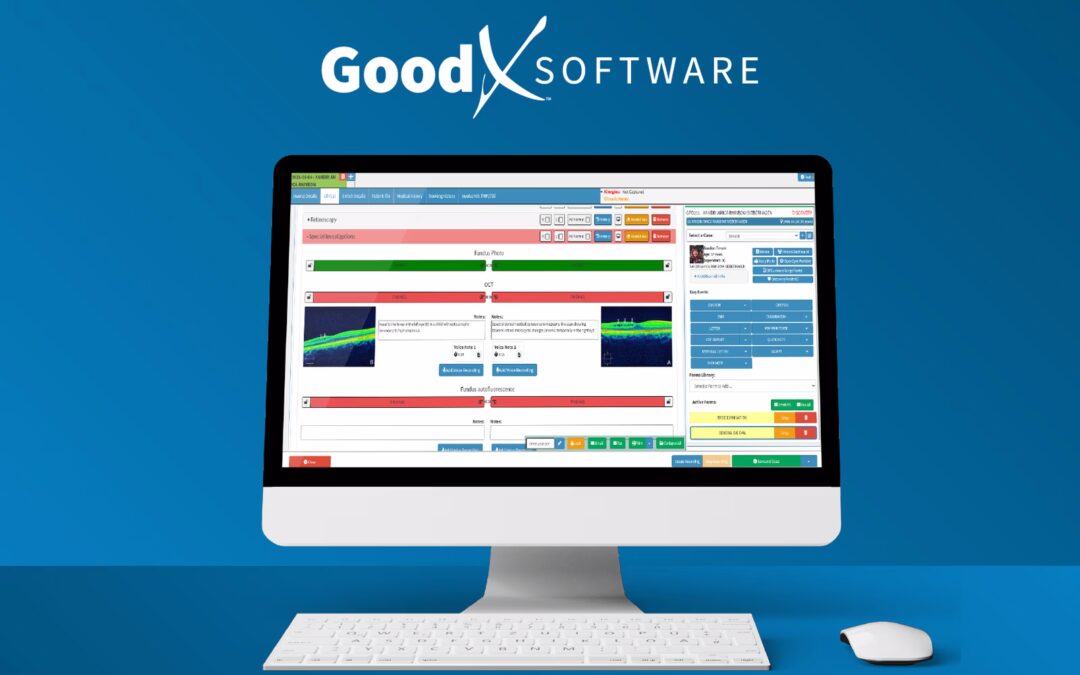
GoodX Ophthalmology EHR was designed to take that weight off your shoulders. Built specifically for eye care, it delivers the tools, integrations, and automation your practice needs, without the compromises of a generic system.
Why Generic EHRs Can Hold Eye Care Back
On the surface, a general EHR can look like it will get the job done. But for ophthalmology, the cracks start to show quickly:
- Missing ophthalmology-specific fields and templates
- No direct machine integration for OCT scans, fundus photographs, or corneal topography, such as DICOM
- Double data entry between EHR and practice management systems
- Limited reporting that misses key ophthalmology performance metrics
GoodX Ophthalmology EHR avoids these pitfalls by giving you a platform built around the way your specialty actually works.
GoodX Features Designed for Ophthalmology
Every feature in GoodX exists because ophthalmologists and their teams said they needed it. The result is a solution that matches your workflows, instead of forcing you to adapt to the software.
- Digital Surgical Planning Sheets: Plan, track, and share surgical details without extra steps.
- Co-Management Tools: Coordinate seamlessly with optometrists, retina specialists, and other providers.
- Customizable Scheduling: Adjust for each provider’s pre- and post-operative needs.
- DICOM Image Integration: Access and compare imaging results directly within patient records.
- Surgical Preference Cards: Standardize preparation and reduce administrative mistakes on surgery day.
- Automated Lens Inventory Management: Prevent shortages and keep procedures on schedule.
- Mobile Access: Securely update or review records from anywhere.
- Lead and Referral Tracking: Understand where new patients come from and strengthen referral relationships.
- Practice and Office Management Tools: Bring clinical and business operations together in one system.
How GoodX Ophthalmology EHR Improves Patient Care
A strong EHR does more than organize data, it changes the way patients experience your practice. GoodX helps you:
- Perform thorough exams with specialized templates designed for ophthalmology
- View diagnostic images alongside patient history for better decision-making
- Automate follow-up reminders so patients stay on track with care plans
- Shorten wait times by streamlining administrative tasks
When your team can work smoothly, patients notice, and they’re more likely to return, refer others, and stick with their treatments.
Efficiency That Fuels Growth
Every minute saved in administration is a minute you can invest in patient care. GoodX Ophthalmology EHR helps your practice:
- Cut down on billing errors that delay reimbursements
- Eliminate repetitive data entry
- Increase patient throughput without feeling rushed
- Gain insights through reports tailored for ophthalmology
Many practices see results quickly, from improved cash flow to more consistent daily schedules and less stress for the entire team.
Secure, Compliant, and Reliable
Security and compliance are non-negotiable. GoodX is HIPAA and GDPR compliant, cloud-based, and encrypted end-to-end. Updates are seamless, downtime is minimal, and your data is always protected.
With GoodX, you can feel confident that your patient information is safe, and that your practice is meeting all regulatory requirements, without the constant worry.
The ROI of GoodX Ophthalmology EHR
Switching systems may feel like a big step, but the return is tangible:
- Higher patient volume without lowering care quality
- Reduced operational costs and fewer billing issues
- Stronger patient satisfaction and retention rates
- A scalable platform that grows with your practice
And unlike generic EHR providers, GoodX offers a support team that understands your terminology, your workflows, and your challenges from day one.
Now Is the Time to Make the Switch
Waiting to replace an underperforming EHR often means continuing to lose time, revenue, and opportunities for better patient care. GoodX makes the transition straightforward and supports you every step of the way.
Bottom line: An ophthalmology EHR should adapt to your practice, not the other way around. GoodX delivers the precision, efficiency, and patient focus that modern eye care requires.
If your practice is ready to work smarter, improve outcomes, and create a better experience for both staff and patients, it’s time to make the switch to GoodX Ophthalmology EHR.
by StefanS | Sep 25, 2025 | Blogs
Selecting the right ophthalmology program, whether it’s an Electronic Medical Record (EMR) system, a Practice Management (PM) platform, or an all-in-one solution, is one of the most important technology decisions your clinic will make. The right choice can streamline your workflow, improve patient care, and even increase revenue. The wrong choice, however, can slow your team down, frustrate staff, and compromise the patient experience.
With the variety of options available, it’s easy to feel overwhelmed. Many systems claim to offer “everything you need,” but in practice, they vary greatly in their ability to handle the unique demands of ophthalmology. To make a confident, informed decision, it helps to understand exactly what makes a program stand out.
Why the Right Ophthalmology Program Matters
An ophthalmology program is more than just software; it’s the operational backbone of your practice. Every appointment scheduled, every diagnostic image reviewed, every bill submitted runs through it. When your system works well, it becomes almost invisible, enabling your staff to focus on patient care instead of troubleshooting technology.
On the other hand, a poorly matched system creates daily inefficiencies. Appointments take longer to book. Images don’t integrate properly with charts. Billing errors delay payments. Over time, these small disruptions compound, impacting both morale and profitability.
The goal is to select a program that not only supports your existing workflow but enhances it. That means looking for solutions designed specifically for ophthalmology, such as those offered by GoodX, which integrates clinical, financial, and operational tools into one streamlined platform.
Designed for Ophthalmology from the Ground Up
While general medical EMR systems may cover basic needs, ophthalmology presents unique requirements that demand specialized features. For example:
- Digital Imaging and Communications in Medicine (DICOM) integration for seamless import of Optical Coherence Tomography (OCT) scans, fundus photography, and other diagnostic imaging
- Lens inventory management to track stock levels, prevent shortages, and manage expiration dates
- Surgical planning sheets with dedicated pre- and post-operative sections tailored to ophthalmic procedures
By choosing a program built for eye care, such as GoodX’s adaptable solutions, you ensure that clinical documentation, diagnostic tools, and surgical workflows all work together without extra manual steps.
Intelligent Scheduling That Works for Your Clinic
In a busy ophthalmology practice, scheduling isn’t just about assigning time slots, it’s about optimizing resources. A strong system will allow you to coordinate multiple providers, rooms, and equipment while also:
- Automatically sending patient consent forms before visits
- Managing complex appointment types, such as a consultation followed by imaging and a procedure in a single visit
- Providing waitlist and recall modules to fill last-minute openings and re-engage patients who are due for follow-up
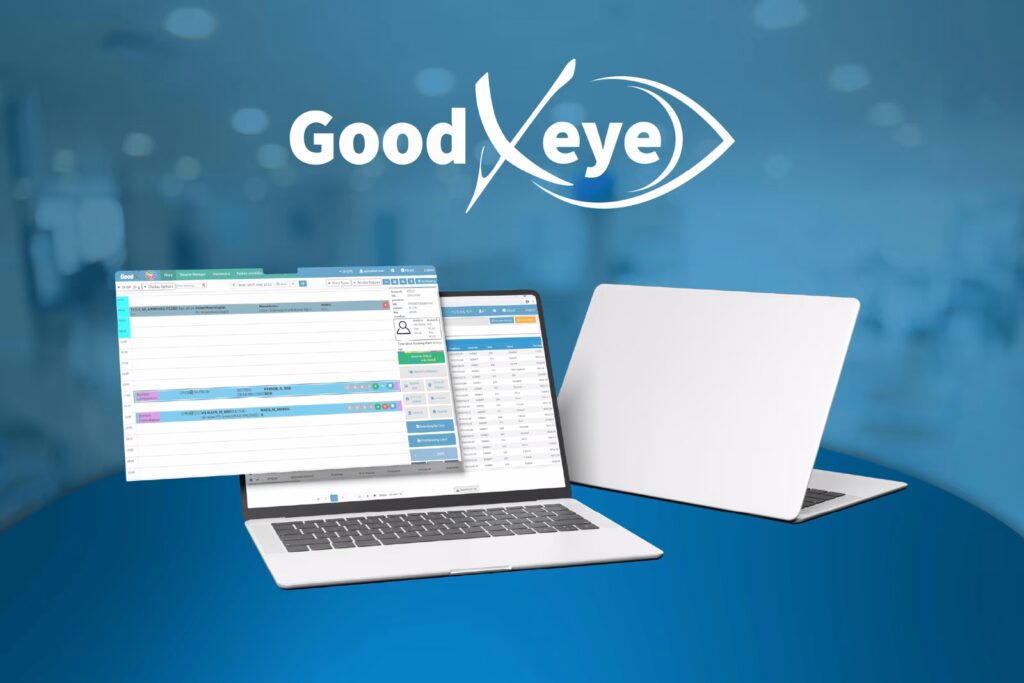
GoodX’s practice management software is designed to simplify these scheduling challenges, making it easier for practices to keep patient flow efficient while reducing administrative stress.
Supporting Every Role in the Practice
A truly effective ophthalmology program recognizes that different team members interact with the system in different ways. Technicians, physicians, and administrative staff each have their own priorities. Features that help include:
- Integrated communication tools for quick, secure team collaboration
- Self-check-in kiosks that speed up intake and reduce front desk workload
- Customizable templates that shorten documentation time while maintaining accuracy
By streamlining the tasks of each role, the program contributes to an overall increase in efficiency and a better patient experience. Solutions like GoodX are built with flexibility in mind, so every member of your team can work smarter, not harder.
Imaging and Documentation Without Compromise
In ophthalmology, diagnostic images are essential for accurate diagnosis, treatment planning, and ongoing monitoring. Your EMR should make working with images intuitive and reliable. This means:
- Allowing annotations without overwriting previous records
- Storing historical images for side-by-side comparison over time
- Maintaining compliance to ensure secure data transfer and interoperability with machine integrations
When image management is seamless, providers can make faster, more confident clinical decisions. GoodX ensures smooth integration with diagnostic equipment, so practices don’t waste time on manual uploads or compatibility issues.
Billing and Revenue Cycle Management Built In
Revenue cycle management is another area where integration makes a significant difference. A well-designed ophthalmology program will:
- Automate Current Procedural Terminology (CPT) and International Classification of Diseases (ICD) coding
- Include built-in claims clearinghouse tools
- Flag potential errors before claim submission to reduce rejections and delays
GoodX includes billing and claims management modules that are tailored to healthcare practices, helping clinics avoid costly errors while accelerating reimbursement.
Data That Drives Decisions
Good data turns day-to-day activity into actionable insights. The right program should offer analytics and reporting capabilities that allow you to:
- Track revenue by procedure type
- Monitor referral sources and patterns
- Measure provider productivity and clinic performance
These metrics support evidence-based decisions for growth, staffing, and service offerings. With GoodX analytics, practices gain clear visibility into operations, helping them improve both efficiency and profitability.
Building Patient Relationships Through Engagement Tools
Today’s patients expect convenience, transparency, and communication. A comprehensive ophthalmology program will include features that help you meet these expectations:
- Secure online scheduling and rescheduling
- Automated appointment reminders and follow-up surveys
- Digital intake forms to reduce wait times and manual entry
Strong patient engagement tools improve satisfaction, encourage loyalty, and support better care outcomes. GoodX helps practices build these touchpoints into daily workflows, creating a seamless experience for both patients and staff.
Vendor Partnership and Long-Term Scalability
The technology itself is only part of the equation. The vendor’s commitment to training, support, and product evolution is equally important. Before selecting a program, evaluate:
- The availability and responsiveness of support teams
- The quality of onboarding and ongoing training
- The frequency and reliability of software updates
- The scalability to handle additional providers, locations, or service lines as your practice grows
GoodX is recognized for ongoing innovation and strong client support, making it a reliable long-term partner for ophthalmology practices that want to future-proof their systems.
Final Thoughts
Choosing an ophthalmology program is a strategic decision that affects every aspect of your practice. By focusing on specialized ophthalmology tools, intelligent scheduling, role-specific workflow support, advanced imaging, integrated billing, actionable analytics, patient engagement, and strong vendor support, you set the foundation for both clinical excellence and operational efficiency.
Taking the time to assess your needs, involve your team in evaluations, and research vendor capabilities will pay off, not just in smoother workflows, but in better patient care and a stronger, more resilient practice. With GoodX offering comprehensive, adaptable solutions, clinics can feel confident that their chosen program will continue to grow alongside them.
Book a demo with GoodX today and discover how the right ophthalmology program can help your practice thrive.

by StefanS | Apr 17, 2025 | Uncategorized
Ophthalmologists don’t have time to waste. When you’re juggling a packed schedule of diagnostics, consultations, and paperwork, admin work can easily start eating into time you’d rather spend with patients.
That’s where AI scribing tools are starting to make a real difference.
Powered by advanced language models, these tools can now capture and summarise patient visits with surprising accuracy. They help cut down on charting time, keep notes consistent, and take some of the load off your plate.
But the biggest win isn’t just saving time. It’s about being able to stay present during consultations and not spending your evening catching up on documentation.
More and more specialists are turning to AI scribes for exactly that reason. If you’re thinking about trying one, here’s what’s driving the shift and what to consider before you do.
Things to Keep in Mind
AI scribing tools offer real advantages, but there are a few important things to first consider before bringing one into your ophthalmology practice:
Patient Consent
Let patients know AI is being used to document their visit. Most people are fine with it, especially when they understand it helps the clinician stay more present during the consultation.
Data Security and Regulations
Ensure the tool you choose meets healthcare regulations in your country (like POPIA in South Africa or HIPAA in the U.S.). Clinical data needs to be encrypted and securely stored, especially if it’s processed off-site or in the cloud.
Review Notes for Accuracy
AI isn’t perfect. Always double-check notes before finalising them, particularly the A&P section. The good news is, most quality tools let you regenerate or edit sections easily.
Specialty Relevance
Not all AI scribes understand the nuances of ophthalmology. Choose one built to handle your field’s terminology, workflows, common conditions, procedures, and meds.
The Core Benefits of AI Scribes in Ophthalmology
More Time with Patients, Less Time on Paperwork
Ophthalmology clinics move fast. With a constant stream of patients and detailed notes to keep, documentation can eat up a lot of time. AI scribes shift that burden, giving clinicians more space to focus on what matters most: the patient.
Instead of manually writing up notes after each visit, AI scribes generate structured documentation in real time based on the conversation. That means less time spent typing and more time reviewing imaging, explaining treatment plans, or simply answering patient questions. It’s a small shift that can make a big difference in patient experience and provider connection.
Better Note Accuracy Without the Extra Work
AI scribes like GoodXpert aren’t just transcribers. They create clean, structured notes that stay focused and relevant, often with a surprisingly solid grasp of context. In ophthalmology, where a tiny detail like a slight change in visual acuity can matter, that level of precision helps support better decision-making and fewer missed details.
Some doctors have noticed that AI occasionally brings up related points they didn’t directly mention, prompting a second look or an extra follow-up. While not perfect, these moments can lead to more thorough care.
Easier EHR Integration
The best AI scribes are built to work within existing systems. Once again, GoodXpert works directly with existing EHRs, cutting out the need for copy-paste routines. That’s especially useful in ophthalmology, where workflow efficiency matters and imaging systems are part of the daily mix.
Less Burnout, Smoother Days
Ophthalmologists juggle clinic and surgical schedules, and the documentation load doesn’t help. AI scribes ease that load, helping reduce mental fatigue, improve accuracy, and boost overall job satisfaction.
They can also reclaim time outside of clinic hours. That “pyjama time” spent finishing notes at home? AI scribes help cut that down, making it easier to maintain a real work-life balance. And when clinicians are less burned out, patients benefit too.
Final Thoughts
AI scribes are quickly becoming more than a nice-to-have. For many ophthalmologists, they’re turning into a key part of delivering efficient, high-quality care. By cutting down on note-taking and after-hours paperwork, these tools help shift the focus back to the patient, where it should be.
Like any tool in the clinic, it’s all about finding the right fit, making sure it works with your flow, and keeping tabs on accuracy and compliance. But for practices tired of the documentation grind, AI scribing is definitely worth a closer look.

by StefanS | Apr 17, 2025 | Uncategorized
Starting your own ophthalmology practice in 2025 is a bold yet rewarding move. With evolving technologies, patient expectations, and healthcare trends, now is an ideal time to take control of your professional journey. Whether you’re a seasoned ophthalmologist looking to go independent or a recent graduate with an entrepreneurial spark, this guide covers the essentials to launch a successful, future-proof eye care practice.
Define Your Vision and Business Model
Before diving into logistics, it’s crucial to define the why behind your practice. What kind of patients do you want to serve? Will you offer general ophthalmology services or sub-specialize (e.g., retina, glaucoma, pediatric)? Clarify your mission and goals.
Choose Your Path:
- Start from scratch: Full creative control but higher initial costs.
- Buy an existing practice: Established patient base, but potential for legacy issues.
- Partner with others: Share costs and responsibilities, but less autonomy.
Develop a detailed business plan that includes:
- Revenue projections
- Target patient demographics
- Competitive analysis
- Operational workflows
Budget for Success
Key Budget Areas:
- Office lease or purchase
- Buildout and interior design
- Diagnostic and surgical equipment
- EHR and practice management software
- Staff recruitment and training
- Marketing and branding
Secure funding through loans, investors, or grants. Many banks offer medical-specific loans with flexible terms.
Choose the Right Location
Location is one of the most strategic decisions you’ll make. Aim for high-visibility areas with easy access for patients, ideally near other healthcare providers for referral opportunities. Analyze local competition and community needs to find the right fit.
Pro tip: Check zoning laws and medical office licensing requirements in your region.
Equip Your Practice with Technology
Invest in modern diagnostic tools and surgical equipment that align with your service offerings. In 2025, AI-powered imaging, teleophthalmology platforms, and cloud-based EHRs are becoming standard.
Must-Have Tech:
- OCT and fundus cameras
- Visual field analyzers
- Slit lamp with imaging capabilities
- HIPAA-compliant telemedicine tools
- Cloud-based practice management and billing software
Look for technology partners that offer training, integration support, and future scalability.
Reference: American Academy of Ophthalmology (AAO) emphasizes the integration of AI and digital health tools in their 2025 practice trends report. Visit AAO
Hire and Train the Right Team
Your team will shape patient experience and operational efficiency. Prioritize hiring experienced clinical and administrative staff who align with your values.
Roles to Fill:
- Front desk and billing
- Ophthalmic technicians
- Practice manager
- Marketing coordinator (or agency)
Offer competitive salaries, ongoing training, and a positive workplace culture.
Reference: According to the AAO, practices that prioritize staff training and patient-centric service see a 20–30% increase in patient retention rates. Learn More
Build a Patient-Focused Brand
Branding isn’t just about logos—it’s about building trust. Create a name, logo, and visual identity that reflects your professionalism and values.
Key Brand Assets:
- Website optimized for SEO and mobile devices
- Google Business Profile and online listings
- Patient education content (blogs, videos, downloads)
- Active presence on platforms like LinkedIn, YouTube, and Facebook
Invest in professional marketing from day one. Most patients now research ophthalmologists online before booking.
Reference: A 2023 survey by Healthgrades found that 77% of patients research a provider online before scheduling an appointment. Source
Streamline Operations with Smart Systems
Efficiency is key in running a successful ophthalmology practice. Implement systems that reduce admin burden, improve patient flow, and support data-driven decisions.
Systems to Implement:
- Appointment reminders and online booking
- Patient intake forms and consents (paperless)
- Insurance verification and claims automation
- KPI dashboards for tracking performance
Network and Grow
Build strong referral relationships with optometrists, GPs, and other specialists. Join ophthalmology associations and attend conferences to stay updated on industry changes.
Growth Tactics:
- Host free community eye screenings
- Collaborate with influencers or wellness platforms
- Run local search and social media ad campaigns
Reference: The American Society of Cataract and Refractive Surgery (ASCRS) encourages new practices to leverage community involvement and continuing education as growth tools. Visit ASCRS
Your Practice, Your Future
Launching your own ophthalmology practice is a significant step, but with the right preparation, it’s entirely achievable. By defining your vision, investing wisely in technology and people, and creating a strong patient-centered brand, you’ll set the foundation for a thriving, modern practice in 2025 and beyond.
Start building your legacy today, the future of ophthalmology is in your hands.

by StefanS | Apr 17, 2025 | Uncategorized
Your online presence is often the first impression potential patients have of your practice. Whether they are searching for a nearby doctor, reading reviews, or looking for reliable health information, how you appear online matters. A strong digital presence is no longer just a bonus; it is essential.
How Online Visibility Impacts Your Medical Practice?
Patients’ Research Before Booking:
- Most patients now begin their search for healthcare providers online, often through Google or other search engines.
- If they cannot easily find accurate and up-to-date information about your practice, they are likely to lose interest and move on to a competitor.
- Having clear, accessible information about your services, contact details, and treatment options is crucial to capturing their attention and trust.
Builds Trust and Credibility Through Communication:
- A well-managed online presence allows you to share valuable health tips with your patients.
- You can also address common questions, providing immediate answers and increasing patient satisfaction.
- Keeping patients informed about practice updates, new services, and treatment options helps build trust and encourages continued engagement.
Leveling the Playing Field with Larger Practices:
- Even smaller practices can thrive online by establishing a strong digital presence.
- Having an effective online strategy allows you to reach a wider audience and connect with potential patients.
- A well-curated website and active social media accounts provide the same visibility that larger practices enjoy, but at a fraction of the cost.
- Digital marketing, including search engine optimisation (SEO) and social media engagement, enables smaller practices to compete without requiring large budgets.
Tips and Tools to Supercharge Your Digital Presence
Ensure Your Website is Simple, Clear, and Accessible
Important information like your location, contact details, services, and an intuitive appointment scheduling system should all be prominently displayed on your website. Make sure your website is mobile-friendly because a lot of people look on mobile devices.