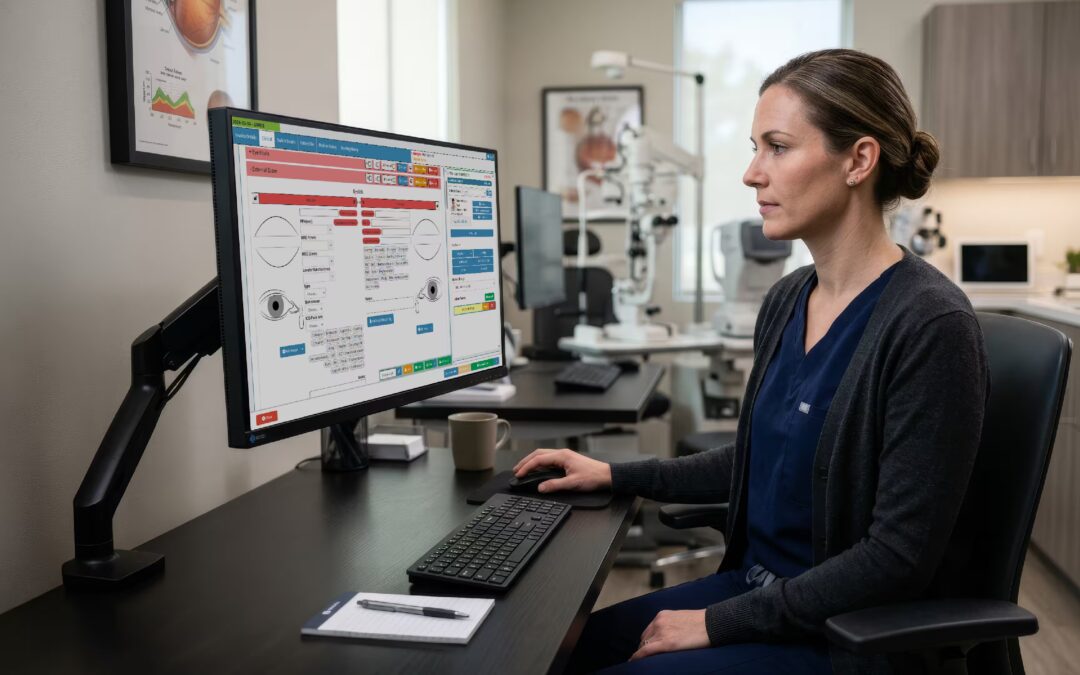
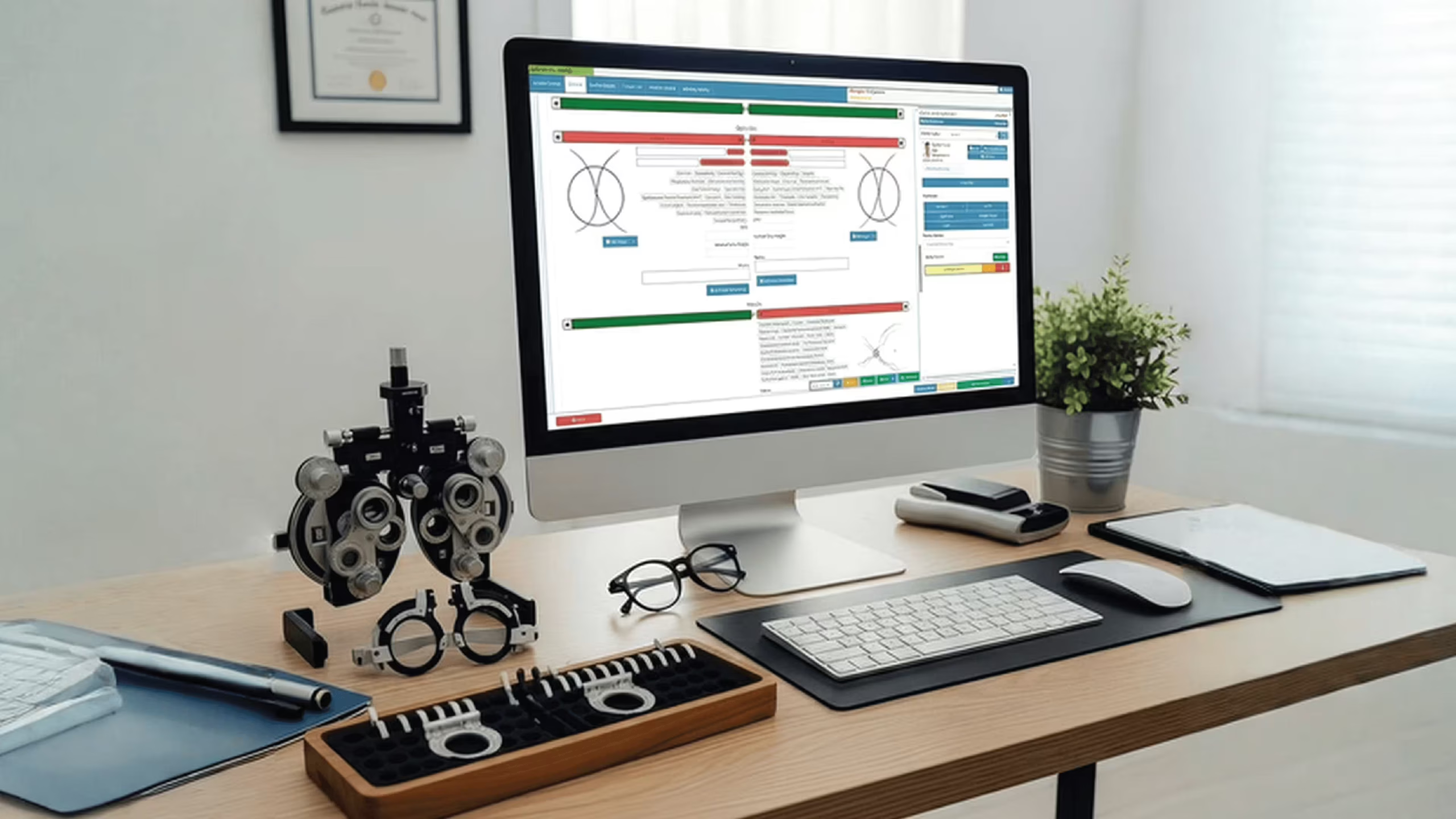
The clinical and administrative pressure on a South African ophthalmology practice in 2026 looks different to what it did even three years ago. Medical aid scheme audits are sharper, POPIA enforcement has visibly stepped up, and patient expectations around digital access have caught up with the rest of the world. In that environment, the ophthalmology software a practice runs on is no longer a back-office decision. It sits at the centre of clinical workflow, billing accuracy, and regulatory posture.
This refresher looks at what ophthalmologists in South Africa should reasonably expect from a modern ophthalmology software platform, and where general-purpose practice management systems tend to fall short of what the subspecialty actually needs.
Why Generic Practice Management Is Not Enough for Ophthalmology
Ophthalmology generates more imaging per patient encounter than almost any other outpatient specialty. OCT scans, fundus photography, visual fields, biometry for IOL calculations, corneal topography. A generic EMR built for general practice does not anticipate this volume, and it does not anticipate the structured fields ophthalmologists need to chart efficiently.
The American Academy of Ophthalmology has documented this issue for over a decade, pointing out in its practice resources that image management and device interoperability remain weak spots in non-specialist EHR systems. Ophthalmologists working in such environments often end up with imaging stored in one place, clinical notes in another, and billing in a third. The result is duplicated data capture, longer consult times, and a higher rate of coding errors at the point of claim submission.
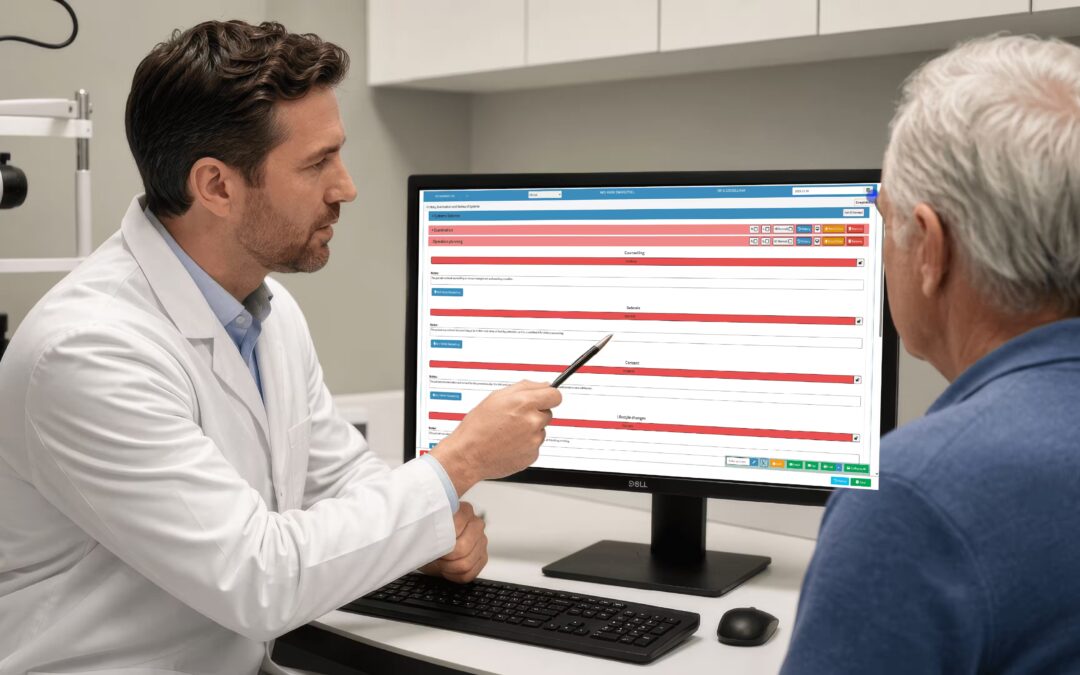
A purpose-built ophthalmology platform changes this by treating the imaging device, the clinical chart, and the billing engine as parts of one workflow rather than three.
The Documentation Standard South African Practices Are Held To
Record-keeping in South Africa is governed by Booklet 9 of the HPCSA ethical guidelines, which sets out what constitutes an adequate clinical record, how long records must be retained, and how electronic records must be safeguarded. Records must be contemporaneous, complete, and legible. They must include identifying particulars, clinical findings, the proposed management plan, prescribed medication and dosage, referrals, test results, and written proof of informed consent where applicable.
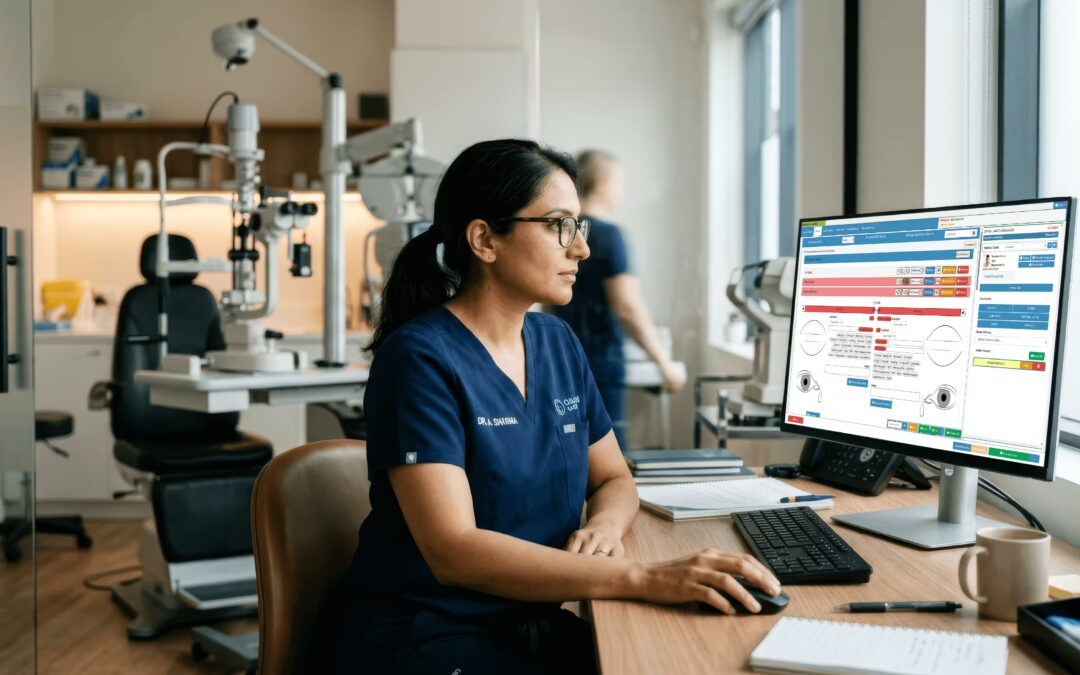
For an ophthalmology practice that may see thirty to fifty patients in a day, meeting that standard manually is unrealistic. A specialist ophthalmology software platform supports compliance by structuring the consult template around the elements HPCSA actually requires, by timestamping every entry, by maintaining an audit trail of who edited what and when, and by storing data in a way that survives a regulatory inspection.
GoodX is built specifically around these requirements. The clinical templates align with subspecialty workflows (cataract, glaucoma, medical retina, oculoplastics), the audit trail is automatic, and the system is operated under an ISO 27001 certified information security management framework.
POPIA and the Information Security Question
POPIA classifies health information as special personal information under section 26, which means processing is prohibited unless a narrow exception applies. The Information Regulator gazetted new health information regulations in March 2026, and while the final version is less prescriptive than the September 2025 draft, the underlying obligations on confidentiality, security safeguards, and cross-border transfer have been reinforced.
South African legal commentary on the matter, including Webber Wentzel’s analysis of the POPIA health data framework, makes the practical point clearly. Practices need to know where their patient data is stored, who has access to it, and whether the platform they use can demonstrate adequate security controls if the Regulator comes asking.
This is where ISO 27001 certification stops being a marketing line and starts mattering. It is an independently audited standard for information security management, and it is the most credible signal a software vendor can provide that the controls behind the system have been tested by someone other than the vendor itself.
Clinical Efficiency in the Practice
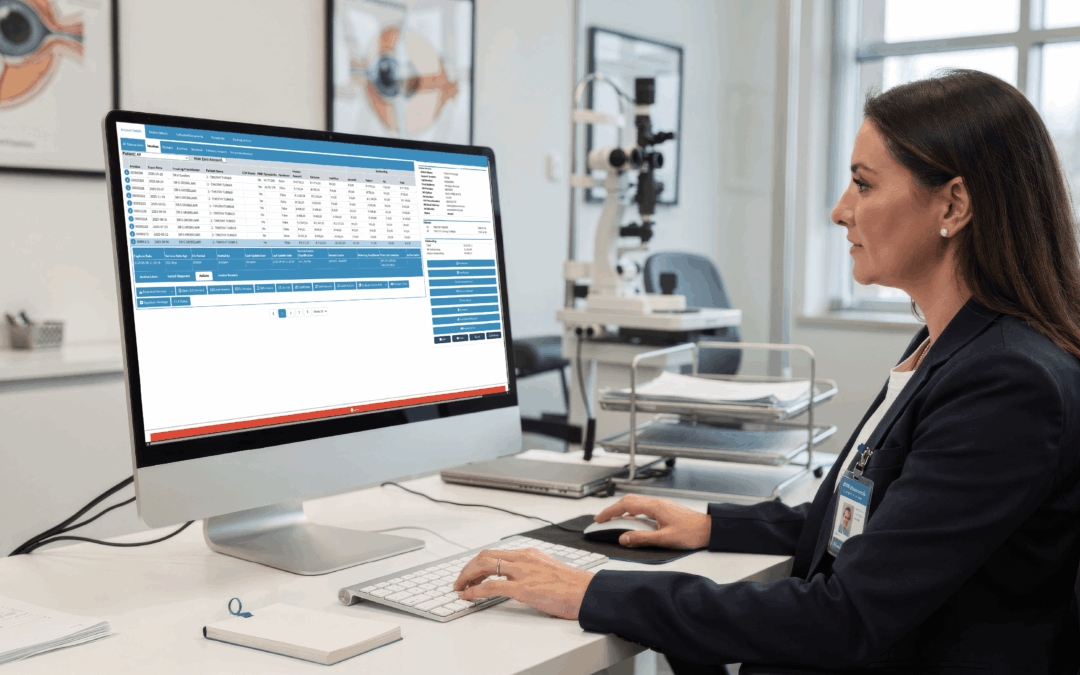
Beyond compliance, the day-to-day question for most ophthalmologists is simpler. Does the software let me see more patients with less administrative drag, and does it reduce the rate at which claims come back rejected.
Modern ophthalmology software addresses this in several ways. Structured templates reduce the time spent on free-text documentation. ICD-10 coding suggestions integrated into the chart reduce miscoding at submission. Synchronised scheduling and charting means that the front desk, the technician room, and the consulting room are all working off the same record. For practices running surgical lists, theatre scheduling, IOL inventory tracking, and post-operative follow-up sit within the same platform rather than across separate spreadsheets.
The efficiency gains are not theoretical. In a properly configured ophthalmology practice, the difference between a generic system and a specialist platform tends to show up most clearly in consult duration and in first-pass claim acceptance rates.
Patient-Side Functionality
Patient expectations have shifted. Online appointment booking, digital pre-consultation forms, and access to records or accounts through a patient portal are no longer differentiators. They are the baseline. A platform that supports this without exposing the practice to data leakage risk is what practices should be looking for.
Secure messaging, online bookings, and mobile-friendly access need to operate within the same POPIA-compliant boundary as the clinical record itself. Bolting on a third-party booking widget that does not integrate with the practice management system tends to create more problems than it solves.
What to Look For in a Specialist Platform
For ophthalmologists evaluating their options in 2026, the practical checklist is reasonably short. The platform should be built for ophthalmology rather than adapted from a general medical template. It should integrate with the imaging devices already in the practice. It should be hosted and operated under a recognised information security standard, with ISO 27001 being the strongest signal available. It should support South African billing conventions, including ICD-10 and BHF practice number protocols, rather than expecting the practice to work around an imported coding scheme. And it should be backed by a vendor that understands the regulatory environment the practice is operating in.
These are not luxury features. They are the conditions under which a modern ophthalmology practice in South Africa can operate sustainably.
Conclusion
Ophthalmology software in 2026 is doing more than digitising what used to be on paper. It is the layer that holds together clinical accuracy, regulatory compliance, financial performance, and patient experience. For an ophthalmologist, the question is not whether to adopt specialist software, but which platform is built for the subspecialty and the jurisdiction.
GoodX is purpose-built for ophthalmology, ISO 27001 certified, and developed within the South African regulatory environment.