Artificial intelligence is no longer on the horizon for ophthalmology. It is already inside the exam room, in the diagnostic equipment, and increasingly in the practice management systems that run eye care practices from scheduling through billing. For ophthalmologists who want to understand where the field is heading and what it means for their practice today, this guide offers a grounded look at AI in ophthalmology and how to position your practice to benefit from it.
We will cover the current clinical applications, the broader shift in ophthalmology technology, and how GoodX is built to support eye care practices in this rapidly evolving environment.
How AI is Reshaping Ophthalmology in 2026
The pace of AI adoption in ophthalmology has accelerated significantly over the past few years, driven by a combination of improved imaging technology, larger training datasets, and regulatory clearances from the FDA for specific AI-based diagnostic tools. In 2026, AI in ophthalmology is a practical clinical reality in several areas.
Diabetic Retinopathy Screening
One of the most established AI applications in ophthalmology is automated diabetic retinopathy screening. AI systems trained on millions of retinal images can now detect signs of diabetic retinopathy in fundus photographs with sensitivity and specificity that is comparable to, and in some screening contexts exceeds, human graders. The American Academy of Ophthalmology has acknowledged FDA-cleared AI screening tools as a significant development in expanding access to diabetic eye care, particularly for underserved populations who may not have routine access to an ophthalmologist.
Glaucoma Detection and Monitoring
AI algorithms analyzing optical coherence tomography (OCT) and visual field data are improving early glaucoma detection and tracking disease progression with greater precision than traditional manual analysis. Subtle structural changes in the optic nerve head that might be missed in a standard review are flagged by AI for follow-up. This is particularly valuable for managing patients with suspected glaucoma or borderline findings who require more nuanced monitoring.
Age-Related Macular Degeneration
AI in ophthalmology has shown strong performance in detecting and classifying age-related macular degeneration (AMD) from OCT imaging. Research published in the Lancet demonstrated that deep learning systems can identify over 50 sight-threatening conditions from OCT scans and make referral recommendations with expert-level accuracy. For busy practices managing high volumes of AMD patients, AI-assisted image review can prioritize urgent cases and improve workflow efficiency.
AI in Surgical Planning and Intraocular Lens Calculation
Beyond diagnostics, AI is being applied to cataract surgical planning, specifically in intraocular lens (IOL) power calculation. AI-based biometry formulas, trained on large patient outcome datasets, are producing better refractive outcomes than traditional formulas, particularly for eyes with unusual axial lengths or post-refractive surgery anatomy. This is one of the clearest examples of AI improving patient outcomes in a way that practicing ophthalmologists can observe directly.
The Limits of AI in Ophthalmology
It is worth being clear about what AI in ophthalmology does not do. It does not replace the physician-patient relationship, the clinical judgment required for complex cases, or the surgical skill that defines outcomes in cataract and refractive surgery. AI tools require validation, oversight, and the interpretive capacity of a trained ophthalmologist to be clinically useful. The technology is a force multiplier, not a substitute.
GoodX in Ophthalmology
Managing an ophthalmology practice involves a level of clinical and administrative complexity that generic practice management software often handles poorly. Specialty-specific needs, from ophthalmic examination templates and procedure-specific billing codes to integration with diagnostic equipment, require a platform that understands how eye care practices actually work.
Built for Eye Care Workflows
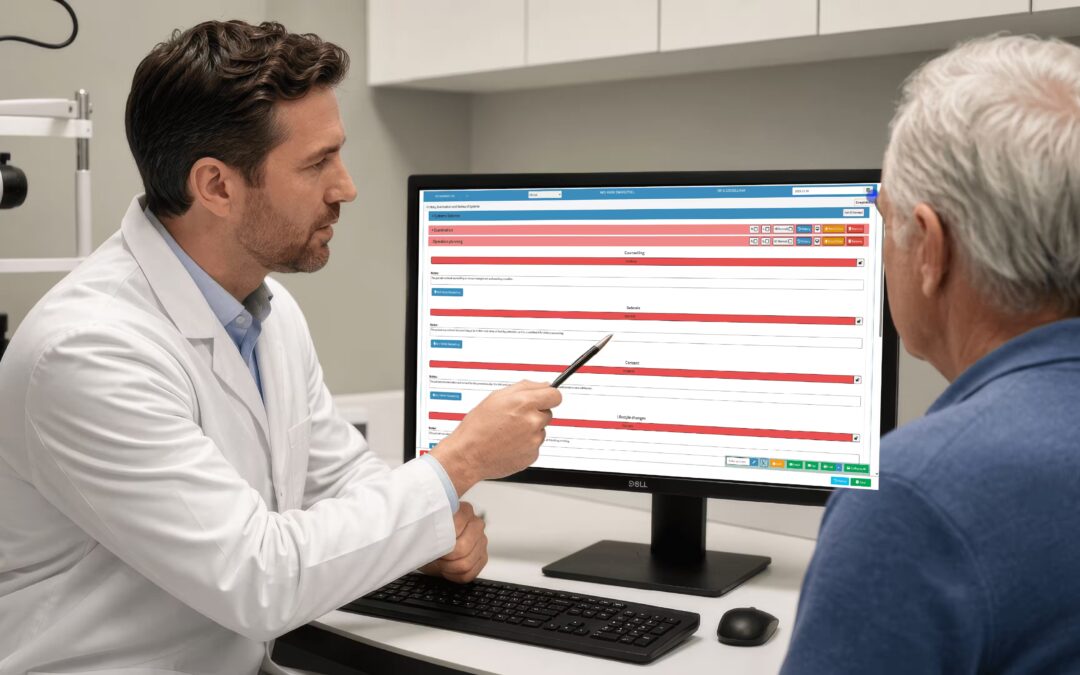
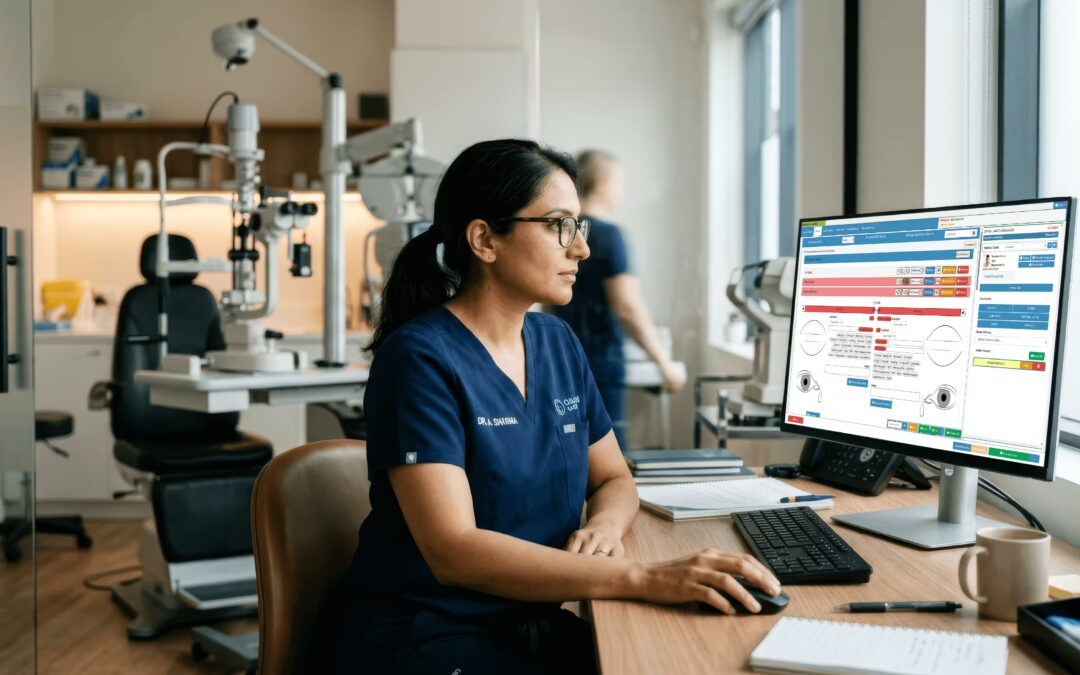
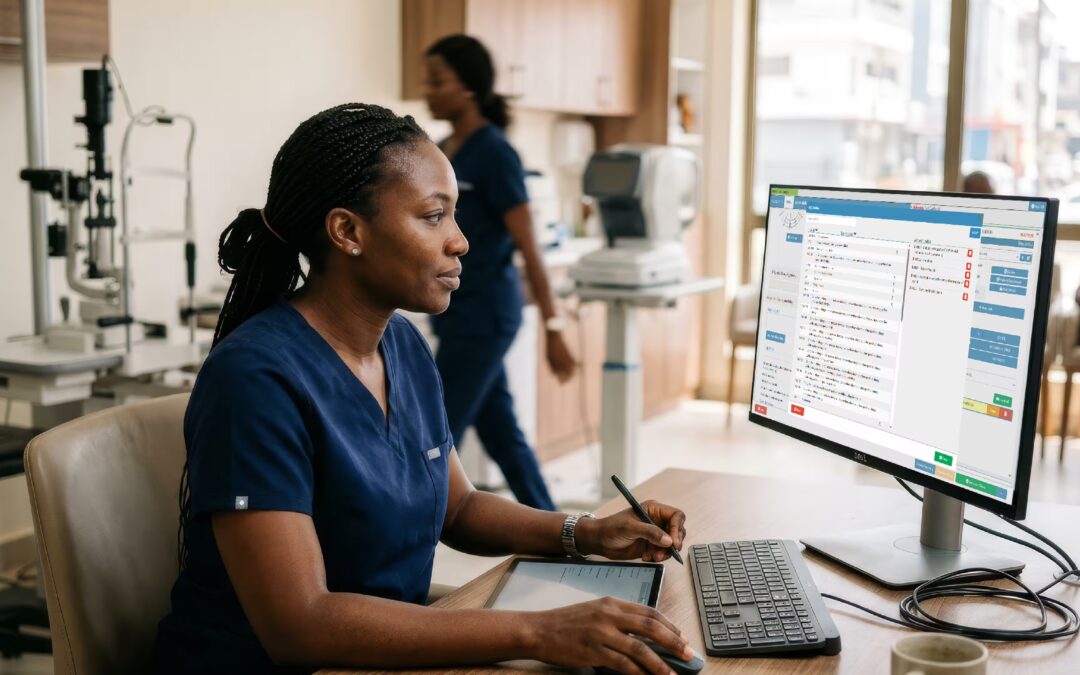
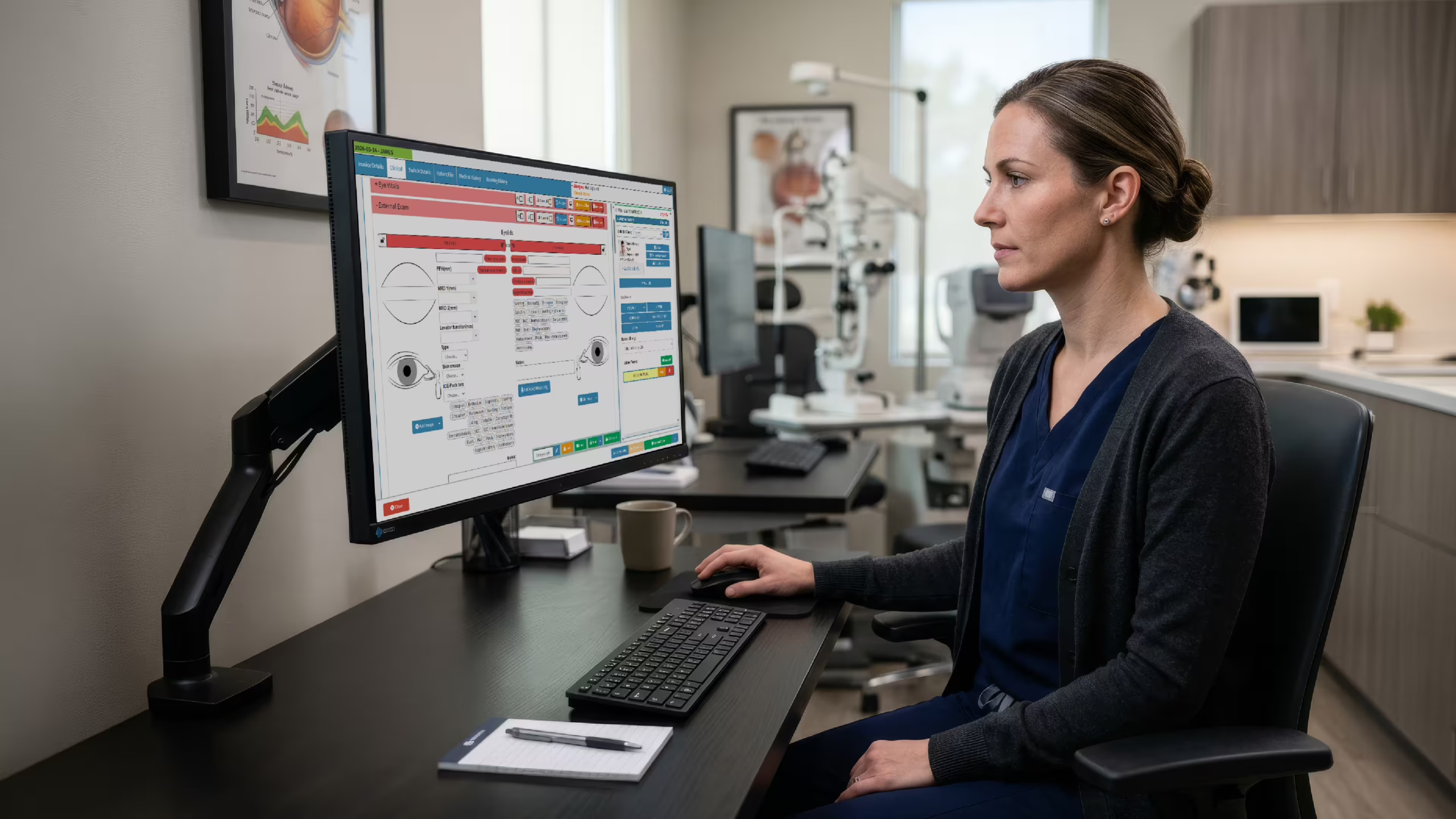
GoodX Eye Care software is designed specifically for ophthalmology practices, with clinical documentation templates that match the structure of a real ophthalmic examination. Visual acuity, IOP readings, refraction data, slit lamp findings, and posterior segment examination findings all have dedicated fields rather than being forced into a generic clinical note format. This matters because structured data is what enables accurate coding and what makes a patient record clinically useful over time. You can learn more at the GoodX Ophthalmology practice page.
Specialty Billing and Coding Support
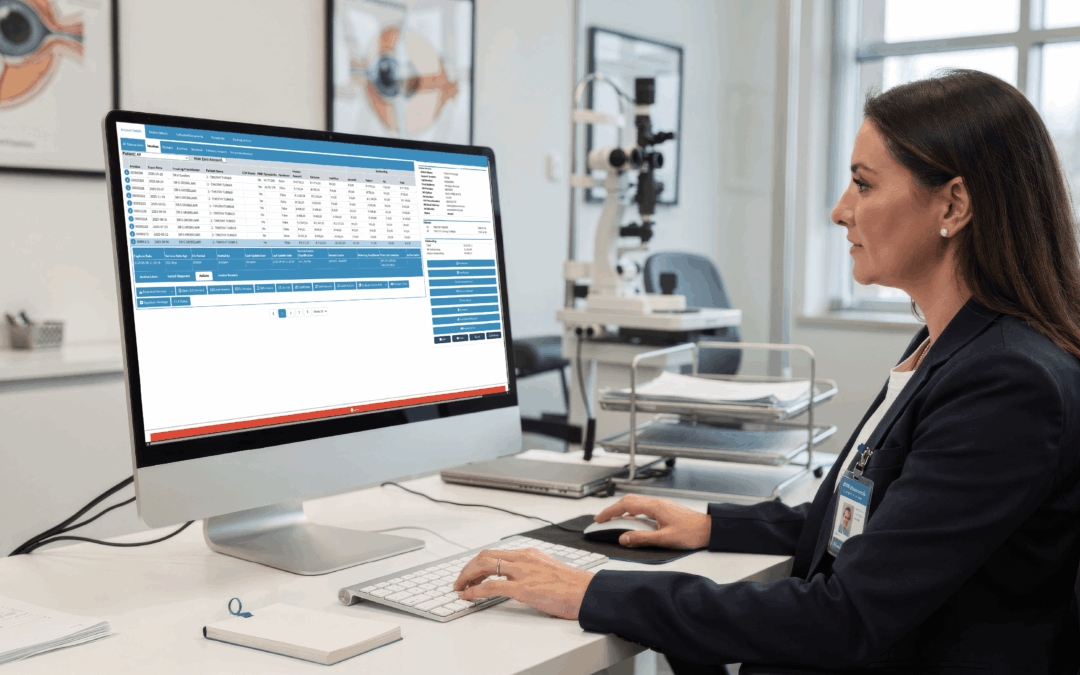
Ophthalmology billing is complex. CPT codes for procedures like phacoemulsification, YAG capsulotomy, intravitreal injections, and fluorescein angiography each carry specific documentation and coding requirements. GoodX integrates ICD-10-CM and CPT code search directly into the clinical workflow, so the codes captured during the encounter match the documentation and the claim is built accurately without a separate manual coding step.
Integration with Diagnostic Equipment
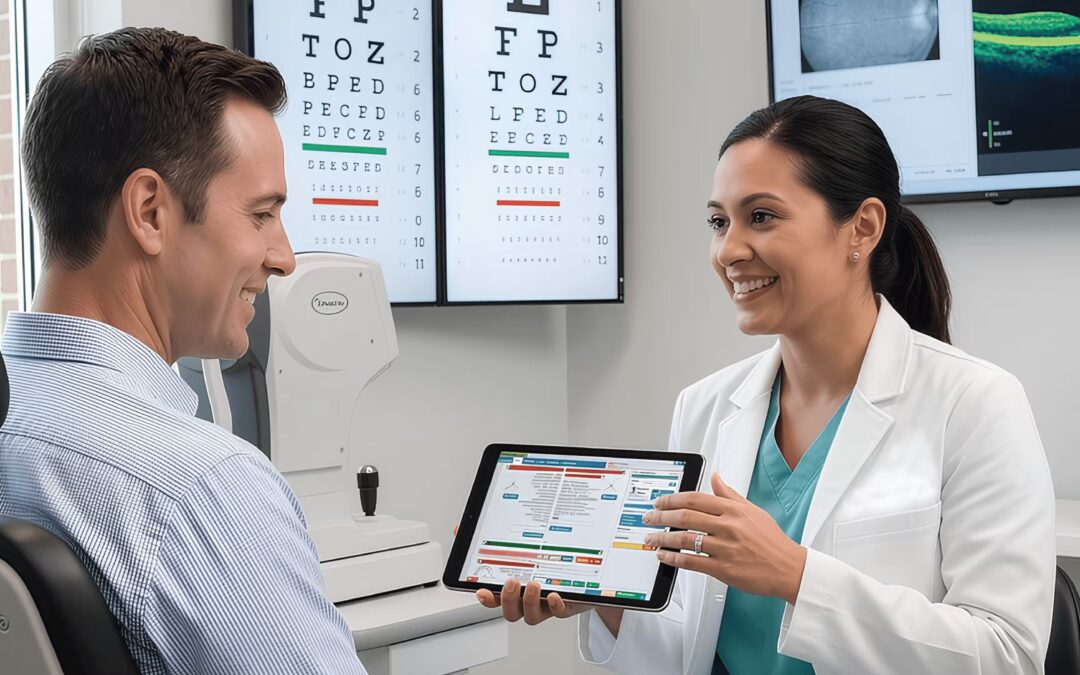
Modern ophthalmology practices rely on a range of diagnostic devices, including OCT systems, fundus cameras, corneal topographers, and automated perimeters. GoodX is built with integration in mind, enabling diagnostic data to flow into the patient record without requiring manual transcription. This reduces documentation time and ensures that imaging results are part of the coded clinical record rather than stored separately.
Ophthalmology Technology
AI is the most discussed technology trend in ophthalmology, but it sits within a broader ecosystem of innovation that is changing how practices are equipped and how they operate. Understanding the full technology landscape helps practices make better decisions about where to invest.
Diagnostic Imaging Advances
OCT and OCT angiography technology continues to evolve, with newer systems providing higher resolution, faster acquisition times, and wider fields of view. These advances generate more data per patient, which is both an opportunity and a challenge. AI-assisted interpretation is increasingly necessary to make sense of the volume of imaging data that modern equipment produces.
Teleophthalmology
Teleophthalmology, the delivery of eye care services through digital communication platforms, has moved from an emergency-driven adaptation during the COVID-19 pandemic to an established component of many practice models. Remote diabetic retinopathy screening programs, asynchronous image review, and virtual follow-up visits are all examples of teleophthalmology that are now standard practice in many settings. The World Health Organization recognises teleophthalmology as a key strategy for addressing the global burden of avoidable blindness, particularly in underserved populations.
Practice Management Technology
Alongside clinical technology, the administrative side of ophthalmology is also being transformed. Automated appointment scheduling, digital patient intake, integrated insurance verification, and AI-assisted billing are all becoming standard expectations rather than differentiators. For practices that are still running administrative functions manually or with disconnected systems, the technology gap is increasingly visible in both efficiency and patient experience.
GoodX Eye Care addresses this directly by combining specialty-specific clinical documentation with a full suite of practice management functions in a single platform. The result is a practice that can keep pace with both the clinical and administrative dimensions of modern ophthalmology.
Frequently Asked Questions
How is AI being used in ophthalmology in 2026?
AI in ophthalmology in 2026 is most established in diabetic retinopathy screening, glaucoma detection from OCT and visual field data, AMD classification from retinal imaging, and IOL power calculation for cataract surgery. FDA-cleared AI diagnostic tools are in active clinical use, and AI-assisted practice management functions are becoming standard in modern eye care platforms.
Will AI replace ophthalmologists?
No. AI is augmenting clinical capabilities in ophthalmology, not replacing the ophthalmologist’s role. Surgical skill, physician-patient communication, complex diagnostic judgment, and the management of multi-system conditions all require the training and contextual expertise that only a physician can provide. AI tools extend what ophthalmologists can achieve, particularly in screening and image analysis, without replacing clinical leadership.
What ophthalmology-specific features should I look for in practice management software?
Look for structured ophthalmic examination templates that capture visual acuity, IOP, refraction, and slit lamp findings in dedicated fields. Specialty-specific CPT and ICD-10-CM coding support for procedures like intravitreal injections and phacoemulsification is essential. Integration with OCT and fundus imaging systems, automated insurance verification, and a specialty billing workflow are also important features for a modern ophthalmology practice.
How does GoodX support ophthalmology practices specifically?
GoodX Eye Care is built for ophthalmology, not adapted from a general medical platform. It provides specialty-specific clinical documentation templates, integrated ophthalmology CPT and ICD-10-CM coding, diagnostic equipment integration, and a full practice management system covering scheduling, billing, and claims. This means your clinical and administrative workflows operate from the same platform without data handoffs between systems.
What is teleophthalmology and is it relevant for my practice?
Teleophthalmology refers to the delivery of eye care services through digital communication and imaging technology. It includes remote retinal screening, asynchronous image review by specialists, and virtual follow-up consultations. It is relevant for practices that want to extend their reach, improve access for patients with mobility limitations, or participate in population health programs such as diabetic eye screening.
Ready to Bring AI-Era Practice Management to Your Eye Care Practice?
AI in ophthalmology is changing the clinical landscape, and the right practice management technology should be keeping pace. GoodX Eye Care software is built for modern ophthalmology practices that need specialty-specific clinical tools, accurate billing, and a platform that grows with the technology. Book a free demo to see how GoodX can work for your practice.