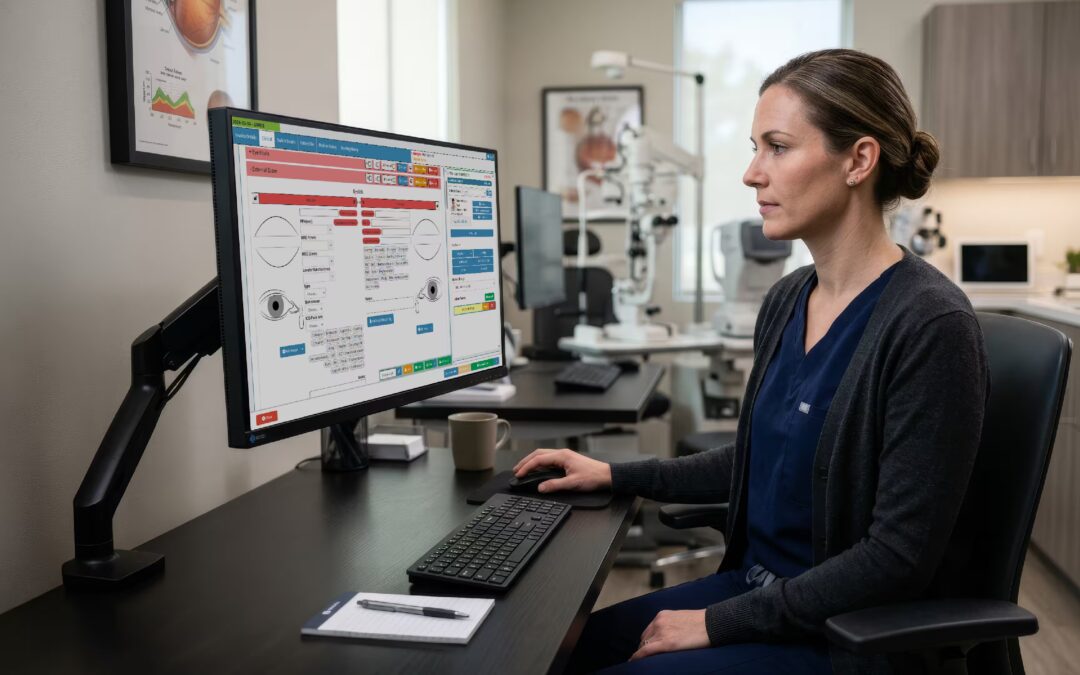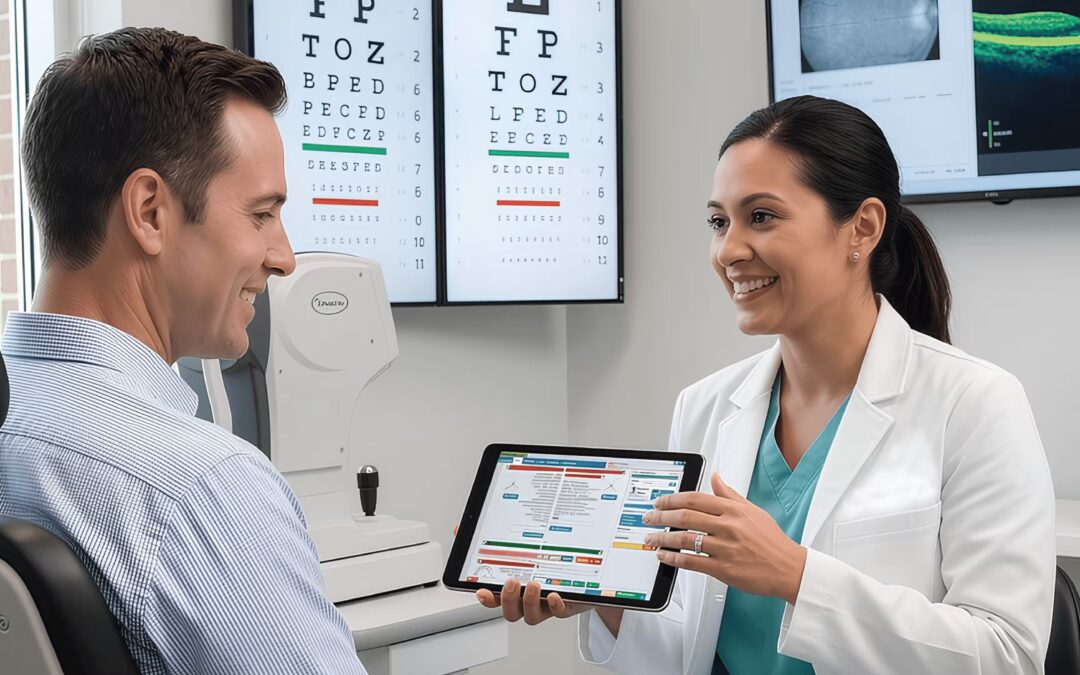
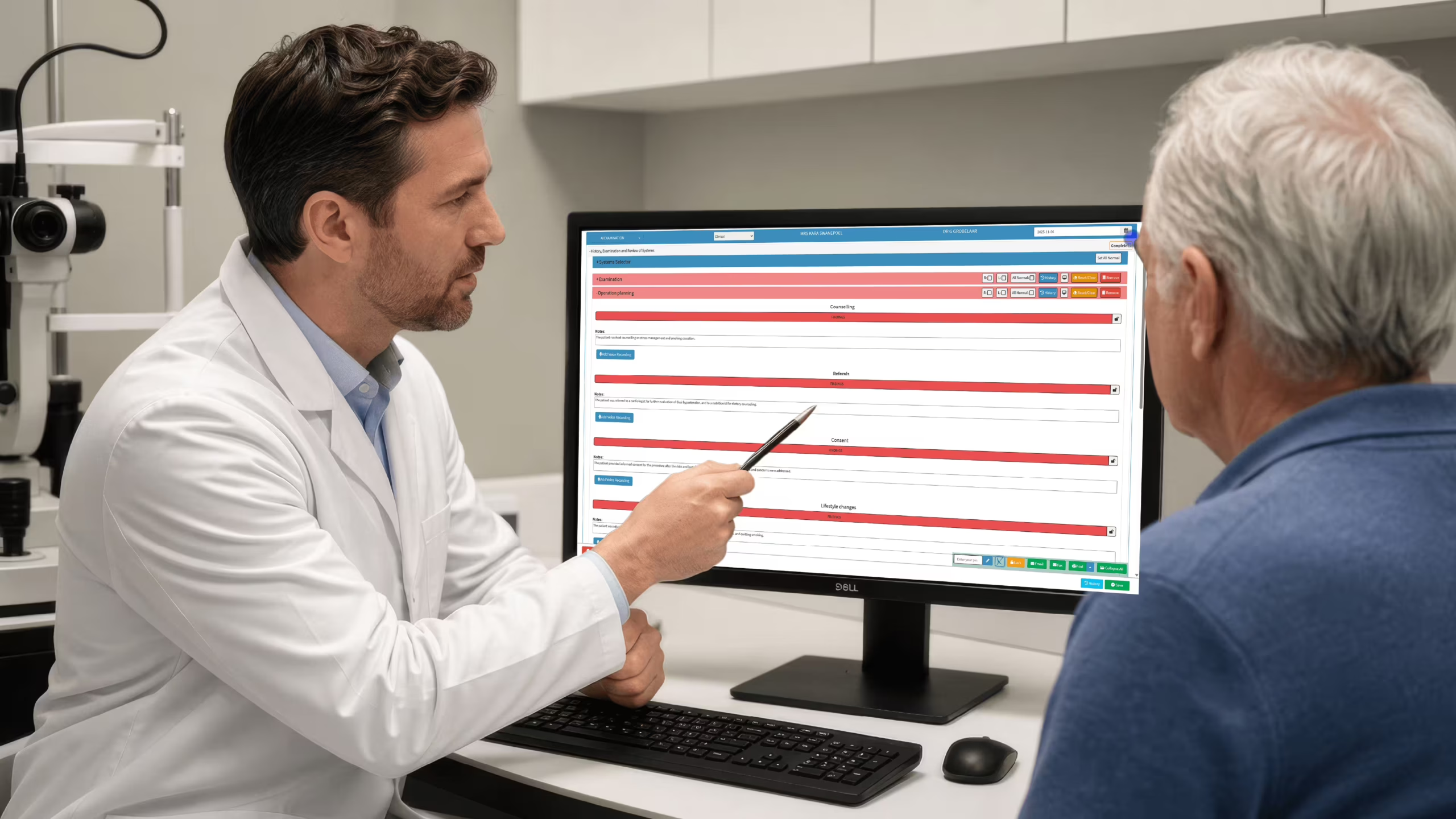
Ophthalmology has been at the front of the AI in healthcare story from the start, and for a simple reason: the eye produces images, and images are exactly what these models read best. Diabetic retinopathy screening was among the first places an algorithm earned regulatory clearance to support real clinical decisions.
That head start cuts both ways. More promise, and more lessons already learned the hard way.
Here is a grounded look for eye practices: the genuine pros and cons, a straight answer on which country leads in AI, and the disadvantages worth weighing before a tool goes anywhere near a patient.
AI in Healthcare Pros and Cons
The upside in ophthalmology is unusually tangible. AI can screen retinal images at scale, flagging signs of diabetic retinopathy, glaucoma, or macular degeneration faster than a clinic could manually, which matters when screening volumes keep climbing.
The cons are equally specific. A model can miss an atypical presentation or flag a false positive that sends a worried patient for tests they did not need. Practitioners sometimes ask which medical jobs will be replaced by AI, and in ophthalmology the realistic answer is that screening throughput changes while the specialist’s diagnostic and surgical role does not.
The professional consensus is clear on where responsibility sits. The American Academy of Ophthalmology stresses that AI tools support, rather than supplant, the ophthalmologist’s judgment, and that a clinician reviews and owns the final read.
Which Country Is No. 1 in AI?
The honest answer depends on the yardstick. By research, investment, and the concentration of leading firms, the United States leads, with China close behind and ahead in certain applied areas, including some medical imaging work.
For ophthalmology specifically, leadership is less about geography and more about which regulators have cleared which tools, and on what evidence. A screening algorithm validated on one population may need fresh validation before it is safe on another.
For an eye practice, the practical question is narrow and local: is this tool cleared, validated on patients like mine, and supported. Research published in The Lancet keeps reinforcing that real world clinical performance, not national ranking, decides whether an ophthalmic AI tool actually helps.
Disadvantages of AI in Healthcare
The disadvantages take a particular shape in eye care. Image quality is the first. A poorly captured retinal photograph produces an unreliable result, so the tool is only as good as the camera and the technician behind it.
Then the familiar concerns. Bias, when a model was trained largely on one population. The black box problem, when a tool grades an image without explaining why. Over reliance, when a clinic starts trusting the screen over a second look. And patient data security, which carries real legal weight wherever you practise.
Sight is not a forgiving area to get wrong. The World Health Organization has documented the scale of preventable vision loss worldwide, which is exactly why AI screening is promising and exactly why it must be deployed with a specialist firmly in the loop.
Building AI Screening Into Your Clinic
For an eye practice, the practical question is not whether AI screening works in studies. It clearly does on narrow tasks. The question is how it fits a real clinic without creating new problems.
Image quality is where it lives or dies. A screening model fed blurry or poorly centred retinal photographs will produce results you cannot trust, so the camera, the lighting, and the technician’s training matter as much as the algorithm. Get the capture right and the tool is worth having. Get it wrong and you are reviewing noise.
Build it in as a triage aid, not a verdict. Let the model sort the obvious normals from the cases that need a closer specialist look, and keep an ophthalmologist signing off every read that matters. Store the images and results in the same system as the rest of the patient record, so a flagged scan today connects cleanly to the follow up in three months.
Beyond Screening: Other Uses in Eye Care
Retinal screening gets the headlines, but it is not the only place AI is finding a role in ophthalmology. The eye generates a lot of data, and data is what these tools work on.
Models are being explored to track disease progression over time, comparing today’s images against a patient’s own history to spot subtle change a single visit might miss. Others support surgical planning, or help triage referrals so the urgent cases reach a specialist sooner. On the administrative side, the same automation that helps any practice applies here too, from scheduling to coding.
The thread running through all of it is the same. These are aids to a specialist, not replacements for one. The ophthalmologist’s judgment, examination, and surgical skill remain the core, with AI handling the volume and the pattern spotting around the edges.
Keep the Specialist in Charge
For all its promise in eye care, AI works best as a second set of eyes, never the final one. The ophthalmologist stays the decision maker.
The sensible model is simple. The model flags and sorts, the specialist reviews and decides. That keeps the speed of automation without surrendering the judgment that a difficult case demands. It also keeps responsibility where it belongs, with the clinician who can examine the patient, weigh the history, and act on more than a single image. Used that way, AI extends a specialist’s reach rather than competing with it.
Frequently Asked Questions
What are the pros and cons of AI in ophthalmology?
The pros are fast, scalable retinal screening for conditions like diabetic retinopathy and glaucoma. The cons include missed atypical cases, false positives, and dependence on image quality. Used with a specialist reviewing every read, the benefits hold while the risks stay controlled.
Which country is number one in AI?
By research, investment, and leading firms, the United States ranks first, with China close behind and ahead in some applied imaging work. For ophthalmology, what matters more is whether a specific tool is cleared and validated on patients like yours.
What are the disadvantages of AI in eye care?
Dependence on image quality, bias when models are trained on narrow populations, the black box problem where grading cannot be explained, over reliance by clinics, and patient data security duties. Sight is unforgiving, so a specialist must stay in the loop.
Will AI replace ophthalmologists?
No. AI changes screening throughput by handling high volumes of images, but it cannot replace diagnostic judgment, surgical skill, or the clinician who owns the final read. The realistic future is ophthalmologists working with AI as a screening aid, not a substitute.
Book Your Free GoodX Demo
AI screening works best when imaging, records, scheduling, and billing live in one connected system. That is exactly what GoodX is built to provide for eye practices.
See how a connected practice system would fit your clinic.