
Ophthalmology billing is among the most code-intensive in all of outpatient medicine. Between the breadth of diagnostic codes covering the full spectrum of eye disease and the procedure codes for both minor and major surgical interventions, getting ICD-10 coding right in an eye care practice requires both a solid grasp of the classification system and the right software tools to apply it efficiently.
This guide is written specifically for ophthalmologists and eye care practice administrators. It covers what ICD-10 diagnosis codes are, how they are constructed, and what you need to understand about their structure to code ophthalmology encounters accurately and compliantly.
What are the ICD-10 Diagnosis Codes?
ICD-10 stands for the International Classification of Diseases, 10th Revision, published by the World Health Organization as the global standard for documenting diseases, health conditions, and clinical encounters. In the United States, the clinical modification of this system, ICD-10-CM, is the version used for outpatient and ambulatory care diagnosis coding and is maintained by the Centers for Medicare and Medicaid Services (CMS) and the National Center for Health Statistics.
For eye care practices, the ICD-10-CM codes that matter most are concentrated in Chapter 7 (Diseases of the Eye and Adnexa), which spans codes H00 through H59. This chapter covers conditions from blepharitis and conjunctivitis to glaucoma, macular degeneration, diabetic retinal disease, and retinal detachments. Eye care practices also regularly use codes from other chapters, including endocrine codes for diabetic eye disease (Chapter 4, E-codes), injury codes for ocular trauma, and Z codes for preventive exams and screening encounters. The World Health Organization ICD portal provides access to the full international classification, while the CDC’s ICD-10-CM resources maintain the US-specific version.
Why Accurate ICD-10 Coding Matters for Ophthalmology
In ophthalmology, diagnostic specificity in ICD-10 coding directly affects medical necessity determinations for both procedures and diagnostic imaging. If a claim for OCT imaging is submitted with an unspecified retinal code when the documentation clearly supports a more specific code, the claim may be denied or downcoded. Similarly, intravitreal injection claims tied to wet AMD require the correct AMD code with the correct laterality and stage to be adjudicated accurately.
The American Academy of Ophthalmology provides specialty-specific coding guidance, including Ophthalmic Coding Coach publications and annual coding updates, that are essential reading for ophthalmology billing staff. Staying current with these resources, alongside the annual ICD-10-CM updates, is part of maintaining a compliant and financially healthy practice.
Anatomy of ICD-10 Codes
Every ICD-10-CM code follows a defined structure, and understanding that structure makes it much easier to navigate the classification system, verify codes, and catch errors before submission. Here is how ophthalmology-relevant codes are built.
Character 1: The Chapter Letter
The first character of every ICD-10-CM code is a letter indicating the broad disease chapter. For diseases of the eye and adnexa, that letter is H. Codes beginning with H00 through H59 cover the full range of ophthalmic conditions from eyelid disorders through retinal diseases. When you see a code beginning with H in an ophthalmology chart, you are in the right chapter. When coding diabetic retinal disease, you will also use E codes (endocrine chapter) as the principal diagnosis, with the H code as a manifestation code.
Characters 2 and 3: The Category
The second and third characters narrow the H-code to a specific disease category. H25 refers to age-related cataract. H26 covers other cataracts. H33 refers to retinal detachments and breaks. H35 is other retinal disorders. H40 is glaucoma. H43 covers the vitreous and H44 disorders of the globe. At this three-character level, you know the general condition but not the specific diagnosis, laterality, or stage.
Characters 4 Through 6: Specificity and Laterality
The fourth through sixth characters, following the decimal point, add essential clinical specificity. In ophthalmology, this is where laterality is captured: right eye, left eye, or bilateral. For example, H40.1110 means: primary open-angle glaucoma (H40.11), mild stage (first .1), right eye (second .1), not specified as low tension or high tension (0). Each additional digit adds a layer of specificity that payers use to adjudicate claims and that the practice record uses to track disease progression over time.
The Seventh Character: Encounter Type
Some ICD-10-CM codes in ophthalmology require a seventh character to indicate the encounter type. Injury codes, in particular, use seventh characters to indicate whether the encounter is initial (A), subsequent (D), or for a sequela (S). An ocular penetrating injury would require the correct seventh character based on where in the course of treatment the patient is being seen. Omitting a required seventh character results in an invalid code and a rejected claim.
Structure of an ICD-10-CM Code
Understanding how the structure of an ICD-10-CM code applies to real ophthalmology encounters helps coders select the right code and avoid the common errors that drive claim rejections in eye care practices.
Laterality: One of the Most Common Ophthalmology Coding Errors
Ophthalmology is one of the few specialties where laterality is embedded in the ICD-10-CM code itself for most conditions. Coding a retinal tear as a unilateral code when the documentation specifies the left eye, or using a bilateral code when only one eye was examined, results in a coding error that can trigger claim rejection or audit. Practice management software with integrated ophthalmology coding support, like GoodX Eye Care, helps prevent laterality errors by guiding coders to the appropriate code level for each documented condition.
Principal and Secondary Diagnosis Sequencing in Ophthalmology
For diabetic eye disease, ICD-10-CM coding guidelines require that the systemic condition, the diabetes code (E10 for type 1, E11 for type 2), be listed as the principal or first-listed diagnosis, with the ophthalmic manifestation code (such as E11.3411 for type 2 diabetes with severe nonproliferative diabetic retinopathy with macular edema, right eye) coded to its full specificity. Getting this sequencing wrong, either by coding the H code first or by using an unspecified diabetes code, is a common error in practices that see high volumes of diabetic patients.
Common Ophthalmology ICD-10-CM Codes Every Practice Should Know
While the full ophthalmology code set is extensive, certain codes appear frequently in most eye care practices. These include the primary open-angle glaucoma codes (H40.11 series with stage and laterality), the age-related macular degeneration codes (H35.31 for dry AMD, H35.32 for wet AMD, both requiring stage and laterality), the diabetic retinopathy codes under E10 and E11, the cataract codes (H25 series for age-related), and refractive error codes (H52 series) used for refraction and spectacle prescription encounters.
Annual Code Updates and Ophthalmology
ICD-10-CM codes are updated each year on October 1. Ophthalmology has been an active area for new and revised codes in recent years, particularly for conditions with evolving treatment protocols such as AMD subtypes and myopia management. CMS publishes the annual ICD-10-CM updates along with a summary of changes. Eye care practices must ensure their coding software and code libraries are updated before October 1 each year to avoid using deleted or invalid codes. GoodX Eye Care applies annual code set updates automatically, eliminating this administrative risk.
Frequently Asked Questions
What are the ICD-10 diagnosis codes used in ophthalmology?
Ophthalmology ICD-10-CM codes are primarily found in Chapter 7 (H00 through H59), covering all diseases of the eye and adnexa. Eye care practices also use Chapter 4 codes for diabetic eye disease, injury codes for ocular trauma, and Z codes for preventive exams and screening encounters. Accurate coding requires selecting codes to the highest level of specificity, including laterality and disease stage.
What is the anatomy of an ophthalmology ICD-10-CM code?
An ophthalmology ICD-10-CM code begins with the letter H (diseases of the eye and adnexa), followed by two digits for the category, a decimal point, and up to four characters specifying the condition, disease stage, and laterality (right eye, left eye, or bilateral). Some injury codes require a seventh character indicating initial, subsequent, or sequela encounter. Each element of the code must match the clinical documentation.
What is the structure of an ICD-10-CM code for eye diseases?
Eye disease codes in ICD-10-CM follow the standard CM structure: a letter indicating the chapter (H for ophthalmology), a two-digit category code, and up to four additional characters that specify the exact condition, stage, and laterality. For example, H35.3210 means: age-related macular degeneration (H35.32), dry type, right eye, stage unspecified. Correct specificity at every level is essential for claim acceptance.
How does laterality affect ICD-10 coding in ophthalmology?
In ophthalmology, most condition-specific ICD-10-CM codes include laterality as part of the code structure. Right eye, left eye, and bilateral codes are often distinct and non-interchangeable. Using the wrong laterality code, even for the correct diagnosis, is a coding error that results in claim rejection or audit risk. Integrated ophthalmology coding software that enforces laterality selection reduces this error type significantly.
How does GoodX Eye Care handle ICD-10 coding for ophthalmology practices?
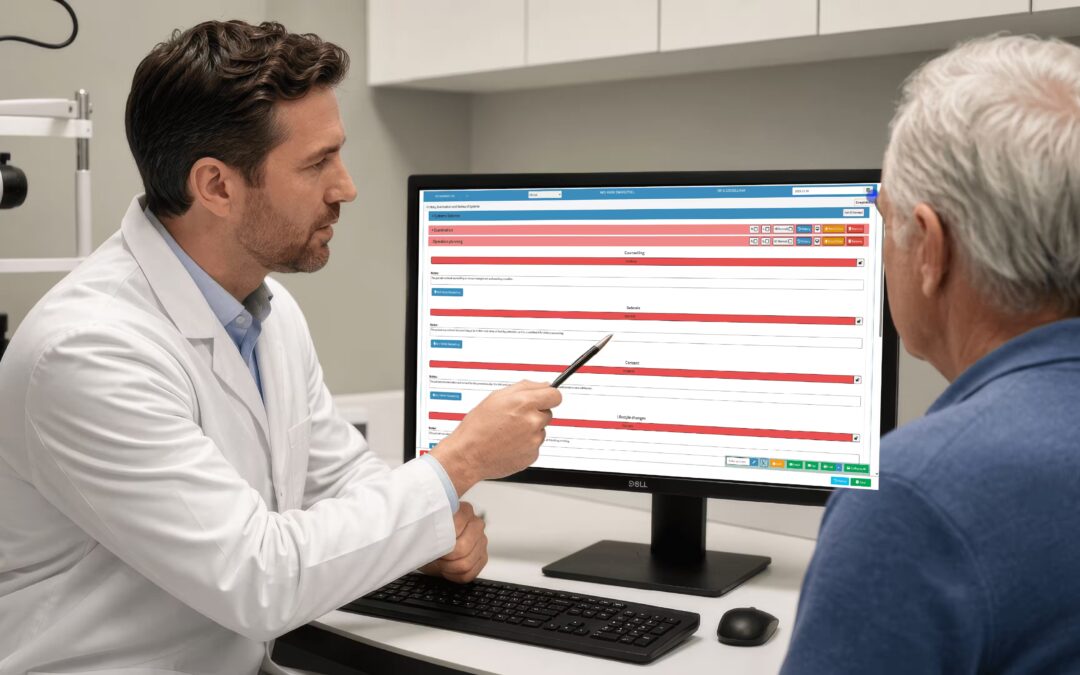
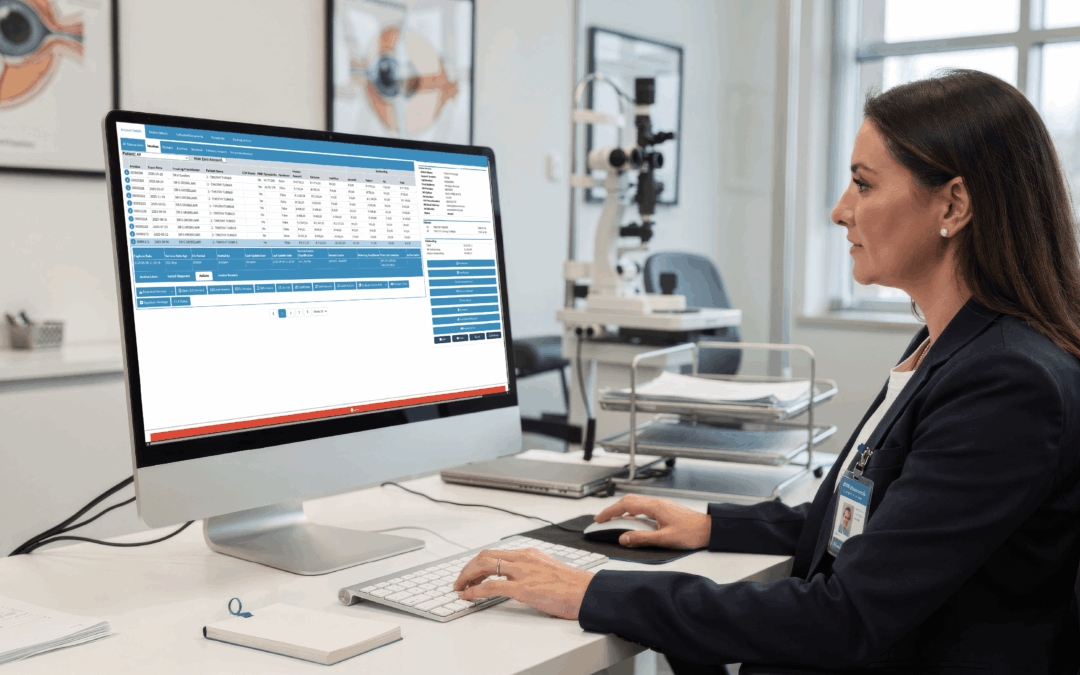
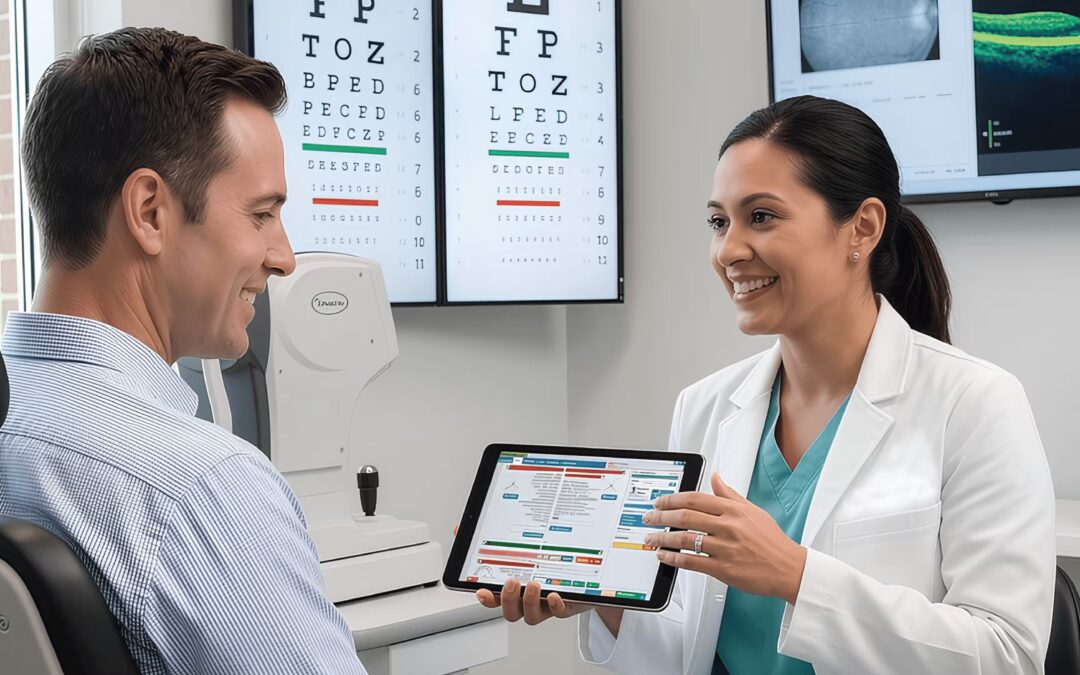
GoodX Eye Care integrates ophthalmology-specific ICD-10-CM code search directly into the patient encounter. Codes are searched and selected within the clinical record, with built-in guidance for laterality, disease stage, and sequencing requirements for diabetic retinal disease. Annual code set updates are applied automatically, and the coding module connects directly to the billing workflow so claims are built from accurately coded encounter data.
Code Smarter with GoodX Eye Care Software
Accurate ICD-10 coding in an ophthalmology practice is the foundation of a clean revenue cycle. GoodX Eye Care integrates specialty-specific coding directly into the clinical workflow, with automated code updates, laterality guidance, and direct linkage to billing, so your team codes confidently and your claims go out clean. Book a free demo to see how it works.