Good ophthalmology history taking is rarely lost in the consulting room. It’s lost at the front desk, on a crumpled paper form, or in the gap between the technician’s notes and the doctor’s first question. By the time the ophthalmologist walks in, a patient may have told their story twice, and the second telling is usually shorter and less accurate than the first.
A structured approach fixes most of this. You decide in advance what a complete eye history contains, who collects each part, and where it’s recorded. Then the clinician spends their limited minutes confirming, probing and examining, not starting from a blank page.
This article gives you a working checklist you can adapt to your own practice. It covers the presenting complaint, past ocular and medical history, and medication and allergy history, with notes on how to build each into a repeatable ophthalmic patient history template. Think of it as a skeleton you can flesh out for a glaucoma clinic, a cataract pathway or a busy general practice.
Efficiency matters here too. Practice-flow writers, including the American Academy of Ophthalmology’s EyeNet series on office flow, keep returning to the same point: track where time goes, and move the work that doesn’t need the doctor away from the doctor. History taking is a prime candidate.
Presenting Complaint in Eye Examination: Getting the Story Straight
The presenting complaint in eye examination sets the direction for everything that follows, so capture it in the patient’s own words first. “Everything’s gone blurry on the left since Tuesday” tells you more than a tidy code ever will. Record the quote, then structure it.
For each symptom, work through a consistent set of attributes. Which eye, or both? When did it start, and was onset sudden or gradual? Is it constant or intermittent? What makes it better or worse? Then ask about the associated features that separate the benign from the urgent: pain, redness, discharge, flashes, floaters, a curtain or shadow across the vision, double vision, headache, light sensitivity.
Some answers should change the schedule immediately. A sudden shower of floaters with flashes, a painful red eye with reduced vision, or sudden painless vision loss is not a patient to leave in the waiting area for forty minutes. Your front-desk and technician team needs a short, written list of red-flag phrases and a clear route to the clinician. Keeping some emergency capacity in the day, a point the EyeNet office-flow guidance also makes, means that route has somewhere to lead.
Don’t forget function. Ask what the problem stops the patient doing: reading, driving at night, recognising faces, managing stairs, working at a screen. A retired teacher who can’t read her own handwriting and a lorry driver worried about his licence have very different priorities, even with the same visual acuity. That functional detail also helps later when you’re deciding on treatment timing and documenting medical necessity.
One practical habit: have the technician record the complaint and the first-pass attributes before pre-testing, and let the doctor review and amend. It saves the repeated questioning that patients find so irritating.
Past Ocular and Medical History Checklist
A reliable past ocular and medical history checklist works best when it’s the same for every patient, with extra branches for specific conditions. Start with the eyes. Ask about previous eye disease, surgery, laser, injections, trauma, amblyopia or squint treatment, and any history of patching in childhood.
Ask about refractive history as well. Current spectacle or contact lens use, how old the prescription is, contact lens hygiene and wearing time, and any previous refractive surgery all matter. A patient with a previous corneal laser procedure will change how you read keratometry and plan cataract surgery years later.
Then move to systemic health. The conditions that most often reach the eye are diabetes (including duration and recent control), hypertension, cardiovascular disease, thyroid disease, autoimmune and inflammatory conditions, and neurological problems such as migraine or multiple sclerosis. Ask about pregnancy or breastfeeding where relevant. The National Eye Institute publishes patient-facing material on many of these links, which is handy to hand over when you’re explaining why you’re asking.
Family history of eye disease deserves its own deliberate question, because patients rarely volunteer it. Ask specifically about glaucoma, macular degeneration, retinal detachment, keratoconus, inherited retinal conditions, early cataract and childhood squint. “Does anyone in your family have eye problems?” gets a shrug. “Has anyone in your family been treated for glaucoma or lost vision from it?” gets a useful answer, and it can change how often you recall a patient.
Finally, capture social history that bears on the eye: smoking, alcohol, occupation, screen use, sun exposure, sport and driving. Occupational detail turns up surprising things, such as a welder with no eye protection or a farmer with repeated organic trauma.
Medication and Allergy History in Eye Care
Medication and allergy history in eye care is where incomplete records do real harm. Many drugs affect the eye, and many eye drops affect the rest of the body. Record every medicine, including topical eye drops, with dose and frequency, plus over-the-counter products, supplements and herbal remedies.
Pay attention to the ones that matter to ophthalmology. Examples include anticoagulants and antiplatelets before injections or surgery, alpha-blockers linked to floppy iris problems at cataract surgery, corticosteroids by any route, hydroxychloroquine and other drugs requiring retinal screening, and amiodarone. Ask about drops by name where possible, and ask patients to bring the bottles. A patient who says “I use something for pressure” may be using any of several different classes.
Adherence belongs in this section too. Ask how often doses are missed and whether the patient can actually instil the drops. A glaucoma patient who’s been “failing” treatment may simply be unable to squeeze the bottle, and that’s a very different problem from a medication that isn’t working.
Allergies need detail, not a single yes or no. Record the substance, the reaction and roughly when it happened. Intolerance to preservatives, reactions to dilating drops, sulpha or penicillin allergies, latex sensitivity and previous reactions to fluorescein or iodine-based preparations all change what you can safely do on the day. Make sure allergy status is visible on every screen the clinician and nurse will use, not buried in a tab.
Where you rely on a patient’s own account, say so in the record and reconcile it against any referral letter or pharmacy list. Standards for confirming identity, consent and confidentiality differ between countries and regulators, so check what applies in your own jurisdiction.
Building a Consistent Eye Consultation Record
A checklist only helps if it lands in one place. A single, structured eye consultation record means the receptionist’s pre-visit form, the technician’s pre-test notes and the doctor’s examination all feed the same chart. Free-text boxes have their place, but fields for laterality, onset, medication and allergy make records searchable and comparable between visits.
Review how the history is collected, then time it. Track how long the history takes at each stage, as the Ophthalmology Management piece on Lean principles suggests for the whole patient journey. If the doctor is spending five minutes on questions a trained technician could have asked, that’s your waste. If you sent the form ahead and half of patients still arrived with it blank, that’s a process problem you can fix with a reminder message.
A few small habits make a large difference:
- Send the history questionnaire with the appointment confirmation.
- Pre-populate returning patients’ records and ask only “what’s changed?”
- Standardise abbreviations and laterality so nobody reads OD as OS.
- Review allergies and medications at every visit, not only the first.
Where GoodX Eye Fits In
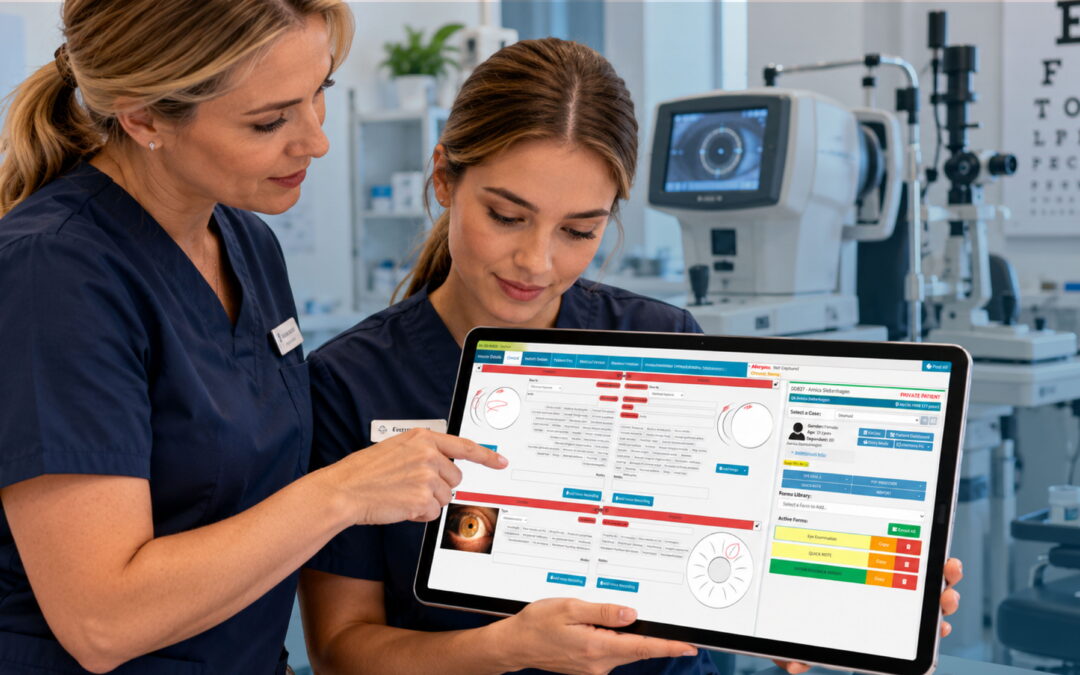
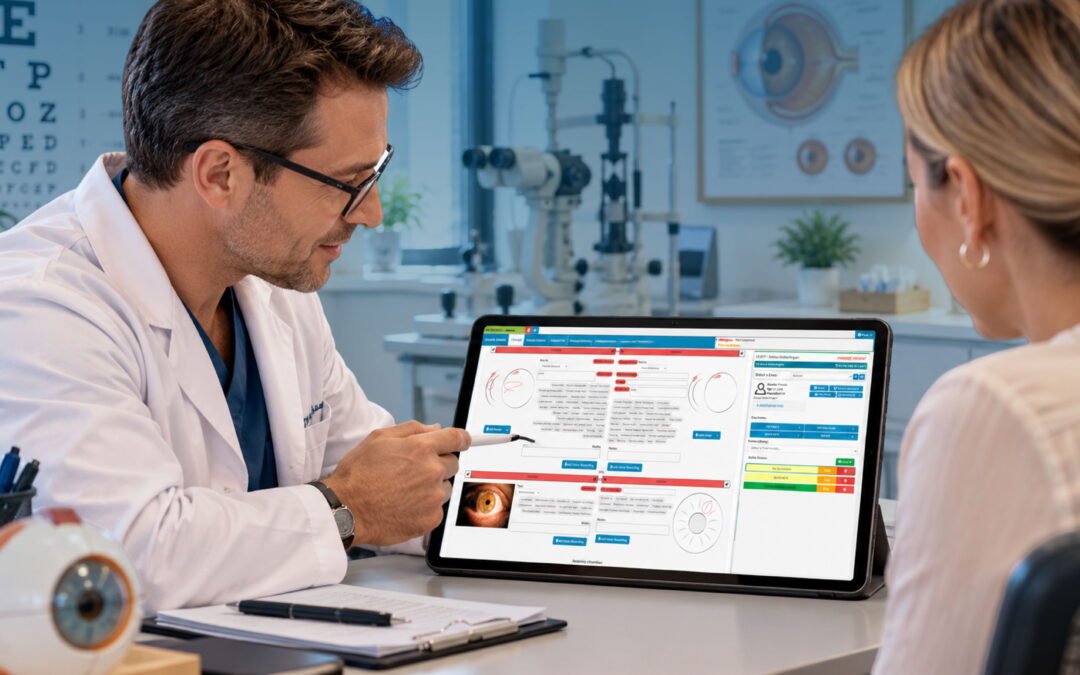
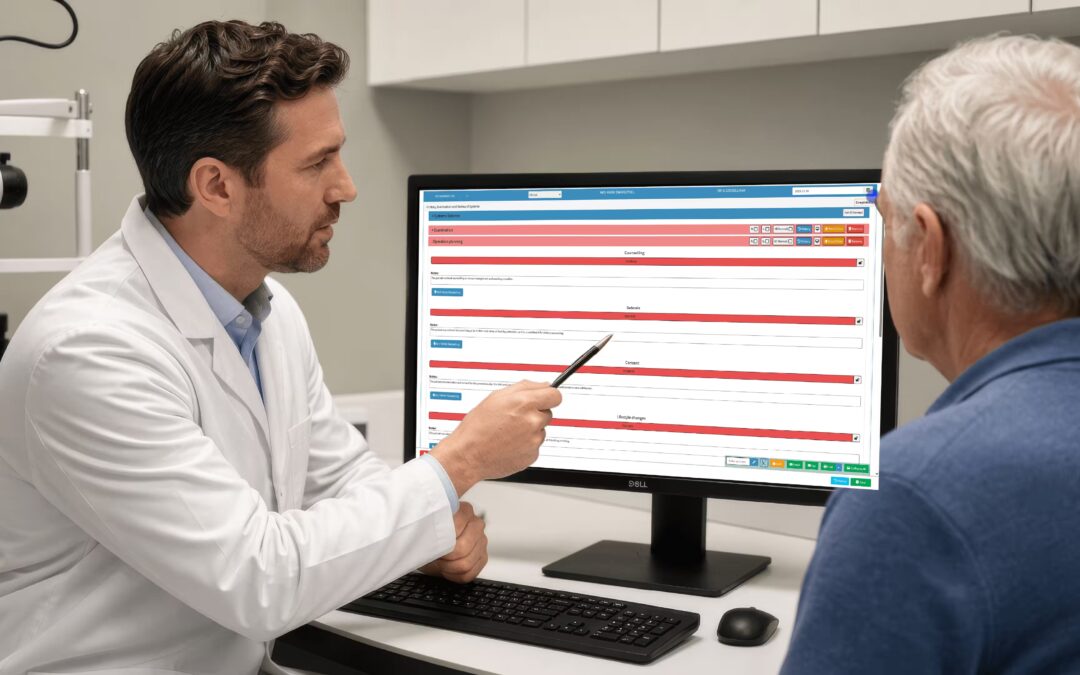
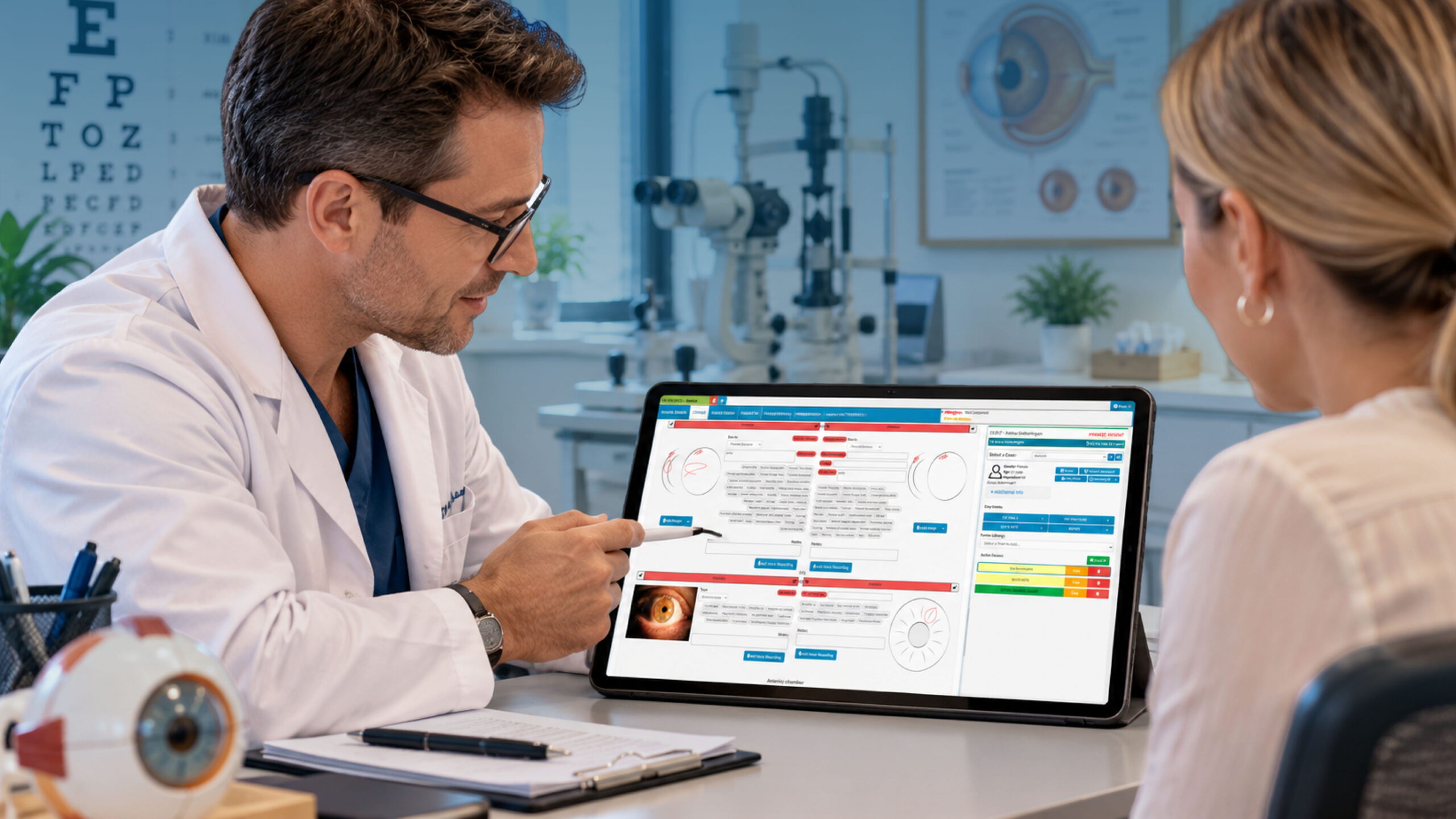
GoodX Eye is practice management software for ophthalmology and eye care practices, and it supports this kind of structured history in a few practical ways. Clinical records can be organised around consistent templates, so every patient’s presenting complaint, ocular and medical history, medication and allergy details are captured in the same place and the same order. That makes the record easier to read at the next visit and easier to audit.
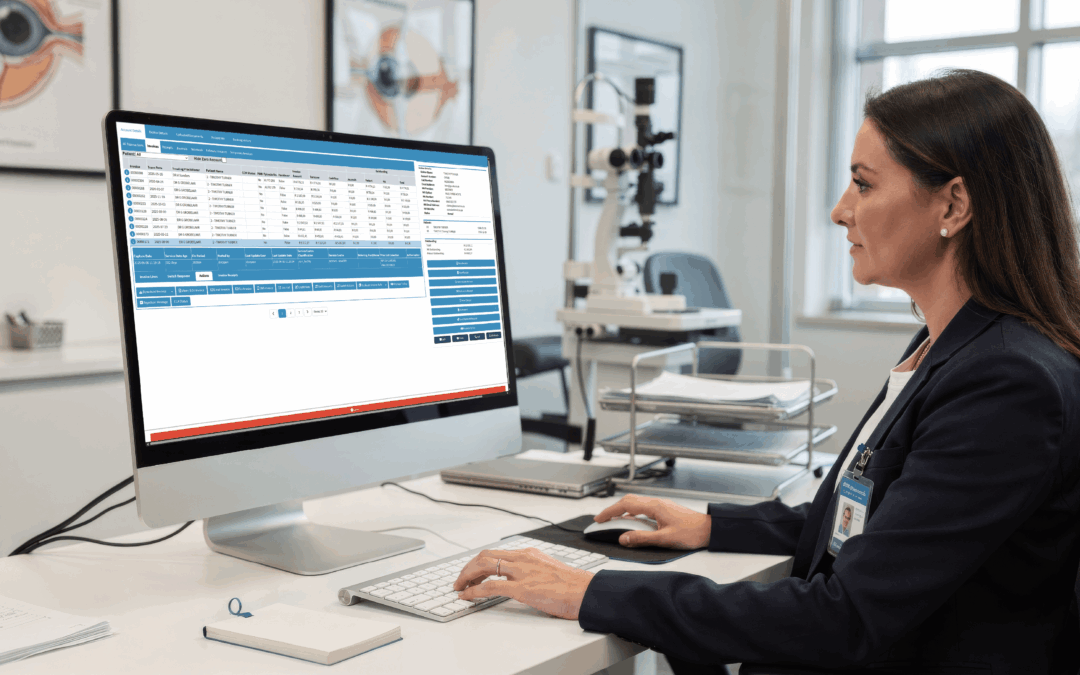
On the administrative side, bookings, reminders and patient communication help you get history forms and confirmations to patients before they arrive, which supports the pre-visit approach described above. Reporting can show you where time is going across the patient journey. Billing and claims sit alongside the clinical record, so the documentation behind a procedure or consultation is easier to find when you need it. If you’re weighing up how to move from paper to a structured digital chart, our guide to digital clinical records for eye practices is a good next read, and how appointment reminders cut late arrivals covers the front-desk side.
Software won’t fix a vague process. Decide what a complete history is first, then configure the system to match. For wider context on electronic records, Ophthalmology Times has a useful overview of electronic health records.
Frequently Asked Questions
What should an ophthalmology history include?
An ophthalmology history should include the presenting complaint, past ocular history, systemic medical history, medications, allergies, family history of eye disease and relevant social or occupational factors. Record each in a consistent order so any clinician can read the chart quickly and spot gaps. Related reading: ophthalmic history template guide.
Who should take the eye history in a practice?
Either a trained technician or the clinician can take it, depending on your team and local regulations. Many practices have technicians collect the first pass, including complaint, medications and allergies, then the doctor confirms and probes. Whoever does it, use the same template every time.
How do I spot an urgent presenting complaint?
Look for sudden vision loss, new flashes or floaters, a curtain over the vision, a painful red eye with reduced vision, trauma, or new double vision. Give reception staff a written red-flag list and a clear route to the clinician. Keeping emergency slots free makes this workable.
Why does family history of eye disease matter?
Conditions such as glaucoma, macular degeneration and some inherited retinal diseases run in families. A positive history can lower your threshold for testing and shorten recall intervals. Ask about specific conditions by name, because patients rarely mention relatives’ eye problems unprompted.
How often should medications and allergies be reviewed?
Review them at every visit, even for established patients. Medicines and allergy status change between appointments, and some drugs affect surgery planning or retinal monitoring. A quick “anything new since last time?” check, recorded in the chart, takes under a minute.
Book your free GoodX Eye demo
If you’d like to see how a structured history can sit inside your daily workflow, book a free demo at goodxeye.com. We’ll show you how GoodX Eye handles clinical records, bookings and reporting for eye care practices like yours.
Disclaimer: This article is provided for general informational and educational purposes only. While GoodX Software takes reasonable care to ensure that the information is accurate and current at the time of publication, laws, regulations, industry standards, healthcare policies and technology may change. The content should not be regarded as medical, legal, financial or other professional advice. Readers should verify information relevant to their circumstances and consult an appropriately qualified professional where necessary. GoodX Software accepts no responsibility for decisions made or actions taken solely on the basis of this content.