Picture a Monday morning at a busy eye clinic. A man in his sixties has just been told he has early glaucoma, nods politely, and walks out holding a drops prescription he doesn’t fully understand. Three months later he has stopped using them because his vision “feels fine”. That’s not a failure of the patient. It’s a failure of the process.
Ophthalmology patient education works when it’s designed into the visit rather than squeezed in at the end. Most eye conditions are slow, painless or both, so patients have little natural reason to take them seriously. You have to supply that reason, clearly and more than once.
This article looks at how to make education a routine part of every consultation without adding minutes to the clock. We’ll cover where it fits in the workflow, what to give patients to take home, and how understanding connects to the treatment adherence you’re ultimately after.
Patient Education in the Consultation Workflow
The most common mistake is treating education as the doctor’s job alone, delivered in the last ninety seconds. By then the patient is dilated, a little anxious, and thinking about the car park. Spread the work across the whole visit instead.
Start at the front desk. Waiting-room screens, a short video on what dilation feels like, or a quick explanation of the tests ahead all reduce surprises and shorten later conversations. Ophthalmology Management’s piece on screens and digital tools in eye clinics describes how a welcoming, informative waiting area sets the tone before anyone meets a clinician.
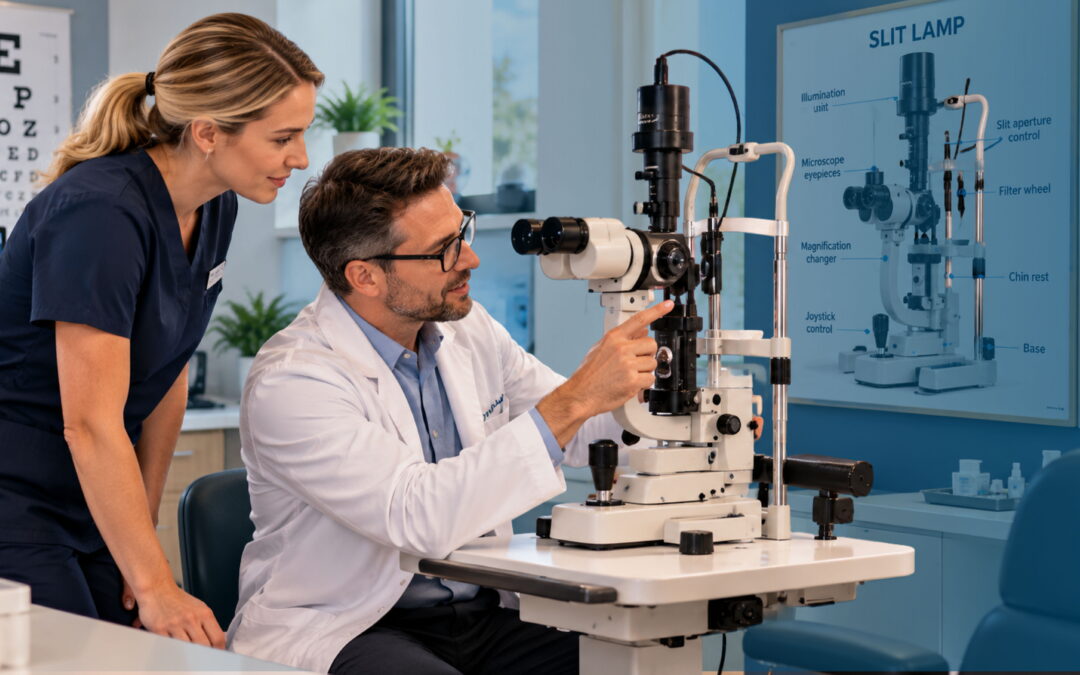
Next, use your technicians. Trained scribes and patient educators can run the first explanation of a visual field test or an OCT scan, so the ophthalmologist doesn’t repeat the same speech twelve times a day. Four ophthalmologists interviewed on freeing up patient time make the same point: delegate the routine explanation, keep the human conversation for the doctor.
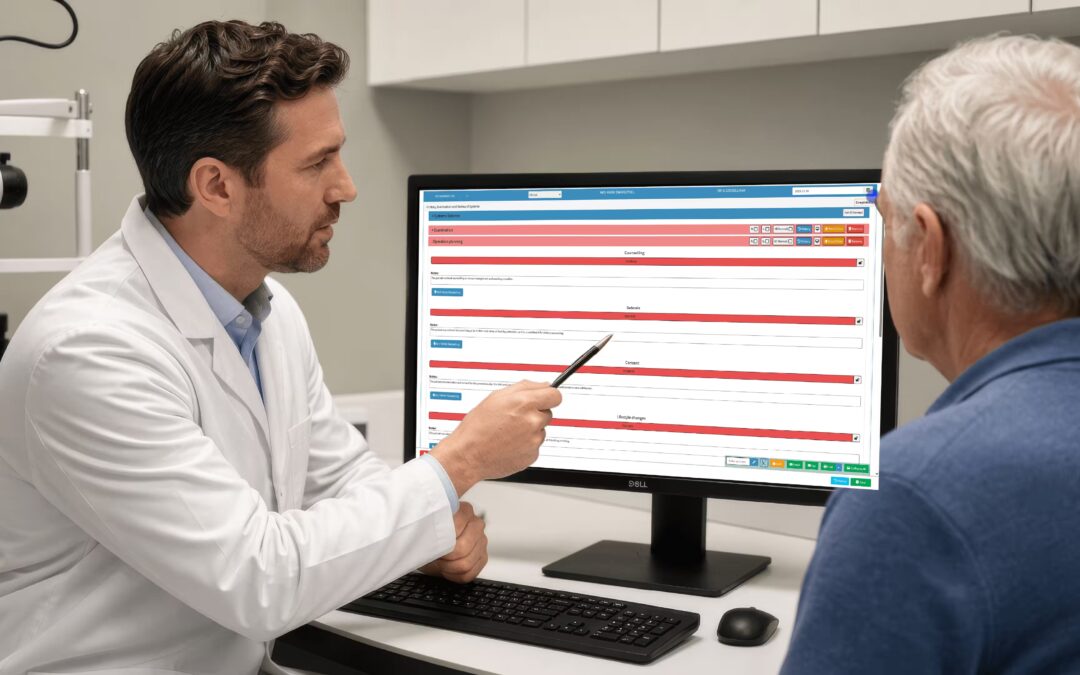
Then there’s the consultation itself. Primary care research offers a useful habit here. The AAFP’s guidance on patient communication notes that clinicians often interrupt patients within about 18 to 23 seconds, and suggests setting a shared agenda by asking “what else?” until the patient has nothing left to add. In an eye clinic, that one habit surfaces the worry about driving or the fear of needles that would otherwise derail the follow-up.
Finally, close the loop before the patient stands up. Ask them to explain the plan back in their own words. If they can’t, you’ve found the gap while they’re still in the room.
Eye Condition Information for Patients That People Actually Read
Handouts have a bad reputation, and mostly they’ve earned it. A dense photocopied leaflet with six conditions on it ends up in a bag, then a bin. Good eye clinic patient handouts are short, specific to the diagnosis, and written at a reading level the average patient can manage comfortably.
Aim for one page per condition. Cover what it is, what the patient should expect, what they must do and when to call you. Put the urgent signs in plain language: a curtain over part of the vision, sudden flashes and floaters, or a painful red eye with reduced sight. Those warnings matter more than anything else on the page.
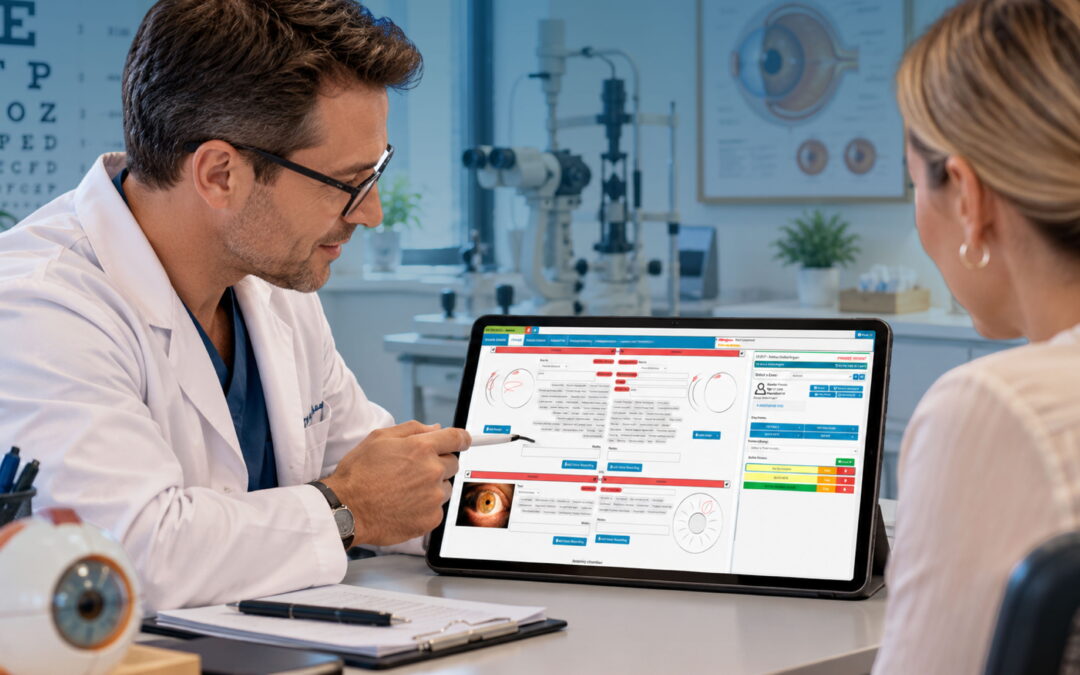
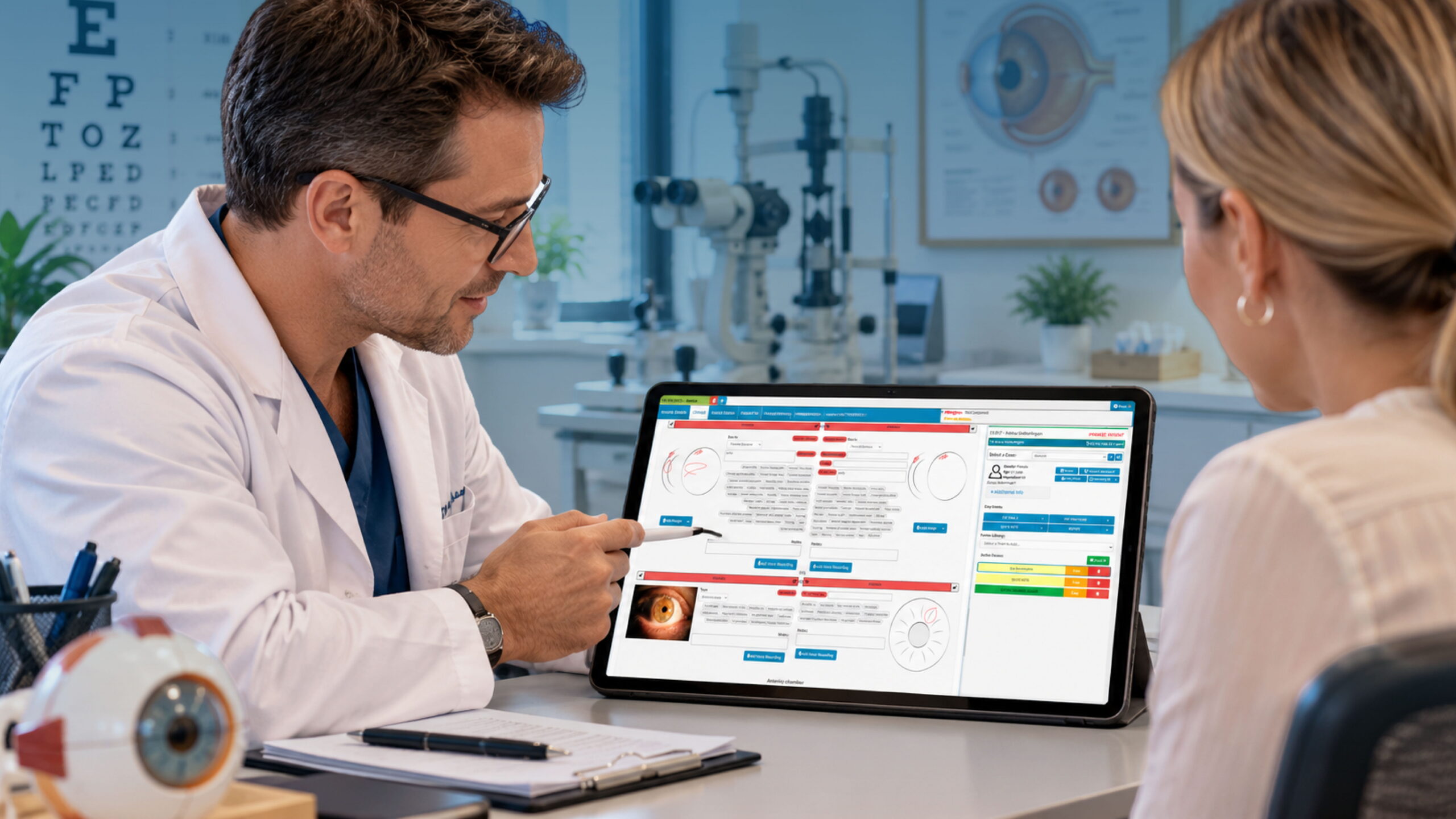
Pictures help enormously when you’re explaining eye conditions to patients. A simple diagram of the drainage angle, or a simulated view of how cataract or macular degeneration affects sight, does in ten seconds what a paragraph of anatomy cannot. Telemedicine consultations lean on the same idea, using shared images and annotated scans to make an abstract diagnosis visible.
Don’t write everything yourself. Reputable bodies publish well-reviewed material you can point patients towards, such as the National Eye Institute’s resources on eye conditions or the patient information from The Royal College of Ophthalmologists. Check that anything you hand out matches your own clinical protocols and local context, since guidance and available treatments differ between countries.
Language matters too. If your patients speak several languages, translated handouts or a short interpreter-supported explanation will do more for adherence than any clinical refinement.
Patient Understanding and Treatment Adherence
Adherence is where education pays off or doesn’t. Glaucoma drops, post-operative regimens, patching, diabetic eye screening attendance: all of them depend on a patient who understands why the effort matters when they feel perfectly well. The World Health Organization’s work on vision impairment and blindness underlines how much avoidable sight loss there is globally, and a good share of it comes down to people not receiving or acting on timely care.
So make the “why” concrete. “These drops lower the pressure that damages the nerve, and we can’t get that nerve back” lands better than “use them twice daily”. Link the instruction to something the patient cares about, whether that’s reading, driving or seeing their grandchildren clearly.
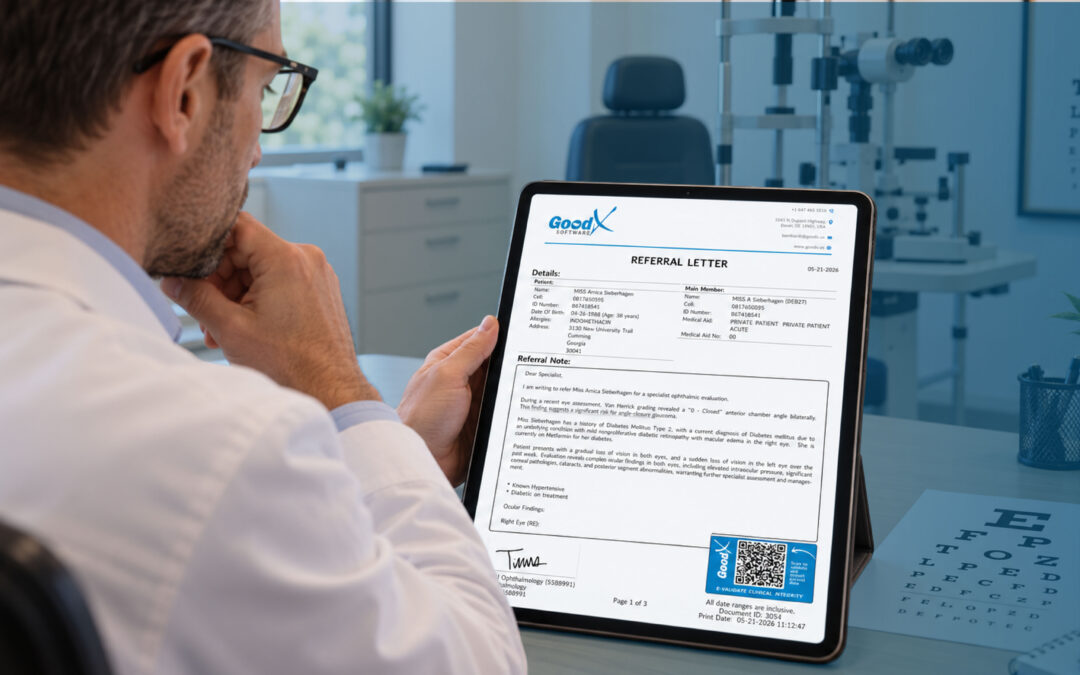
Post-consultation follow-up is the second half of the job. A message the same day that restates the plan, a reminder before the review appointment, and a recall when a check is overdue all keep the conversation alive. Review of Ophthalmology’s article on staying in touch virtually points out that gaps in continuity of care hurt both outcomes and practice finances, and that automated reminders and recalls free staff for direct patient care.
Think about the patient with diabetes who skips a retinal screen because nobody chased. That isn’t laziness. Nobody made the next step easy. automated recalls and reminders take that burden off your reception team.
Finally, measure what you do. Track no-show rates for review visits, how many glaucoma patients return on schedule, and how often staff re-explain the same thing. You can’t improve what you only suspect.
Where GoodX Eye Fits Into Your Patient Education Workflow
Education falls apart when information lives in five places. The doctor’s notes say one thing, the handout in the drawer says another, and the reminder system doesn’t know either exists. GoodX Eye is practice management software built for ophthalmology and eye care practices, and its value here is joining those pieces up.
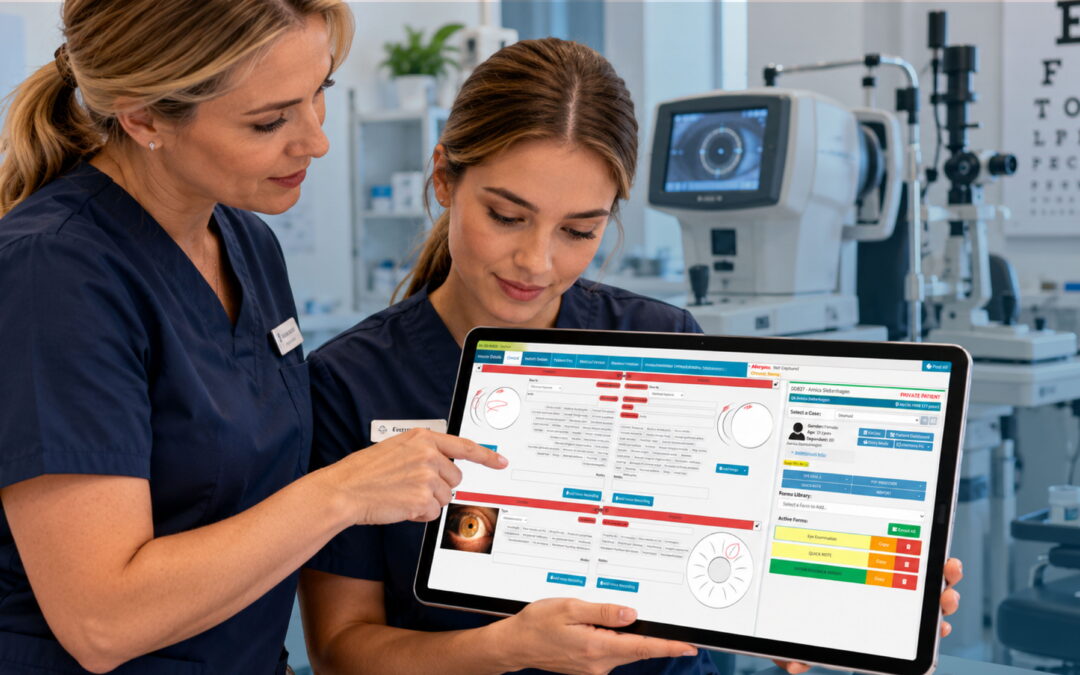
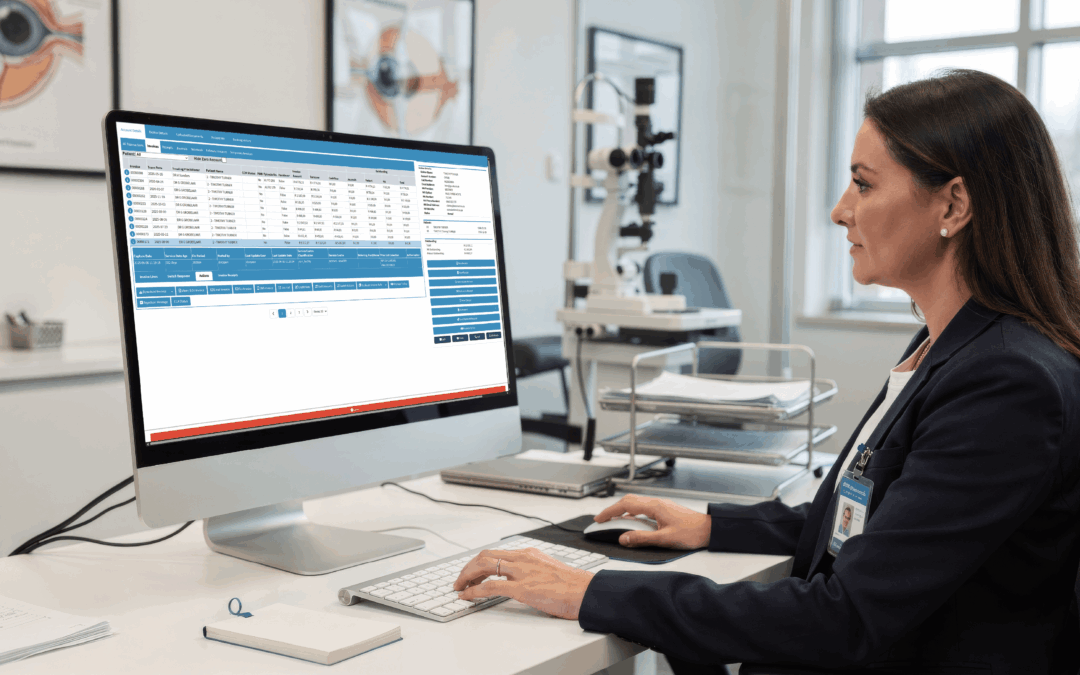
With clinical records, bookings and patient communication in one system, your team can see what a patient was told, what’s due next and who’s overdue. eye care clinical records keep diagnoses and treatment plans in a form your whole team can draw on when they explain or follow up. Automated reminders and recall support the post-consultation follow-up that keeps patients on track, and less repetitive admin leaves your staff more time to talk to people.
Reporting helps you see the results. You can look at attendance patterns and overdue reviews rather than guessing, and adjust your process accordingly. Billing and claims sit in the same system, so the administrative side of a consultation doesn’t pull attention away from the patient in front of you. If you want to see how the pieces fit a practice like yours, see how GoodX Eye works.
Frequently Asked Questions
How long should patient education take in an eye consultation?
It doesn’t need extra time if you spread it across the visit. Pre-visit videos, technician explanations and a short teach-back at the end typically fit inside your existing slot. The aim is to remove repeated explanations, not to add a separate education session to every appointment.
Who should deliver ophthalmology patient education?
The whole team shares it. Technicians and educators can cover tests and routine instructions, while the ophthalmologist focuses on the diagnosis, the reasons behind the plan and the patient’s questions. Reception staff reinforce it through reminders and follow-up contact.
What should an eye clinic patient handout include?
Keep it to one page per condition: what it is, what to expect, what the patient must do, and when to seek urgent help. Use plain language and a simple diagram where possible. Make sure the content matches your clinical protocols and local guidance.
How do I know if patients understood their diagnosis?
Ask them to explain the plan back in their own words. This teach-back approach quickly shows gaps. You can also watch review attendance, treatment continuation and the number of repeat queries as indirect signs of understanding.
Can software really help with patient education?
Yes, indirectly but meaningfully. Software can store consistent information, trigger reminders and recalls, and cut admin so staff have more time to talk. It supports the conversation rather than replacing it, and works best when your team has a clear education process first.
Book your free GoodX Eye demo
Ready to see how GoodX Eye can support education, follow-up and recall in your practice? Book a free demo at goodxeye.com and we’ll show you how it fits the way your team already works.
Disclaimer: This article is provided for general informational and educational purposes only. While GoodX Software takes reasonable care to ensure that the information is accurate and current at the time of publication, laws, regulations, industry standards, healthcare policies and technology may change. The content should not be regarded as medical, legal, financial or other professional advice. Readers should verify information relevant to their circumstances and consult an appropriately qualified professional where necessary. GoodX Software accepts no responsibility for decisions made or actions taken solely on the basis of this content.