Eye care is one of the most documentation-intensive specialties in medicine. Between visual acuity assessments, refraction data, fundus imaging, OCT reports, IOP measurements, surgical planning, and long-term condition monitoring for patients with glaucoma, diabetic retinopathy, or macular disease, the clinical record requirements of an ophthalmology practice are fundamentally different from those of a general medical practice.
Generic practice management software was not built for this. Ophthalmology practice management software that is purpose-designed for eye care handles all of these clinical requirements natively, alongside the administrative workflows that keep an eye clinic running efficiently. This guide covers what ophthalmology practices should expect from their practice management and EMR platform, and how GoodX delivers specifically for this specialty.
Ophthalmology Medical Practice Management: The Full Picture
Ophthalmology medical practice management involves coordinating a significantly more complex set of workflows than a standard GP or general outpatient setting. Consider the appointment structure alone: a single patient visit to an ophthalmology clinic might involve pre-testing by a technician, a refraction assessment, an OCT scan, a consultation with the ophthalmologist, and a follow-up booking all within the same session. Each step has its own documentation, equipment requirements, and staff allocation.
A practice management platform that is designed for ophthalmology understands this structure. It supports multi-step patient journeys within a single visit, connects pre-testing results to the consultation record automatically, and ensures that the complete picture of what happened during the appointment is captured in one place without requiring manual transfer of data between systems or staff members.
Surgical workflow management is another dimension that sets ophthalmology apart. For clinics that perform cataract surgery, LASIK, or other ophthalmic procedures, the practice management system needs to handle theatre booking, pre-operative assessment documentation, IOL calculations, consent forms, post-operative review scheduling, and outcome recording. GoodX Software addresses these workflows as part of a cohesive system rather than as add-on modules bolted to a generic platform.
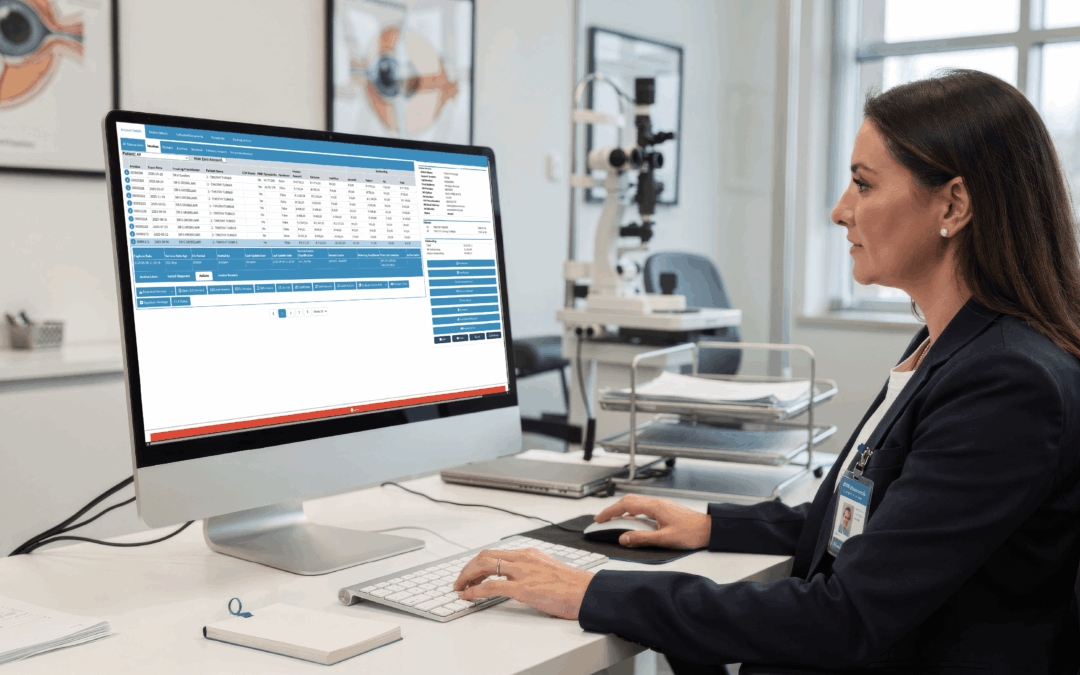
Financial management for ophthalmology practices also carries specific complexity. Insurance authorisations for certain procedures, billing for diagnostic tests, and managing the mix of medical and optical billing streams requires a billing module that understands this landscape. A general practice billing tool often requires significant manual work-arounds in an ophthalmology context.
According to the World Health Organization, vision impairment affects over 2 billion people globally, and the demand for quality eye care is growing faster than the availability of trained ophthalmologists in most regions. Eye clinics that operate with maximum efficiency through well-designed practice management software are better placed to meet this growing demand without compromising on care quality.
Ophthalmology EMR Software: Clinical Documentation Built for Eye Care
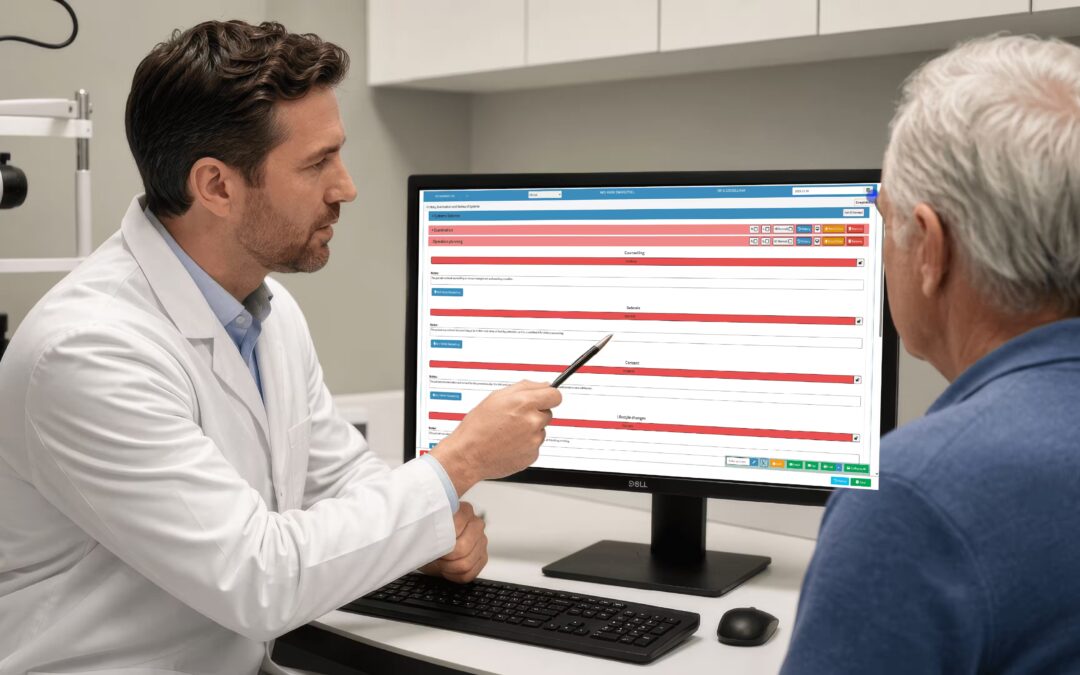
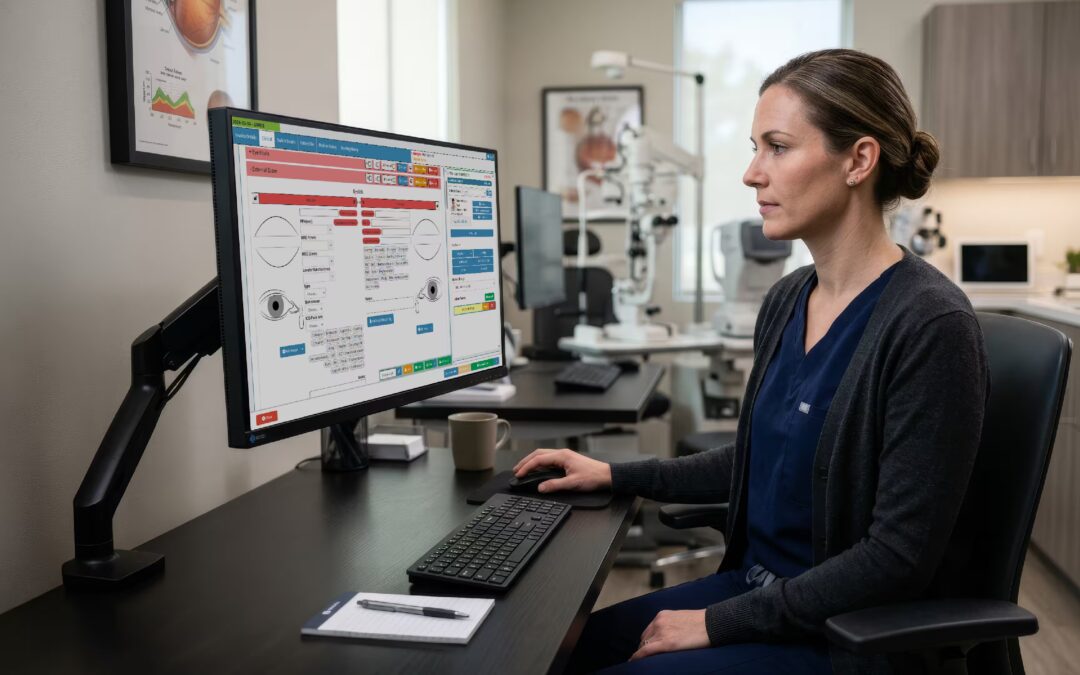
Ophthalmology EMR software needs to do something that general EMR platforms typically cannot: capture the structured clinical data of an eye examination in a format that is medically meaningful, retrievable, and useful for longitudinal patient monitoring.
For a glaucoma patient seen every six months over ten years, the value of the EMR is not just in storing individual visit notes. It is in presenting a structured, comparable view of IOP readings, visual field test results, optic disc assessments, and medication history over time, so the treating ophthalmologist can assess disease progression and treatment response at a glance.
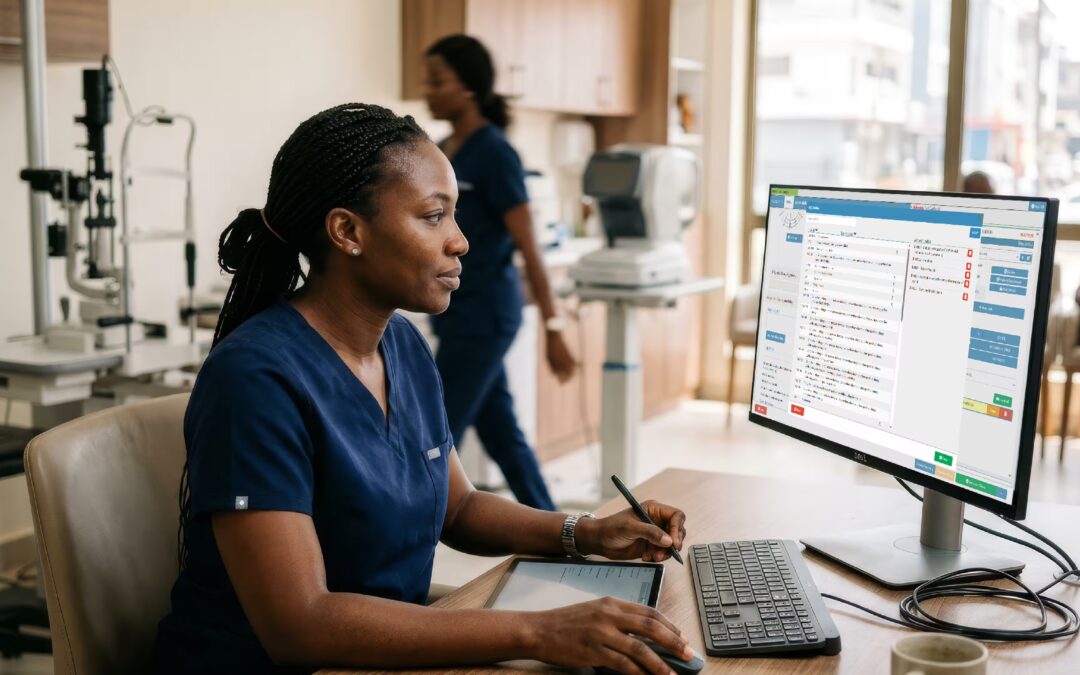
This kind of structured longitudinal data management requires EMR design that goes beyond a generic note-taking interface. Ophthalmology EMR software needs templated examination forms for specific conditions, graphical display of measurements over time, integration with diagnostic equipment outputs, and structured fields for recording standardised clinical parameters.
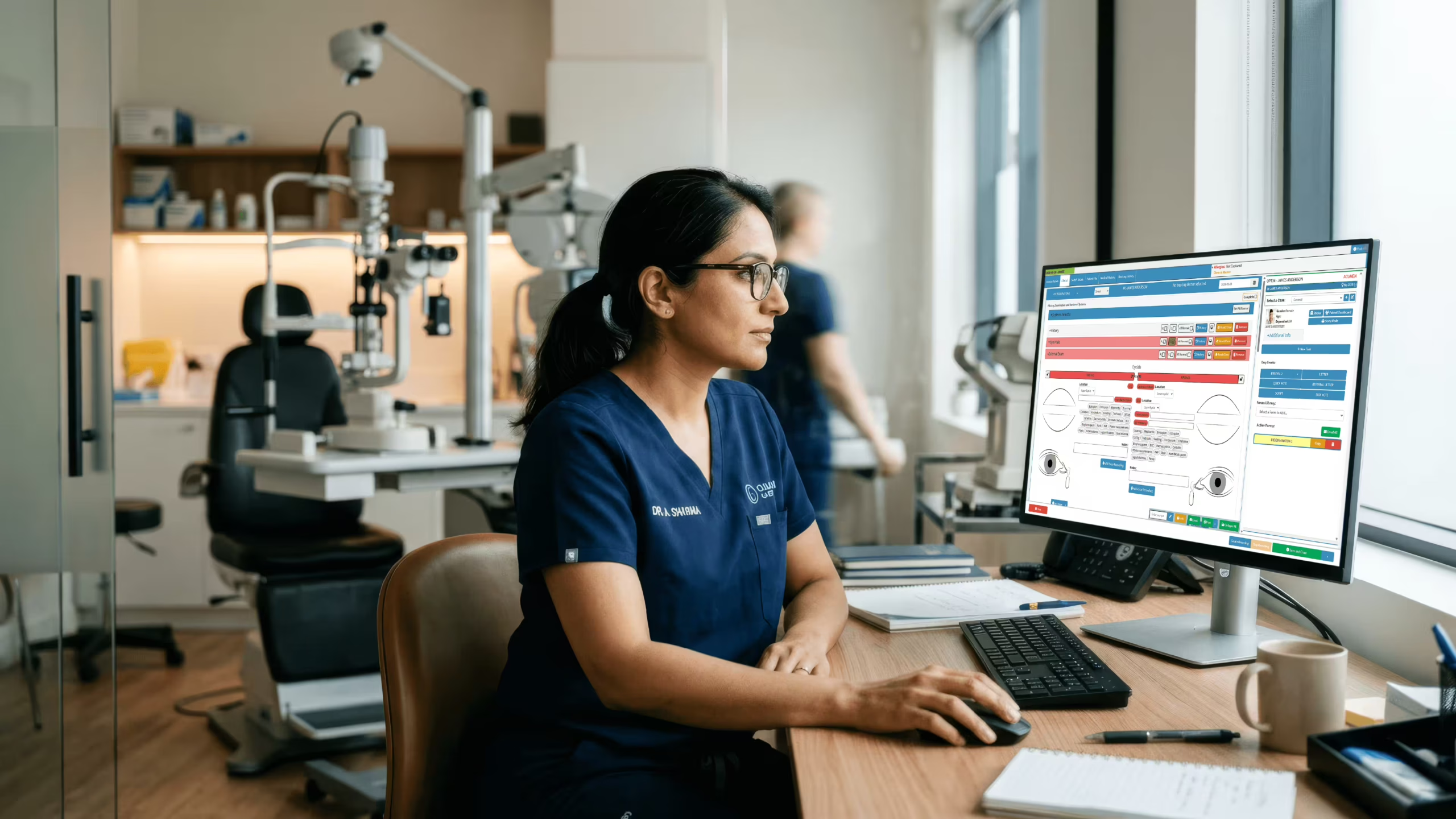
GoodX is designed with precisely this clinical depth in mind. The platform supports the documentation requirements of an ophthalmology practice from routine refraction through to complex retinal disease management, all within a system that also handles the administrative and billing functions of a busy eye clinic.
The International Agency for the Prevention of Blindness emphasises the importance of comprehensive data collection in eye care settings to support both individual patient outcomes and population-level vision health monitoring. Purpose-built ophthalmology EMR software that captures structured clinical data consistently is a direct enabler of this goal.
Practice Management Software for Ophthalmologists: What GoodXEye Delivers
Practice management software for ophthalmologists needs to solve a specific set of problems that generic platforms handle poorly or not at all. GoodX has been built in response to exactly these challenges.
Speciality-appropriate scheduling handles the unique structure of an ophthalmology clinic day, where appointment types vary significantly in length, the sequence of events within a single patient visit is complex, and equipment availability needs to be coordinated alongside practitioner availability. GoodX Software makes this manageable through a scheduling interface that reflects how ophthalmology clinics actually work.
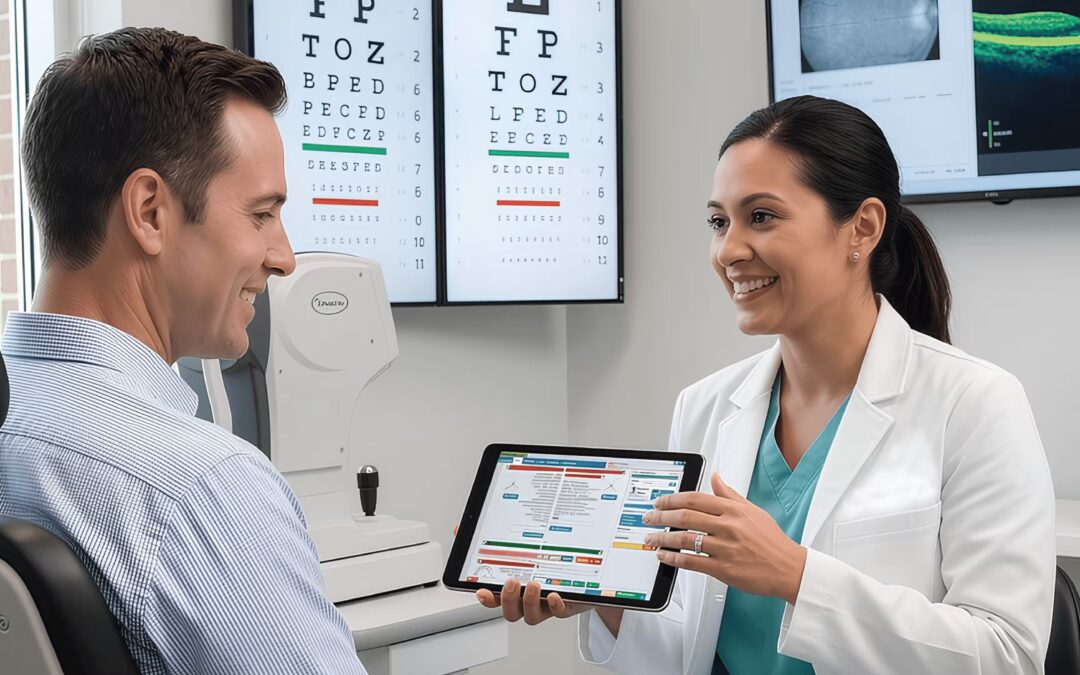
Diagnostic integration connects the outputs of ophthalmic equipment, including OCT machines, visual field analysers, corneal topographers, and automated refractors, directly to the patient record. When test results flow automatically into the EMR rather than being printed, scanned, and manually attached, the clinical workflow is faster and the record is more complete.
Recall and disease monitoring tools support the long-term patient management that characterises ophthalmology. For patients requiring regular monitoring due to glaucoma, diabetic eye disease, or age-related macular degeneration, automated recall systems ensure follow-up appointments are booked on the appropriate schedule and that patients who are overdue for review are flagged proactively.
According to Health IT Analytics, specialty-specific clinical software consistently outperforms adapted general-purpose platforms on clinician satisfaction metrics, documentation completeness, and workflow efficiency. For ophthalmologists, the difference between a purpose-built platform and a generic EMR is felt on every patient encounter.
Frequently Asked Questions
What is ophthalmology practice management software?
Ophthalmology practice management software is a speciality-specific platform designed to manage the clinical, administrative, and billing workflows of an eye care clinic. It includes structured clinical documentation tools for ophthalmic examinations, appointment scheduling configured for the complexity of ophthalmology clinic visits, diagnostic integration, surgical workflow management, and billing tools that handle the specific requirements of eye care billing.
What should ophthalmology EMR software include?
Ophthalmology EMR software should include templated examination forms for common ophthalmic conditions, structured fields for recording IOP, visual acuity, visual fields, and other standardised measurements, longitudinal data display for monitoring disease progression over time, integration with diagnostic equipment outputs, and clinical documentation tools that support both routine and complex ophthalmic care without requiring work-arounds designed for general practice settings.
Why is GoodX Software a good fit for ophthalmology practices?
GoodX Software is a strong fit for ophthalmology practices because GoodX has been purpose-built for the specific clinical and administrative demands of eye care. It combines specialty-appropriate clinical documentation, complex scheduling support, diagnostic integration, surgical workflow tools, and integrated billing in one platform, rather than requiring ophthalmology practices to adapt a generic system to their specific requirements.
How does ophthalmology practice management software improve patient care?
It improves patient care by ensuring that complete, structured clinical records are available at every encounter, enabling meaningful longitudinal monitoring of conditions like glaucoma and macular disease over time. It also reduces administrative bottlenecks that can delay clinical processes, supports proactive recall management so patients do not miss critical review appointments, and frees clinical staff to focus on patient interaction rather than documentation overhead.
Can ophthalmology practice management software handle surgical scheduling?
Yes. Purpose-built ophthalmology practice management software supports surgical workflow management including theatre booking, pre-operative documentation, IOL calculation records, consent form management, post-operative review scheduling, and outcome recording. This is a key area where specialty-specific software outperforms adapted general practice platforms, which often require manual work-arounds for ophthalmic surgical workflows.
Ready to See GoodXEye in Action?
GoodX is the ophthalmology practice management and EMR platform built specifically for eye care clinics. It combines the clinical depth ophthalmologists need with the administrative and billing tools that keep a practice running efficiently.