Picture a Tuesday clinic at a busy retina service. The registrar opens a new referral and finds two lines: “Blurred vision, please assess.” No acuity, no medication list, no mention of diabetes. Someone now has to phone the referrer, or worse, book a slot that turns out to be the wrong one.
A well-built ophthalmology referral letter prevents that. It lets the receiving team triage correctly, book the right clinic and arrive at the first appointment already knowing the story. Poor letters cost time on both sides, and the patient is the one who waits.
This checklist covers the ten details a specialist actually uses. They are: patient identifiers, the reason for referral, urgency level, visual acuity, the presenting history, relevant eye findings, systemic conditions, current medications and allergies, previous treatment and imaging, and your contact details with consent. Each one earns its place, and the sections below explain why.
Good referrals also matter at system level. The World Health Organization’s work on vision impairment and blindness highlights how much avoidable sight loss depends on timely access to care, and a clear referral is the first step in that chain.
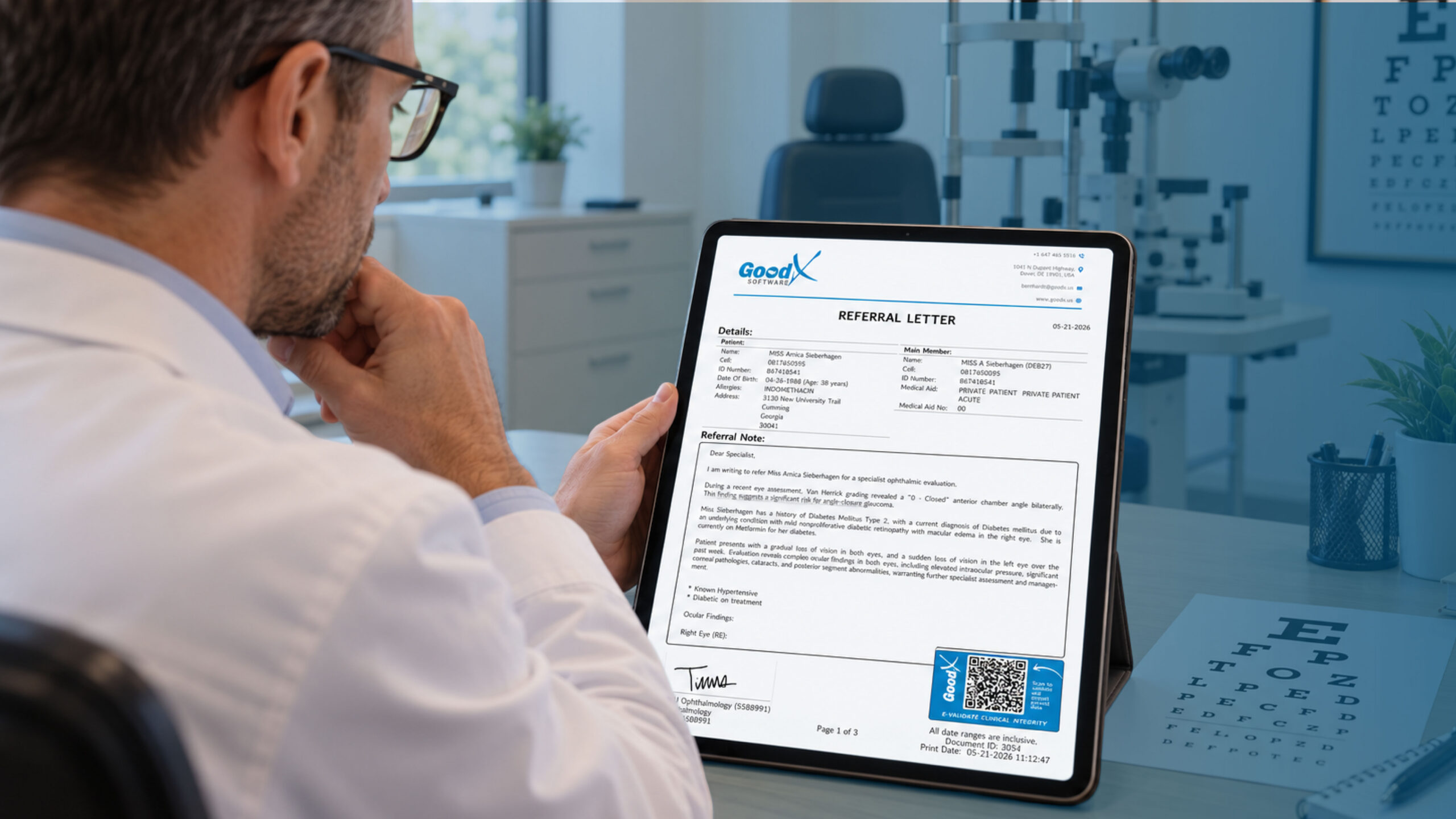
An Ophthalmology Referral Letter Template You Can Adapt
A template doesn’t make a letter generic. It makes sure nobody forgets the awkward bits at 5.40 pm on a Friday. Build yours with fixed headings so the reader can find things in seconds.
Start with identifiers: full name, date of birth, a unique patient number, contact details and the preferred language or any need for an interpreter. Add the referring clinician’s name, practice and a direct line. Then state the reason for referral in one plain sentence, such as “Suspected narrow-angle glaucoma, right eye, raised pressure on two visits.”
Next comes a short clinical summary, followed by the question you want answered. That last part is often missing. Are you asking for a diagnosis, a second opinion, surgery or shared monitoring? The specialist shouldn’t have to guess.
Keep the whole thing to a page where you can. Professional bodies such as The Royal College of Ophthalmologists publish standards and guidance that many services use as a reference point, and your own regional pathways may ask for specific fields on top of these. Check them before you finalise your template.
Finally, record consent to share information. Rules differ widely between countries, so follow whatever applies where you practise, and keep a note in the chart that the patient agreed to the referral.
Urgent Eye Referral Information: What to Flag and How
Urgency is the detail most likely to be misread. “Urgent” means different things to different people, so say what you mean. Give a timeframe if your local pathway has one, and give your reasoning in a sentence.
Some presentations should never sit in a general queue: sudden painless loss of vision, a curtain or shadow across the field, new flashes and floaters, a painful red eye with reduced sight, chemical injury, or suspected giant cell arteritis. Telephone the on-call service first, then send the written referral straight after. A letter alone can sit in an inbox overnight.
Put the red-flag detail at the top. If the patient has had symptoms for three days, say three days. If they’re a monocular patient, say so in the first line, because that changes how fast everyone moves. Burying it in paragraph four is how things get missed.
Note too whether the patient can be reached quickly. A mobile number that goes to voicemail has turned many an urgent eye referral into a delayed one. Confirm the number before the patient leaves your room.
Pathway design is a live topic in eye services, and the GIRFT ophthalmology programme from NHS England is one example of how a health system looks at referral flow and waiting times. Your own region will have its equivalents.
Referral Letter Visual Acuity and History: The Core Clinical Content
If you only get two sections right, make them these. Acuity and history are what the specialist reads first, and they decide how the case is triaged.
Record visual acuity for each eye separately. State whether it’s uncorrected, with glasses or with pinhole, and which chart you used. “6/12 right with pinhole, 6/6 left with glasses” tells a story. “Reduced vision” doesn’t. Add intraocular pressure with the method and time of day, plus pupil responses and any visual field findings if you have them.
Then the history. Give onset, duration, progression and whether it’s one eye or both. Mention previous eye surgery, laser, injections, trauma and any family history of glaucoma or macular disease. This patient clinical history is what stops a duplicate work-up.
Systemic conditions matter as much as the eye findings. Diabetes, hypertension, autoimmune disease, anticoagulants and drugs with known ocular effects all change the plan. List medications with doses where you can, and state allergies clearly, especially to dilating drops, anaesthetics or contrast agents.
If you’ve taken photographs, optical coherence tomography scans or fields, attach them or say exactly where they can be accessed. A specialist who can see the scan before the appointment can often skip a repeat test. The National Eye Institute offers plain-language background on common eye conditions that can help you word findings consistently, and the Medical Protection Society’s record keeping guidance is a useful reminder that what you write in the chart should support what you write in the letter.
Where GoodX Eye Fits In
Most bad referrals aren’t written by careless clinicians. They’re written by busy ones working from scattered information. Acuity is in one place, the scan in another, the medication list in a third.
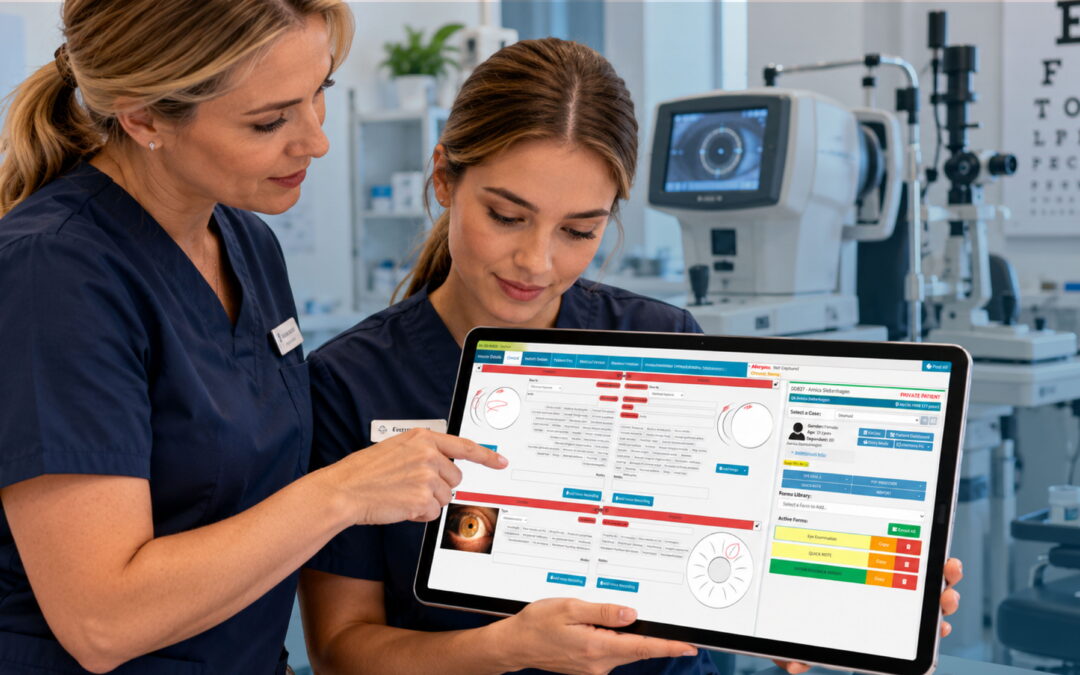
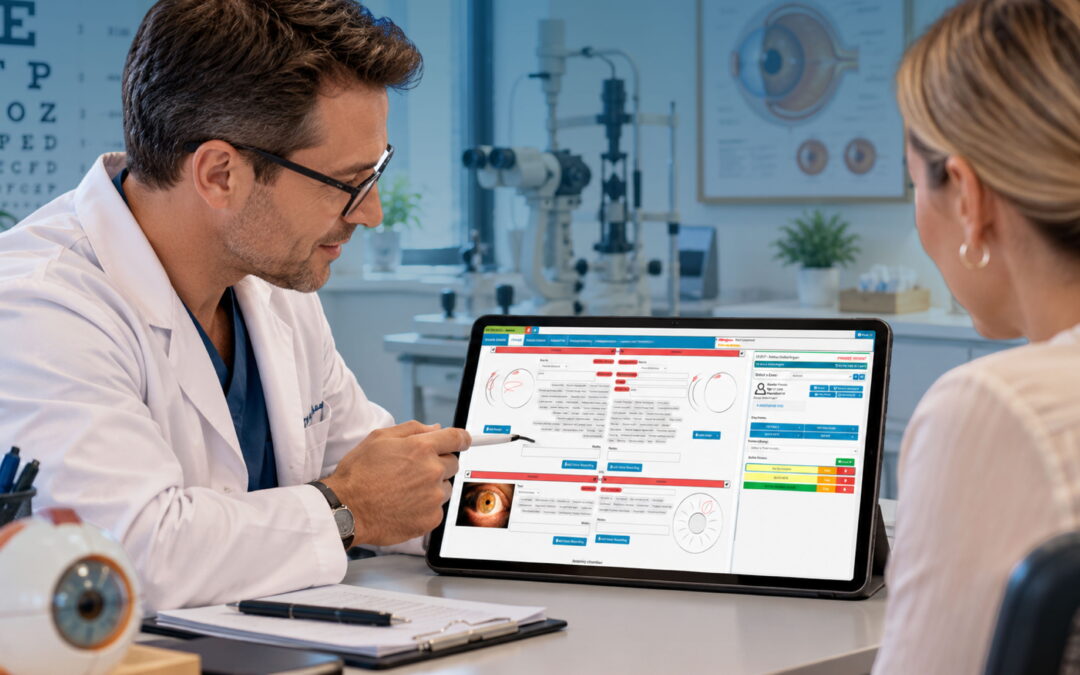
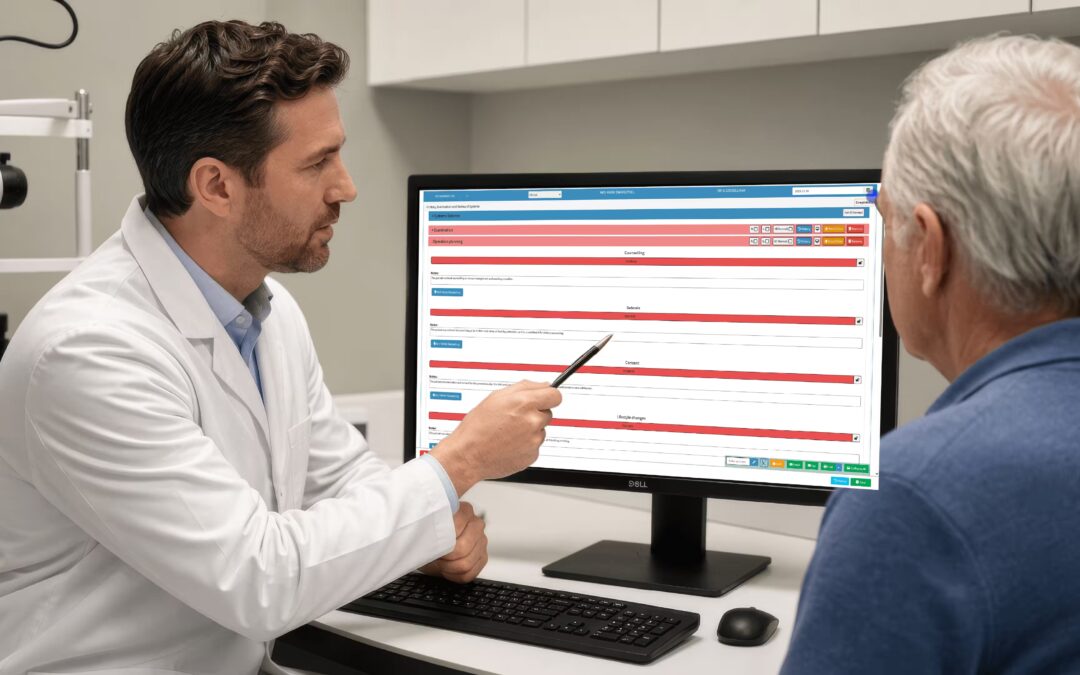
GoodX Eye is practice management software built for ophthalmology and eye care practices, and it keeps clinical records, bookings and administration in one system. That means the details a referral needs sit together in the patient’s record, so staff aren’t hunting through folders before they can send a letter. Related reading: clinical records for eye care practices.
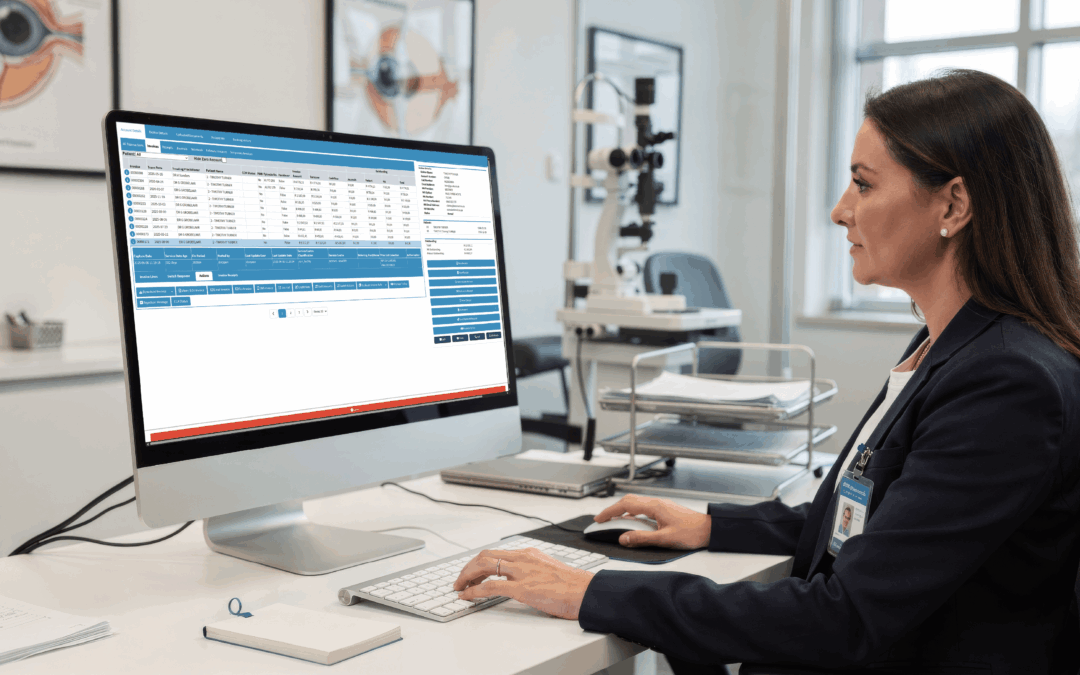
It also supports the admin side of a referral. Tracking whether a letter was sent, whether the patient was booked and whether a report came back is the kind of follow-up that falls through cracks on paper. With electronic referral management in place, your team can see outstanding items at a glance and chase them before a patient is lost. Related reading: appointment and workflow automation.
Integrated systems can also cut repetitive work. One practice-management survey reported meaningful reductions in admin time after automation, though results vary by practice. Billing and reporting live in the same place too, which helps when referral activity needs to be reviewed. Related reading: reporting and billing for eye practices.
Patient-facing tools matter as well. As Ophthalmology Management has noted on patient-friendly EMR features, letting patients submit information before a visit reduces paperwork and improves the quality of what you start with.
Frequently Asked Questions
How long should an ophthalmology referral letter be?
Aim for one page. A specialist needs identifiers, the reason for referral, urgency, acuity, history, medications and your question, not a full chart dump. Attach imaging and test results separately, and put the most urgent information in the first few lines.
What is the most commonly missing detail in an eye specialist referral?
The specific question being asked is often missing. Letters describe symptoms but don’t say whether you want a diagnosis, treatment, a second opinion or shared care. Visual acuity recorded per eye, with correction stated, is a close second.
Should I phone as well as send an urgent referral?
Yes, for sight-threatening presentations such as sudden vision loss, a retinal detachment picture or a painful red eye with reduced vision. A call gets the case seen by a clinician quickly, and the written letter then supports it with the full detail.
Do I need patient consent to send a referral?
Usually, though the rules depend on your country and setting. Many systems treat referral for direct care as covered by implied consent, but you should follow local law and professional guidance and document the discussion in the patient’s record.
Can software help with referral letters?
It can. Software that holds clinical records, images and bookings together lets staff pull accurate details into a letter and track its progress. It won’t replace clinical judgement, but it reduces omissions and lost follow-up.
Book your free GoodX Eye demo
If your team spends too long assembling referrals and chasing replies, see how GoodX Eye could simplify the process. Book a free demo at goodxeye.com and bring a real referral example along.
Disclaimer: This article is provided for general informational and educational purposes only. While GoodX Software takes reasonable care to ensure that the information is accurate and current at the time of publication, laws, regulations, industry standards, healthcare policies and technology may change. The content should not be regarded as medical, legal, financial or other professional advice. Readers should verify information relevant to their circumstances and consult an appropriately qualified professional where necessary. GoodX Software accepts no responsibility for decisions made or actions taken solely on the basis of this content.