A new technician starts on Monday. By ten o’clock the waiting room is full, the doctor is running behind, and nobody has time to explain where the auto-refractor lives, let alone how your clinic wants a history recorded. That’s the moment most practices discover they never had an onboarding plan, only a person who happened to be free.
Good ophthalmic technician training is the fix, and it doesn’t need to be elaborate. It needs to be structured, written down and tied to the real work of your clinic. The reference points are well established: sources such as Ophthalmology Management’s piece on clinical staffing needs note that proficient technicians can work up about three to four patients an hour, and that is the gap you’re trying to close between day one and full competence.
Think of the programme as protecting two things. One is the quality of the data the doctor relies on. The other is the flow of the clinic, which suffers every time a patient waits because a technician is unsure what comes next.
Designing an ophthalmic technician onboarding programme
Start with the calendar, not the content. Map the first twelve weeks into stages: orientation, observation, guided practice, and independent work with review. Most clinics find that a technician who is rushed into a full room in week two ends up needing more correction later, which costs more time than a slower start would have.
In the first week, keep the technician away from live patient pressure. Cover how the clinic is laid out, how a patient moves from reception to pre-testing to the doctor, who to ask for what, and how emergencies are handled. Spend real time on infection control, equipment cleaning, privacy and consent, because these are the habits that are hardest to fix later. Privacy rules differ between countries, so tie this session to the law and regulator that apply where you practise.
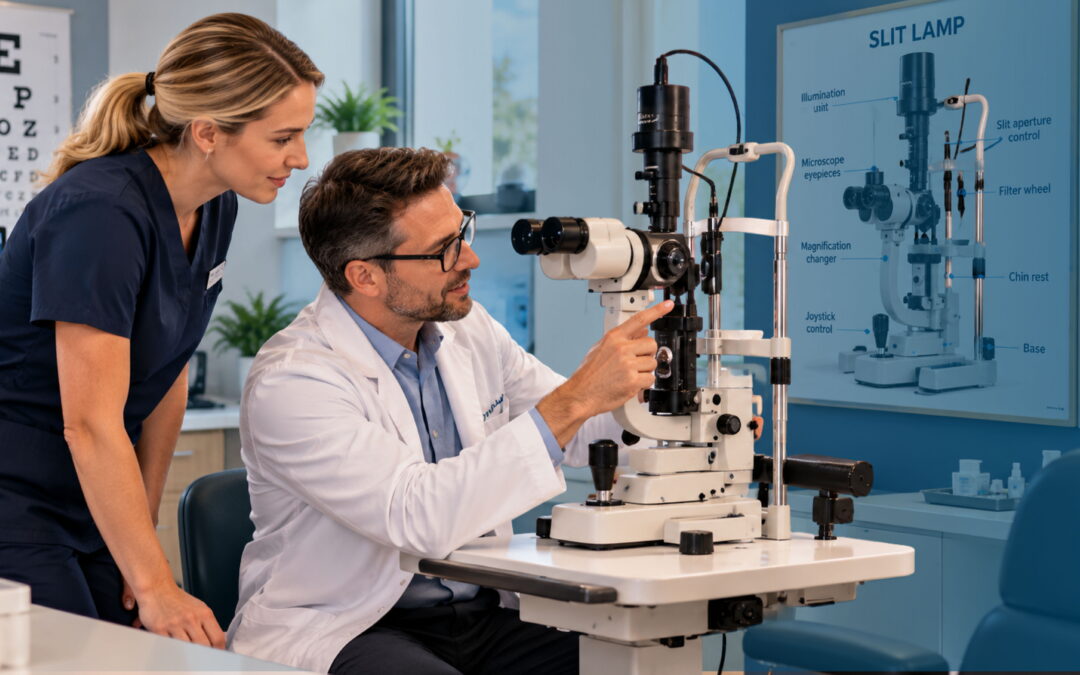
Then comes the skills block. Pre-testing and visual acuity skills should be taught in a fixed order: the technician watches, then performs with a trainer alongside, then performs while the trainer watches from a distance. Cover acuity measurement at distance and near, pinhole testing, pupil checks, intraocular pressure measurement, and use of each device in your room. Give the technician a quiet half-hour on each device before it’s used on a patient, with a colleague playing the patient.
Patient flow belongs in the plan too. The EyeNet series on improving office flow suggests tracking arrival times, room transitions and time with the doctor. Show new technicians those numbers early, so they understand why a three-minute delay in pre-testing ripples through the whole afternoon.
A mentor makes the whole thing work. Name one experienced technician as the point of contact for each new starter, and protect their time on the schedule. If the mentor is expected to train while also running a full list, the training will be the first thing to give.
Building an ophthalmic technician competency checklist
A competency checklist turns “she seems fine” into something you can actually point to. Each line should describe an observable task, a standard, and a sign-off: who watched, on what date, and whether the technician performed it unaided. Keep the language plain. “Measures distance acuity with and without correction, records it correctly, and repeats if the result is inconsistent” is far more useful than “understands acuity”.
Group the checklist by area. Patient history taking deserves its own section, because a technician who asks the right questions in the right order saves the doctor minutes on every visit. Check that they can elicit the presenting complaint, onset and duration, medications, allergies, family eye history and relevant general health, and that they record it in the clinic’s agreed format. Listening for red flags such as sudden vision loss, flashes and floaters, or pain with redness, and knowing exactly who to alert, is a competency in its own right.
Other groups to include are:
- Pre-testing and visual acuity skills, device by device
- Patient communication, including explaining tests and handling anxious patients
- Record accuracy and data entry
- Hygiene, safety and equipment care
- Escalation of urgent cases
Don’t mark someone competent after a single successful attempt. Ask for several observed repetitions across different patient types, including children, older patients with poor mobility and people who struggle with the test. Where your professional body or national college publishes expectations for allied ophthalmic staff, use them as a reference. The Royal College of Ophthalmologists and RANZCO are two examples of bodies whose standards and resources are worth reading, though what applies to you will depend on your own country.
Review the checklist with the technician at weeks four, eight and twelve. It’s a conversation, not an exam. Two people looking at the same page and agreeing what comes next is where most of the learning happens.
Turning it into an eye clinic staff training plan
An onboarding programme covers the first few months. An eye clinic staff training plan keeps going after that, and it’s where many practices quietly lose the investment they’ve made. Skills fade when they aren’t used, and new equipment or protocols arrive faster than anyone updates the manual.
Build supervised clinical practice into the plan as a standing feature, not just a probation step. A senior technician or the lead clinician should observe a handful of encounters per technician each quarter, with brief, specific feedback. Pair this with cross-training. As the American Academy of Ophthalmology’s guidance on glaucoma practice flow points out, cross-trained staff and scribes increase the doctor’s capacity, and a technician who can cover both pre-testing and special testing makes your schedule far more resilient.
Plan around the work you actually do. If you run a testing day for visual fields and OCT, train for that day in advance. If a dedicated scribe supports a clinician, keep them in that role, because the same source material on staffing makes the point that a scribe pulled into other duties stops being effective at the one thing they were hired for.
Retention matters here as well. Technicians stay where they can see a path forward, so offer defined steps: junior, competent, senior, trainer. Articles such as Medical Economics on hiring and keeping the right employees reinforce that structured development and clear expectations help practices hold on to good people.
Finally, put the plan in the diary. Training that depends on “when things quieten down” never happens. Block a protected hour each fortnight, and treat it like a patient appointment.
Where GoodX Eye fits into technician training
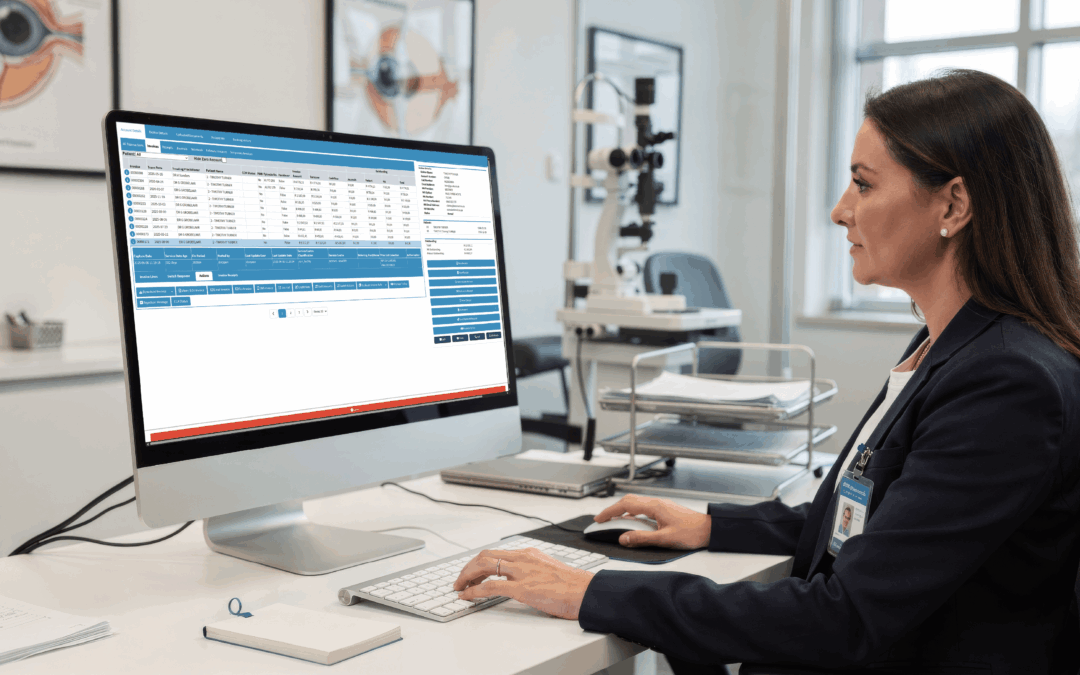
A programme only works if it’s visible and measurable, and that’s where practice software earns its place. GoodX Eye gives eye care practices a single system for bookings, clinical records, billing and reporting, which means a new technician learns one workflow instead of juggling paper notes, spreadsheets and separate screens.
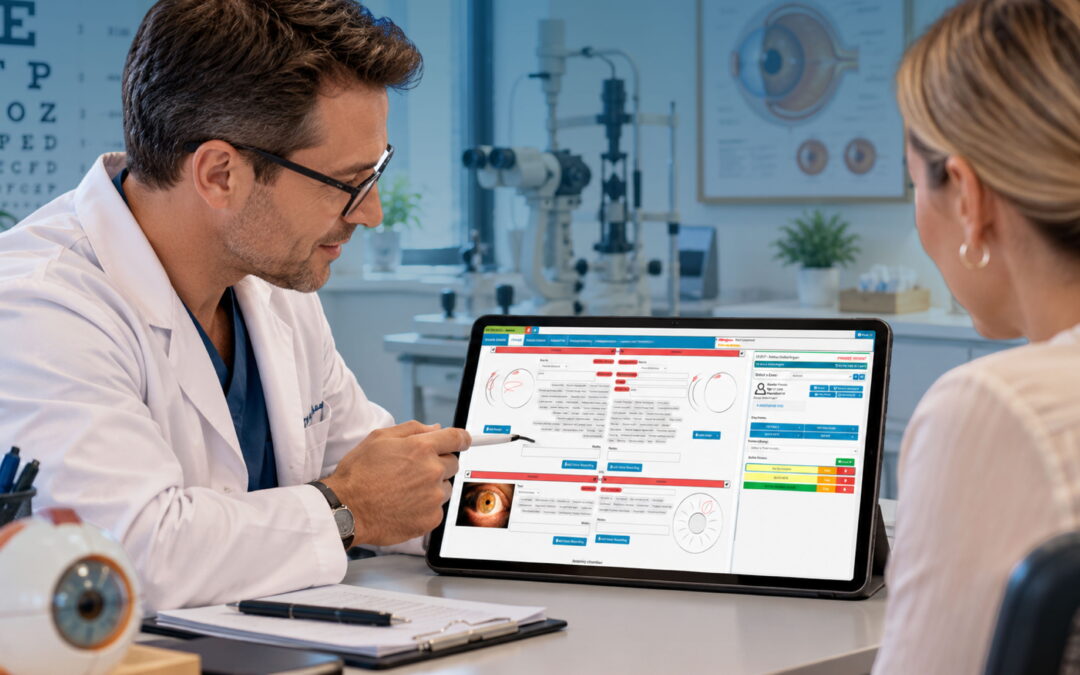
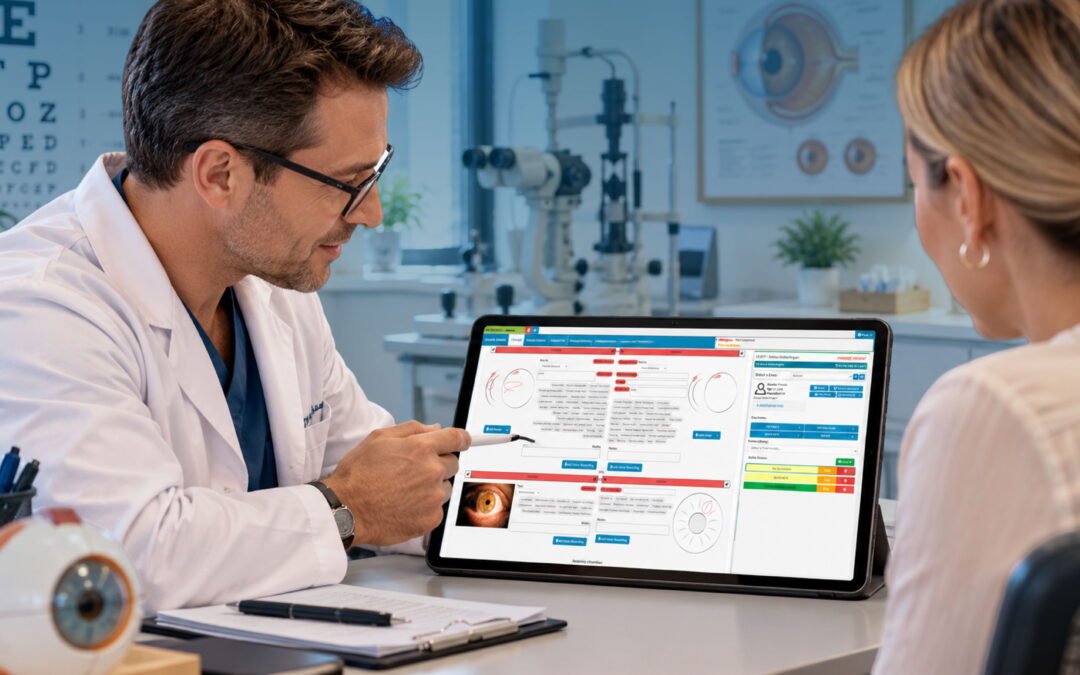
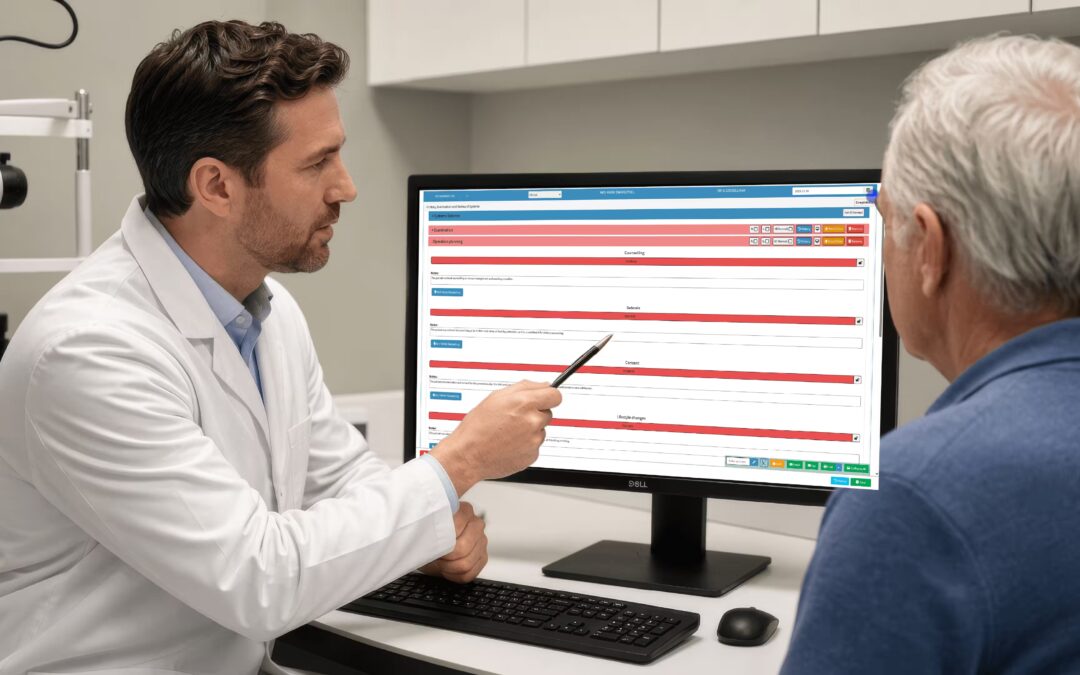
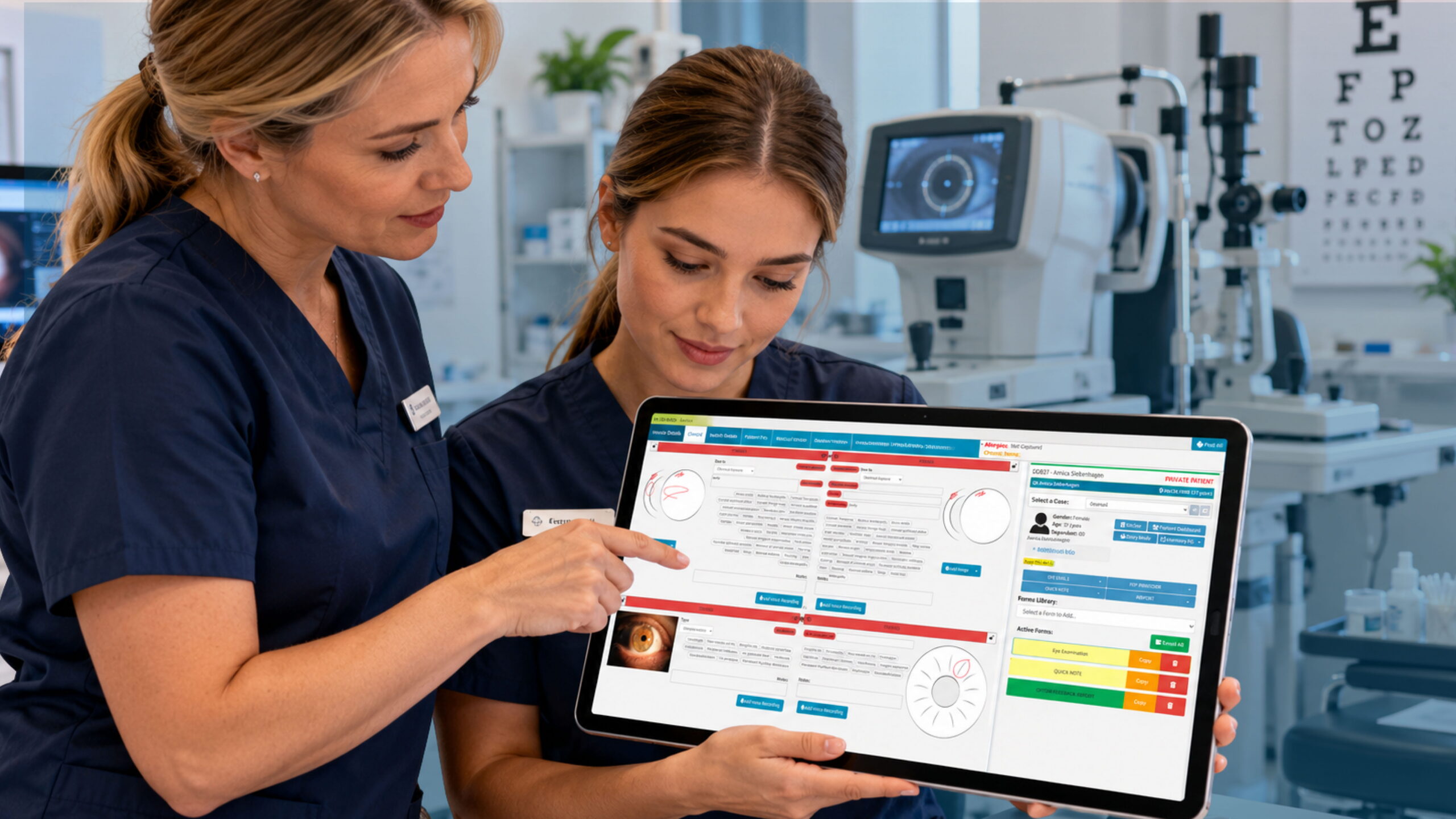
Structured clinical records support consistent patient history taking, so a trainee follows the same format the rest of the team uses and a supervisor can review entries quickly. Scheduling tools help you protect training time and match technician hours to patient volume. Reporting gives you a clear view of room transitions and waiting patterns, so you can see whether a new starter is settling in or whether a bottleneck sits elsewhere. Related reading: eye care practice scheduling and bookings.
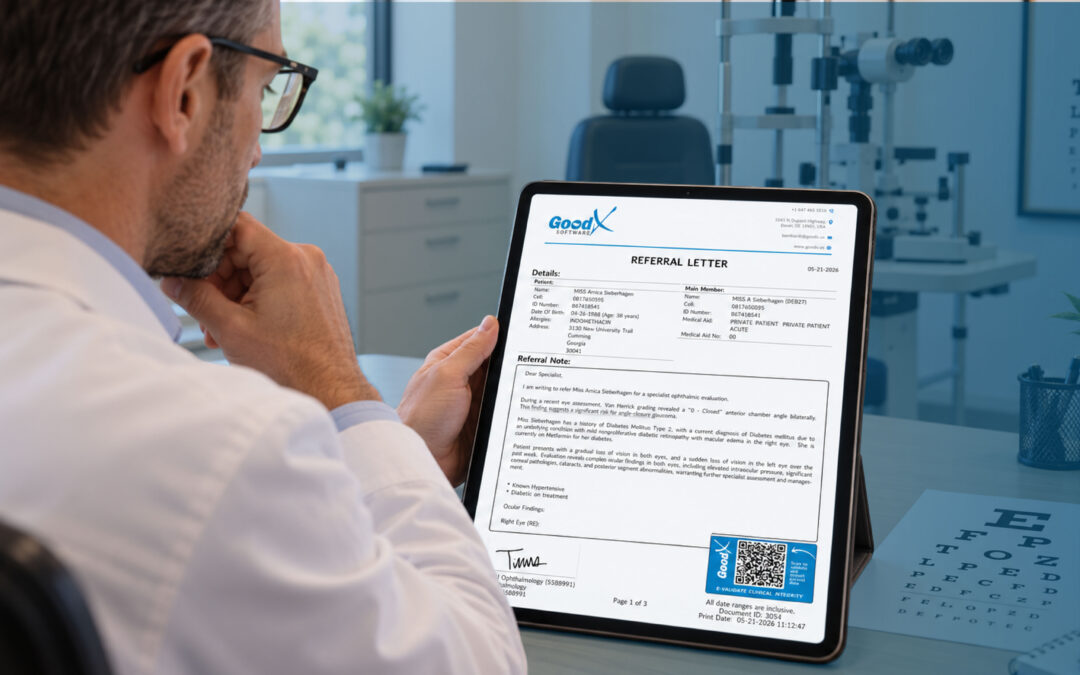
Administrative automation also frees technicians from clerical tasks they shouldn’t be doing, and billing and claims support keeps documentation and coding in better order. Many practices pair this with a review of clinical records and compliance features when they redesign onboarding. The aim is a clinic where the system supports training instead of competing with it. If you want to see how the pieces connect, you can look at how GoodX Eye supports eye care teams.
Frequently Asked Questions
How long should ophthalmic technician training take?
Plan for around twelve weeks of structured onboarding, then ongoing development. The exact length depends on the technician’s prior experience, the complexity of your equipment and the case mix. Sign off each competency on evidence, not on the calendar, and extend the timeline where needed.
What should a new technician learn first?
Start with clinic layout, patient flow, privacy, infection control and emergency escalation. After that, move to pre-testing and visual acuity skills under supervision. Early wins in simple, repeatable tasks build confidence before the technician meets more complex equipment or patient situations.
How do I know a technician is ready to work independently?
They’re ready when they’ve been observed performing each checklist task correctly across several patients, including difficult ones. Look for consistent measurements, accurate records and good judgement about when to call for help. A mentor and a clinician should both agree on the sign-off.
Do experienced technicians still need onboarding?
Yes. Even experienced hires need to learn your equipment, record formats, protocols and patient flow. A shortened programme with a competency check is usually enough, and it protects you from assuming that skills from a previous clinic transfer exactly.
Who should train new technicians?
Choose a mentor who is both technically strong and patient, and give them protected time. Clinicians should contribute to history taking and escalation training, while senior technicians cover equipment and routine pre-testing. Avoid relying on whoever happens to be least busy.
Book your free GoodX Eye demo
If you’d like to see how GoodX Eye can support your onboarding, scheduling and clinical records, book a free demo. We’ll walk through the workflows with your own practice in mind. Start at goodxeye.com.
Disclaimer: This article is provided for general informational and educational purposes only. While GoodX Software takes reasonable care to ensure that the information is accurate and current at the time of publication, laws, regulations, industry standards, healthcare policies and technology may change. The content should not be regarded as medical, legal, financial or other professional advice. Readers should verify information relevant to their circumstances and consult an appropriately qualified professional where necessary. GoodX Software accepts no responsibility for decisions made or actions taken solely on the basis of this content.