by HannesE | Apr 7, 2026 | Blogs
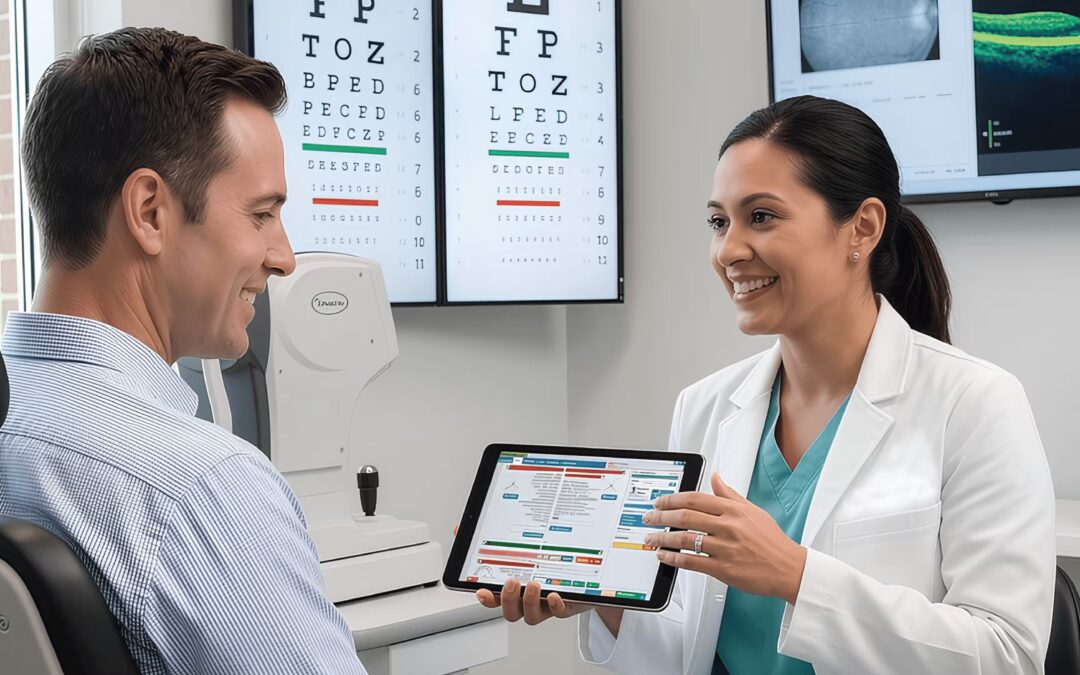
Running a modern eye care practice involves much more than delivering excellent clinical outcomes. From managing patient flow and clinical documentation to navigating billing and compliance, the demands on ophthalmologists and their teams are growing rapidly. That’s where GoodX software steps in. It offers a truly integrated solution that simplifies and enhances every stage of the patient and practice journey.
Designed specifically for eye care professionals, GoodX isn’t just another practice management tool. It is a carefully engineered platform that brings together advanced technology, clinical intelligence, and real-world usability. It is built to meet the complex needs of today’s ophthalmology landscape.
A Complete Ecosystem, Not Just a System
At its core, GoodX software is a single platform that consolidates all essential practice functions into one cohesive system. It combines AI-supported SOAP notes, integrated billing and scheduling, digital communication tools, and a customizable EMR designed with ophthalmology in mind.
This consolidation reduces the need for multiple disconnected tools. These tools often create data silos and administrative inefficiencies. With GoodX, everything from appointment booking and clinical assessments to financial reporting and compliance is seamlessly connected. This improves both staff productivity and patient satisfaction.
Smarter Clinical Documentation with AI Support
Documentation is often one of the most time-consuming aspects of clinical care. GoodX addresses this with GoodXpert, an AI-assisted SOAP note feature that helps clinicians capture detailed and accurate notes more efficiently.
By learning each user’s style and adapting to common inputs, GoodXpert supports real-time documentation with contextual suggestions, code linking, and template automation. This reduces the administrative burden and improves the consistency and completeness of patient records.
Prescriptions and Sick Notes Streamlined and Compliant
Managing scripts and medical certificates is a daily necessity for eye care practitioners. GoodX simplifies this process with integrated modules that allow clinicians to quickly generate prescriptions using ICD-10 coded diagnoses. It checks in-stock medications and applies electronic or saved signatures. Documents can be sent directly to patients or pharmacies via email, fax, or print. This eliminates unnecessary steps.
The system also supports efficient sick note management. It enables the creation of clear, consistent certificates with pre-filled fields, patient history tracking, and options to recommend modified duties or medical leave.
Billing Efficiency with Built-In Accuracy
Billing is one of the most critical and often challenging parts of running a successful practice. GoodX’s integration with Harmony ensures that clinical notes translate directly into billable codes. This automation reduces manual entry errors and accelerates the claims process.
With real-time ERA processing, insurer switching, and Medibase integration, the platform simplifies insurance workflows and minimizes rejected claims. Detailed billing reports provide insight into revenue performance. Macros and planning tools allow teams to bill efficiently without losing accuracy or compliance.
Improved Patient Flow with RFID Technology
In high-volume environments, patient flow can make or break the daily schedule. GoodX supports RFID tracking to streamline patient check-ins, reduce wait times, and improve resource allocation. Real-time location data ensures that clinicians and staff can locate patients quickly. This minimizes disruptions and improves the overall experience.
By integrating RFID into the broader EMR and scheduling system, GoodX helps practices maintain control over patient movement and anticipate high-demand moments before they occur.
Built for Ophthalmology, Down to the Details
Unlike general medical software, GoodX is deeply tailored for eye care. It offers custom clinical forms that cover everything from external and segment exams to fundoscopy, visual acuity, and binocular muscle evaluations. These templates are not only thorough but also fully customizable to match each practitioner’s workflow.
The Eye Eval system integrates with DIACOM-approved devices to ensure diagnostic imaging and data feed directly into the patient record. This reduces duplication and enhances diagnostic accuracy.
Global Reach with Local Support
Whether you operate in a single clinic or manage a network of eye care centers across regions, GoodX scales with your needs. Its cloud-based platform offers access from any device. This allows clinicians to manage care remotely or across multiple locations.
Currently serving practices in South Africa, Canada, New Zealand, Botswana, the US and the UK, GoodX also supports local compliance requirements. It offers international onboarding and support services.
Conclusion: An Investment in Precision and Simplicity
The demands on ophthalmology practices will continue to increase. With the right tools, your team can stay ahead. GoodX software is not just a way to manage your practice. It is a platform that redefines what practice management can be.
From AI-enhanced documentation and automated billing to RFID workflows and specialized ophthalmic tools, GoodX provides everything you need in one place. If you are ready to reduce administrative overhead and deliver better patient care, this may be the solution your practice has been looking for.
by HannesE | Apr 7, 2026 | Blogs
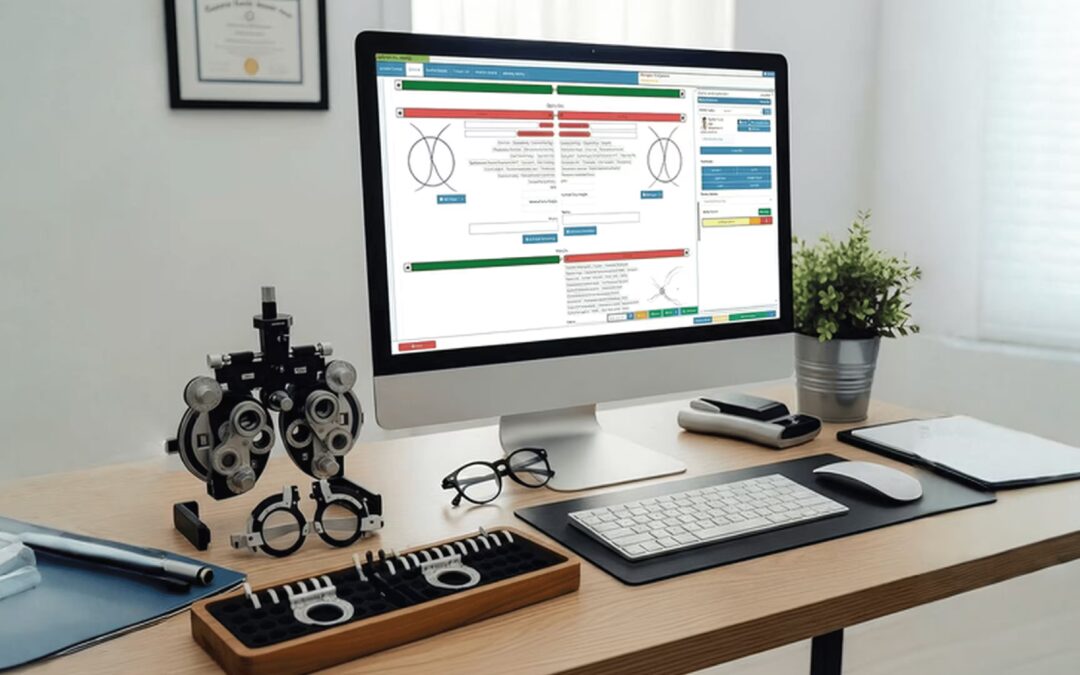
The clinical and administrative pressure on a South African ophthalmology practice in 2026 looks different to what it did even three years ago. Medical aid scheme audits are sharper, POPIA enforcement has visibly stepped up, and patient expectations around digital access have caught up with the rest of the world. In that environment, the ophthalmology software a practice runs on is no longer a back-office decision. It sits at the centre of clinical workflow, billing accuracy, and regulatory posture.
This refresher looks at what ophthalmologists in South Africa should reasonably expect from a modern ophthalmology software platform, and where general-purpose practice management systems tend to fall short of what the subspecialty actually needs.
Why Generic Practice Management Is Not Enough for Ophthalmology
Ophthalmology generates more imaging per patient encounter than almost any other outpatient specialty. OCT scans, fundus photography, visual fields, biometry for IOL calculations, corneal topography. A generic EMR built for general practice does not anticipate this volume, and it does not anticipate the structured fields ophthalmologists need to chart efficiently.
The American Academy of Ophthalmology has documented this issue for over a decade, pointing out in its practice resources that image management and device interoperability remain weak spots in non-specialist EHR systems. Ophthalmologists working in such environments often end up with imaging stored in one place, clinical notes in another, and billing in a third. The result is duplicated data capture, longer consult times, and a higher rate of coding errors at the point of claim submission.
A purpose-built ophthalmology platform changes this by treating the imaging device, the clinical chart, and the billing engine as parts of one workflow rather than three.
The Documentation Standard South African Practices Are Held To
Record-keeping in South Africa is governed by Booklet 9 of the HPCSA ethical guidelines, which sets out what constitutes an adequate clinical record, how long records must be retained, and how electronic records must be safeguarded. Records must be contemporaneous, complete, and legible. They must include identifying particulars, clinical findings, the proposed management plan, prescribed medication and dosage, referrals, test results, and written proof of informed consent where applicable.
For an ophthalmology practice that may see thirty to fifty patients in a day, meeting that standard manually is unrealistic. A specialist ophthalmology software platform supports compliance by structuring the consult template around the elements HPCSA actually requires, by timestamping every entry, by maintaining an audit trail of who edited what and when, and by storing data in a way that survives a regulatory inspection.
GoodX is built specifically around these requirements. The clinical templates align with subspecialty workflows (cataract, glaucoma, medical retina, oculoplastics), the audit trail is automatic, and the system is operated under an ISO 27001 certified information security management framework.
POPIA and the Information Security Question
POPIA classifies health information as special personal information under section 26, which means processing is prohibited unless a narrow exception applies. The Information Regulator gazetted new health information regulations in March 2026, and while the final version is less prescriptive than the September 2025 draft, the underlying obligations on confidentiality, security safeguards, and cross-border transfer have been reinforced.
South African legal commentary on the matter, including Webber Wentzel’s analysis of the POPIA health data framework, makes the practical point clearly. Practices need to know where their patient data is stored, who has access to it, and whether the platform they use can demonstrate adequate security controls if the Regulator comes asking.
This is where ISO 27001 certification stops being a marketing line and starts mattering. It is an independently audited standard for information security management, and it is the most credible signal a software vendor can provide that the controls behind the system have been tested by someone other than the vendor itself.
Clinical Efficiency in the Practice
Beyond compliance, the day-to-day question for most ophthalmologists is simpler. Does the software let me see more patients with less administrative drag, and does it reduce the rate at which claims come back rejected.
Modern ophthalmology software addresses this in several ways. Structured templates reduce the time spent on free-text documentation. ICD-10 coding suggestions integrated into the chart reduce miscoding at submission. Synchronised scheduling and charting means that the front desk, the technician room, and the consulting room are all working off the same record. For practices running surgical lists, theatre scheduling, IOL inventory tracking, and post-operative follow-up sit within the same platform rather than across separate spreadsheets.
The efficiency gains are not theoretical. In a properly configured ophthalmology practice, the difference between a generic system and a specialist platform tends to show up most clearly in consult duration and in first-pass claim acceptance rates.
Patient-Side Functionality
Patient expectations have shifted. Online appointment booking, digital pre-consultation forms, and access to records or accounts through a patient portal are no longer differentiators. They are the baseline. A platform that supports this without exposing the practice to data leakage risk is what practices should be looking for.
Secure messaging, online bookings, and mobile-friendly access need to operate within the same POPIA-compliant boundary as the clinical record itself. Bolting on a third-party booking widget that does not integrate with the practice management system tends to create more problems than it solves.
What to Look For in a Specialist Platform
For ophthalmologists evaluating their options in 2026, the practical checklist is reasonably short. The platform should be built for ophthalmology rather than adapted from a general medical template. It should integrate with the imaging devices already in the practice. It should be hosted and operated under a recognised information security standard, with ISO 27001 being the strongest signal available. It should support South African billing conventions, including ICD-10 and BHF practice number protocols, rather than expecting the practice to work around an imported coding scheme. And it should be backed by a vendor that understands the regulatory environment the practice is operating in.
These are not luxury features. They are the conditions under which a modern ophthalmology practice in South Africa can operate sustainably.
Conclusion
Ophthalmology software in 2026 is doing more than digitising what used to be on paper. It is the layer that holds together clinical accuracy, regulatory compliance, financial performance, and patient experience. For an ophthalmologist, the question is not whether to adopt specialist software, but which platform is built for the subspecialty and the jurisdiction.
GoodX is purpose-built for ophthalmology, ISO 27001 certified, and developed within the South African regulatory environment.
If you are reviewing your current system or planning to move off a generic platform, book a free demo and see how the system fits the way your practice already works.
by StefanS | Sep 25, 2025 | Blogs
In ophthalmology, there’s no room for inefficiency. Patient schedules are full, clinical demands are high, and the pressure to deliver exceptional care never stops. At the same time, administrative tasks, billing accuracy, and compliance requirements all compete for your team’s attention.
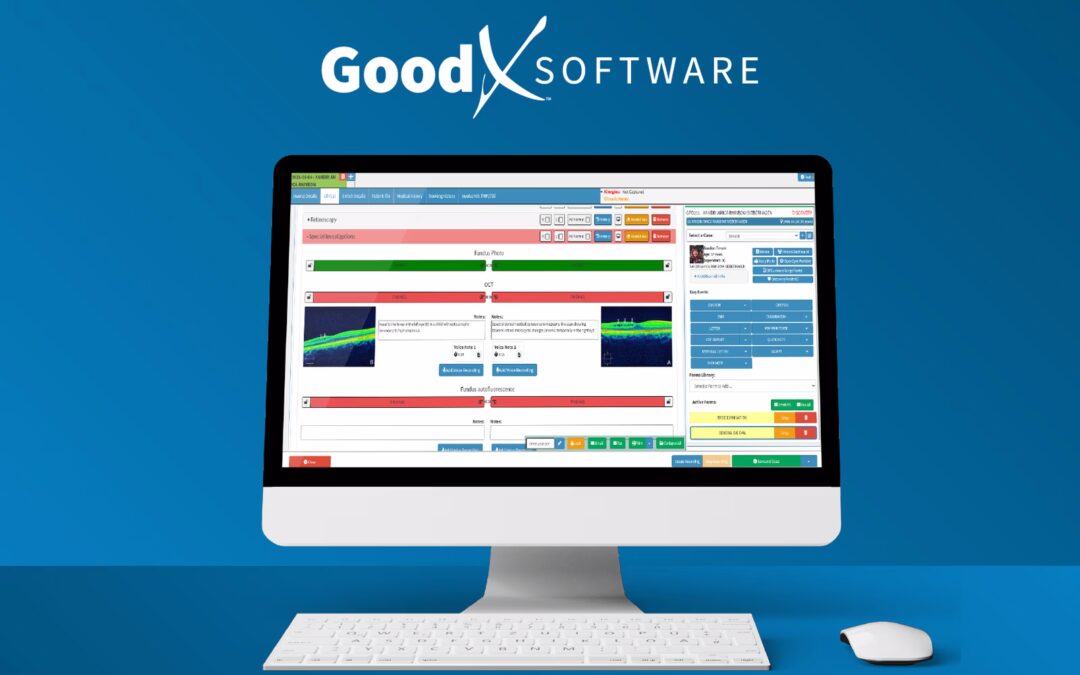
GoodX Ophthalmology EHR was designed to take that weight off your shoulders. Built specifically for eye care, it delivers the tools, integrations, and automation your practice needs, without the compromises of a generic system.
Why Generic EHRs Can Hold Eye Care Back
On the surface, a general EHR can look like it will get the job done. But for ophthalmology, the cracks start to show quickly:
- Missing ophthalmology-specific fields and templates
- No direct machine integration for OCT scans, fundus photographs, or corneal topography, such as DICOM
- Double data entry between EHR and practice management systems
- Limited reporting that misses key ophthalmology performance metrics
GoodX Ophthalmology EHR avoids these pitfalls by giving you a platform built around the way your specialty actually works.
GoodX Features Designed for Ophthalmology
Every feature in GoodX exists because ophthalmologists and their teams said they needed it. The result is a solution that matches your workflows, instead of forcing you to adapt to the software.
- Digital Surgical Planning Sheets: Plan, track, and share surgical details without extra steps.
- Co-Management Tools: Coordinate seamlessly with optometrists, retina specialists, and other providers.
- Customizable Scheduling: Adjust for each provider’s pre- and post-operative needs.
- DICOM Image Integration: Access and compare imaging results directly within patient records.
- Surgical Preference Cards: Standardize preparation and reduce administrative mistakes on surgery day.
- Automated Lens Inventory Management: Prevent shortages and keep procedures on schedule.
- Mobile Access: Securely update or review records from anywhere.
- Lead and Referral Tracking: Understand where new patients come from and strengthen referral relationships.
- Practice and Office Management Tools: Bring clinical and business operations together in one system.
How GoodX Ophthalmology EHR Improves Patient Care
A strong EHR does more than organize data, it changes the way patients experience your practice. GoodX helps you:
- Perform thorough exams with specialized templates designed for ophthalmology
- View diagnostic images alongside patient history for better decision-making
- Automate follow-up reminders so patients stay on track with care plans
- Shorten wait times by streamlining administrative tasks
When your team can work smoothly, patients notice, and they’re more likely to return, refer others, and stick with their treatments.
Efficiency That Fuels Growth
Every minute saved in administration is a minute you can invest in patient care. GoodX Ophthalmology EHR helps your practice:
- Cut down on billing errors that delay reimbursements
- Eliminate repetitive data entry
- Increase patient throughput without feeling rushed
- Gain insights through reports tailored for ophthalmology
Many practices see results quickly, from improved cash flow to more consistent daily schedules and less stress for the entire team.
Secure, Compliant, and Reliable
Security and compliance are non-negotiable. GoodX is HIPAA and GDPR compliant, cloud-based, and encrypted end-to-end. Updates are seamless, downtime is minimal, and your data is always protected.
With GoodX, you can feel confident that your patient information is safe, and that your practice is meeting all regulatory requirements, without the constant worry.
The ROI of GoodX Ophthalmology EHR
Switching systems may feel like a big step, but the return is tangible:
- Higher patient volume without lowering care quality
- Reduced operational costs and fewer billing issues
- Stronger patient satisfaction and retention rates
- A scalable platform that grows with your practice
And unlike generic EHR providers, GoodX offers a support team that understands your terminology, your workflows, and your challenges from day one.
Now Is the Time to Make the Switch
Waiting to replace an underperforming EHR often means continuing to lose time, revenue, and opportunities for better patient care. GoodX makes the transition straightforward and supports you every step of the way.
Bottom line: An ophthalmology EHR should adapt to your practice, not the other way around. GoodX delivers the precision, efficiency, and patient focus that modern eye care requires.
If your practice is ready to work smarter, improve outcomes, and create a better experience for both staff and patients, it’s time to make the switch to GoodX Ophthalmology EHR.
by StefanS | Sep 25, 2025 | Blogs
Selecting the right ophthalmology program, whether it’s an Electronic Medical Record (EMR) system, a Practice Management (PM) platform, or an all-in-one solution, is one of the most important technology decisions your clinic will make. The right choice can streamline your workflow, improve patient care, and even increase revenue. The wrong choice, however, can slow your team down, frustrate staff, and compromise the patient experience.
With the variety of options available, it’s easy to feel overwhelmed. Many systems claim to offer “everything you need,” but in practice, they vary greatly in their ability to handle the unique demands of ophthalmology. To make a confident, informed decision, it helps to understand exactly what makes a program stand out.
Why the Right Ophthalmology Program Matters
An ophthalmology program is more than just software; it’s the operational backbone of your practice. Every appointment scheduled, every diagnostic image reviewed, every bill submitted runs through it. When your system works well, it becomes almost invisible, enabling your staff to focus on patient care instead of troubleshooting technology.
On the other hand, a poorly matched system creates daily inefficiencies. Appointments take longer to book. Images don’t integrate properly with charts. Billing errors delay payments. Over time, these small disruptions compound, impacting both morale and profitability.
The goal is to select a program that not only supports your existing workflow but enhances it. That means looking for solutions designed specifically for ophthalmology, such as those offered by GoodX, which integrates clinical, financial, and operational tools into one streamlined platform.
Designed for Ophthalmology from the Ground Up
While general medical EMR systems may cover basic needs, ophthalmology presents unique requirements that demand specialized features. For example:
- Digital Imaging and Communications in Medicine (DICOM) integration for seamless import of Optical Coherence Tomography (OCT) scans, fundus photography, and other diagnostic imaging
- Lens inventory management to track stock levels, prevent shortages, and manage expiration dates
- Surgical planning sheets with dedicated pre- and post-operative sections tailored to ophthalmic procedures
By choosing a program built for eye care, such as GoodX’s adaptable solutions, you ensure that clinical documentation, diagnostic tools, and surgical workflows all work together without extra manual steps.
Intelligent Scheduling That Works for Your Clinic
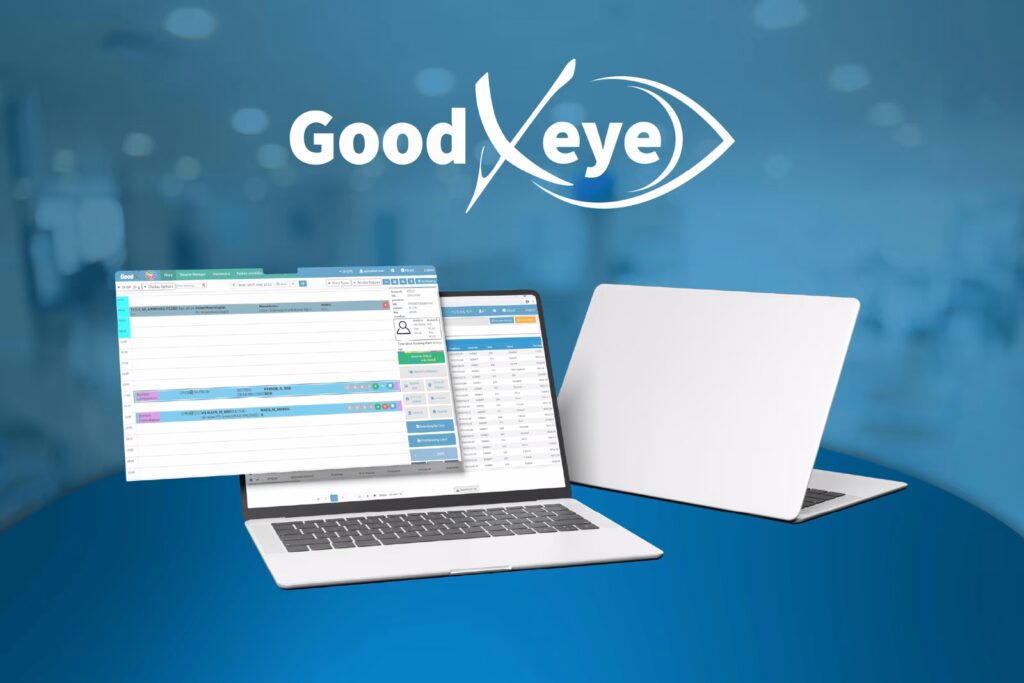
In a busy ophthalmology practice, scheduling isn’t just about assigning time slots, it’s about optimizing resources. A strong system will allow you to coordinate multiple providers, rooms, and equipment while also:
- Automatically sending patient consent forms before visits
- Managing complex appointment types, such as a consultation followed by imaging and a procedure in a single visit
- Providing waitlist and recall modules to fill last-minute openings and re-engage patients who are due for follow-up
GoodX’s practice management software is designed to simplify these scheduling challenges, making it easier for practices to keep patient flow efficient while reducing administrative stress.
Supporting Every Role in the Practice
A truly effective ophthalmology program recognizes that different team members interact with the system in different ways. Technicians, physicians, and administrative staff each have their own priorities. Features that help include:
- Integrated communication tools for quick, secure team collaboration
- Self-check-in kiosks that speed up intake and reduce front desk workload
- Customizable templates that shorten documentation time while maintaining accuracy
By streamlining the tasks of each role, the program contributes to an overall increase in efficiency and a better patient experience. Solutions like GoodX are built with flexibility in mind, so every member of your team can work smarter, not harder.
Imaging and Documentation Without Compromise
In ophthalmology, diagnostic images are essential for accurate diagnosis, treatment planning, and ongoing monitoring. Your EMR should make working with images intuitive and reliable. This means:
- Allowing annotations without overwriting previous records
- Storing historical images for side-by-side comparison over time
- Maintaining compliance to ensure secure data transfer and interoperability with machine integrations
When image management is seamless, providers can make faster, more confident clinical decisions. GoodX ensures smooth integration with diagnostic equipment, so practices don’t waste time on manual uploads or compatibility issues.
Billing and Revenue Cycle Management Built In
Revenue cycle management is another area where integration makes a significant difference. A well-designed ophthalmology program will:
- Automate Current Procedural Terminology (CPT) and International Classification of Diseases (ICD) coding
- Include built-in claims clearinghouse tools
- Flag potential errors before claim submission to reduce rejections and delays
GoodX includes billing and claims management modules that are tailored to healthcare practices, helping clinics avoid costly errors while accelerating reimbursement.
Data That Drives Decisions
Good data turns day-to-day activity into actionable insights. The right program should offer analytics and reporting capabilities that allow you to:
- Track revenue by procedure type
- Monitor referral sources and patterns
- Measure provider productivity and clinic performance
These metrics support evidence-based decisions for growth, staffing, and service offerings. With GoodX analytics, practices gain clear visibility into operations, helping them improve both efficiency and profitability.
Today’s patients expect convenience, transparency, and communication. A comprehensive ophthalmology program will include features that help you meet these expectations:
- Secure online scheduling and rescheduling
- Automated appointment reminders and follow-up surveys
- Digital intake forms to reduce wait times and manual entry
Strong patient engagement tools improve satisfaction, encourage loyalty, and support better care outcomes. GoodX helps practices build these touchpoints into daily workflows, creating a seamless experience for both patients and staff.
Vendor Partnership and Long-Term Scalability
The technology itself is only part of the equation. The vendor’s commitment to training, support, and product evolution is equally important. Before selecting a program, evaluate:
- The availability and responsiveness of support teams
- The quality of onboarding and ongoing training
- The frequency and reliability of software updates
- The scalability to handle additional providers, locations, or service lines as your practice grows
GoodX is recognized for ongoing innovation and strong client support, making it a reliable long-term partner for ophthalmology practices that want to future-proof their systems.
Final Thoughts
Choosing an ophthalmology program is a strategic decision that affects every aspect of your practice. By focusing on specialized ophthalmology tools, intelligent scheduling, role-specific workflow support, advanced imaging, integrated billing, actionable analytics, patient engagement, and strong vendor support, you set the foundation for both clinical excellence and operational efficiency.
Taking the time to assess your needs, involve your team in evaluations, and research vendor capabilities will pay off, not just in smoother workflows, but in better patient care and a stronger, more resilient practice. With GoodX offering comprehensive, adaptable solutions, clinics can feel confident that their chosen program will continue to grow alongside them.
Book a demo with GoodX today and discover how the right ophthalmology program can help your practice thrive.

by StefanS | Sep 17, 2024 | Blogs
Managing prescriptions and sick notes is a crucial part of running an efficient ophthalmology practice. The ability to generate and manage these documents quickly and accurately can make a significant difference in patient care, ensuring that patients receive the right medications and necessary rest periods without unnecessary delays.
Efficient Medical Scripting
When it comes to medical scripting, precision and speed are key. A comprehensive set of ICD-10 codes is integrated into the system, making it easy to include the correct diagnosis with each prescription. For practices that dispense medications, the system even shows whether the prescribed medicine is in stock, saving time and reducing the need for follow-up. The directions for medication use can be customised to meet specific patient needs, and any additional notes can be added to provide clear instructions. The doctor’s signature, which can be saved in the system or completed manually, can be applied to all scripts, which can then be emailed, faxed, or printed directly from the platform.
Comprehensive Sick Notes
Sick notes are another area where efficiency and accuracy are vital. Good Web allows you to manage patient details and track previous sick notes, ensuring consistency and thoroughness. When creating a medical certificate, you can include ICD-10 codes, the date of treatment, and the dates when the patient will be absent or working from home. There’s also the option to note any light duty recommendations or family responsibility considerations. Like with medical scripts, the doctor’s signature can be saved and added to sick notes, which can then be easily shared via email, fax, or print.
Enhancing Patient Care Through Streamlined Documentation
By streamlining the process of generating medical scripts and sick notes, you can improve patient care while reducing administrative burdens. These tools help ensure that patients receive timely, accurate documentation, allowing them to focus on their recovery with the confidence that their needs are being fully addressed. Find out how Good’s innovative care features can benefit your practice by contacting us today!
Visit Good International to see all of the countries that we are currently servicing.
Don’t see your country? No problem! Contact us today and we can still assist your ophthalmology practice!

by StefanS | Sep 4, 2024 | Blogs
In ophthalmology, building strong patient relationships goes beyond clinical skill. Patients want to feel heard, valued, and supported — and that often starts with how smoothly your practice operates. Efficient eyecare not only improves day-to-day operations but also builds lasting trust with your patients.
Why Efficiency Matters in Eyecare
When a practice runs efficiently, it creates a more positive experience for everyone. Shorter wait times, clear communication, and seamless processes show patients that their time and wellbeing are respected. This boosts satisfaction and encourages long-term loyalty.
4 Ways Efficiency Enhances Patient Relationships
1. Easy Appointment Booking:
Online scheduling, digital check-ins, and automated reminders reduce admin work for both patients and staff, making the first impression a smooth one.
2. Streamlined Clinical Workflows:
Using smart ophthalmology software helps reduce time spent on paperwork. Digital imaging, shared clinical notes, and quick access to patient history make consultations more focused and personal.
3. Better Communication:
Efficient practices follow up automatically with appointment reminders, test results, and aftercare information. Consistent, clear communication helps patients feel cared for beyond the consultation.
4. Accurate, Transparent Billing:
Integrated billing systems reduce errors and simplify payments. Patients appreciate clarity and speed when it comes to finances.
The Role of Technology
Modern ophthalmology software connects your clinical, admin, and billing tasks in one system. This improves accuracy, saves time, and lets your team focus on what truly matters — patient care.
Find out how GoodX’s innovative eye care features can benefit your practice by contacting us today!
Visit GoodX International to see all of the countries that we are currently servicing. Don’t see your country? No problem! Contact us today and we can still assist your ophthalmology practice!